
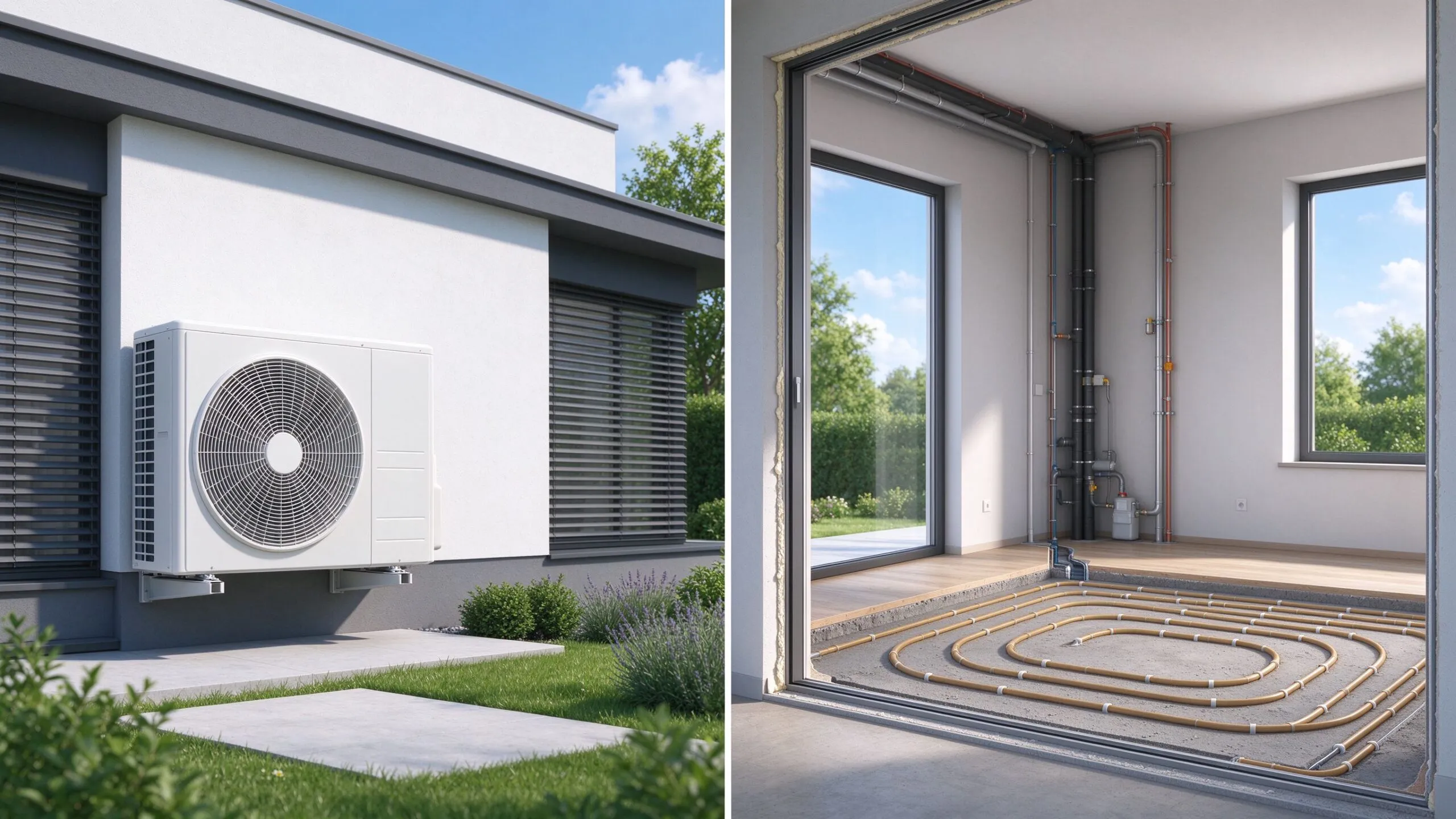
Heat pumps are no longer a niche product in the heating industry. Driven by building regulations, decarbonization targets and a growing body of energy-cost evidence, they have become the default specification for new heating systems across Europe, North America and parts of Asia. But a heat pump only performs at its advertised efficiency when it feeds a heat emitters system designed for low-temperature delivery. That is why underfloor heating with heat pump pairing has become the single most-asked combination in our technical department. In this article we explain why low-temperature compatibility matters, how to design a heat pump compatible underfloor heating system, what changes when you choose electric underfloor heating with air source heat pump hybrid designs, and what wholesale buyers should look for in a heat pump underfloor heating kit supplier.
The Regulatory Driver: Why Heat Pumps Are Going Mainstream
The policy push behind heat pumps is structural. In the European Union, the Energy Performance of Buildings Directive (EPBD), maintained by the European Commission and published on energy.ec.europa.eu, sets increasingly strict energy-performance requirements for new and renovated buildings, pushing member states toward efficient, low-carbon heating. The direction of travel is clear: high-temperature gas boilers are being phased out of new builds, and efficient heat emitters that work at flow temperatures of 35–45°C are being rewarded.
That shift changes product design. A radiator system sized for a 70°C boiler will struggle to deliver comfort when fed by a heat pump at 40°C. A properly designed low temperature underfloor heating system, by contrast, operates with flow temperatures in exactly the range heat pumps produce most efficiently — typically 30–45°C. The result is a system where both pieces of equipment run inside their best efficiency window at the same time.
Why Underfloor Heating and Heat Pumps Are a Natural Match
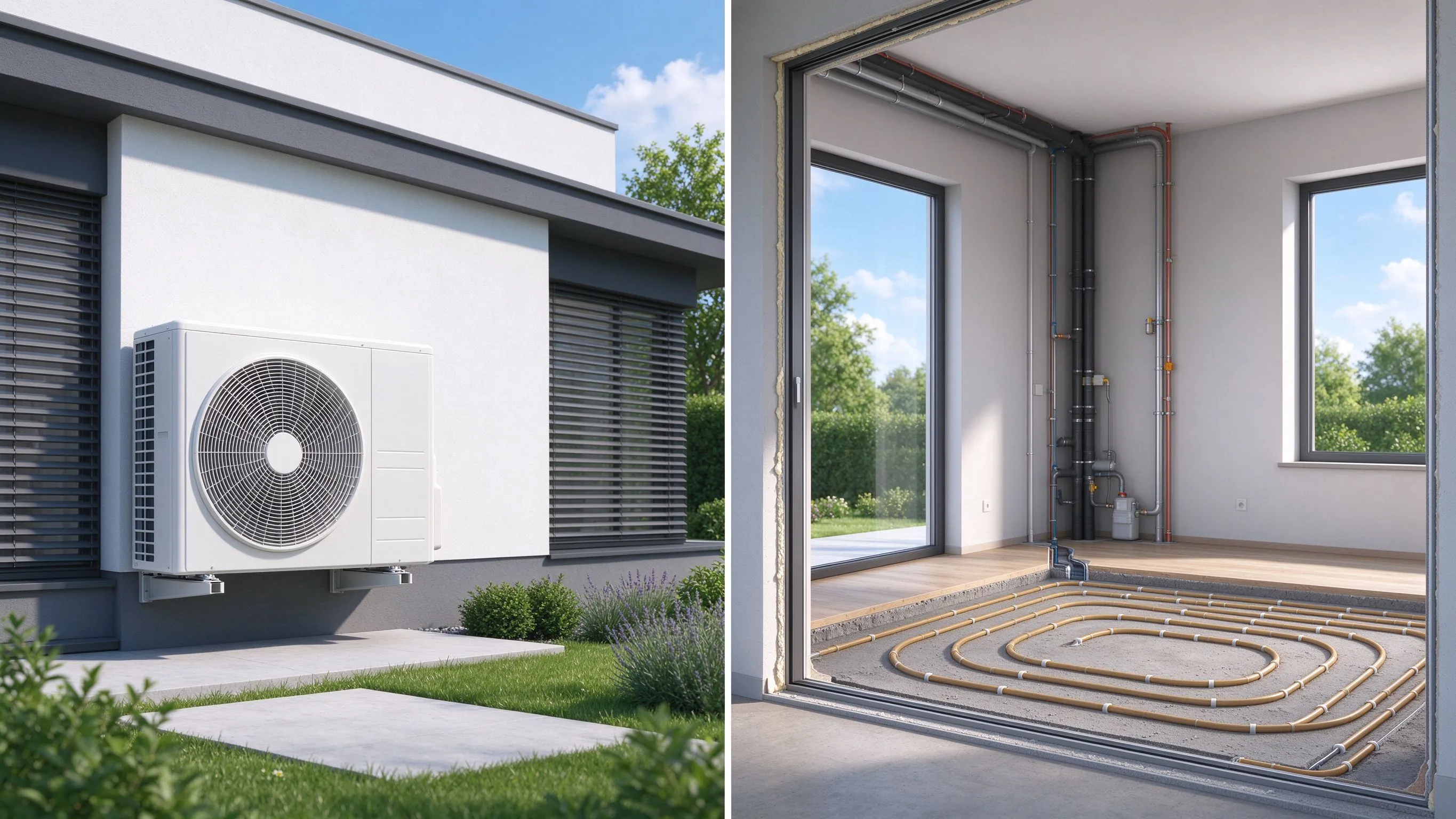
Underfloor heating is a radiant system: it heats the large surface area of the floor, which then radiates warmth evenly across the room. Because the heat is delivered over a wide area, the water temperature needed to maintain comfort is low — far lower than radiators require. Physics works in your favor here: the lower the water temperature supplied by the heat pump, the higher the pump’s coefficient of performance (COP). Every degree of lower delivery temperature improves the heat pump’s seasonal efficiency, which is exactly where heating cost savings are earned.
The pairing also reduces equipment wear. A heat pump feeding a low-temperature radiant floor runs longer cycles at lower output, rather than short cycling on high power. Longer, gentler runs mean quieter operation, less on/off cycling, and longer service life for the compressor. Our market analysis of the global underfloor heating market shows this pairing is now the fastest-growing segment of the residential heating retrofit business.
Hydronic vs Electric: Which Underfloor Heating Pairs With a Heat Pump?
This is where many buyers get confused. Strictly speaking, a heat pump supplies heat through a hydronic loop — pipes carrying warm water. So the classic pairing is air source heat pump → buffer tank → manifold → water-based underfloor heating pipes embedded in screed. However, two related configurations are also common and worth understanding:
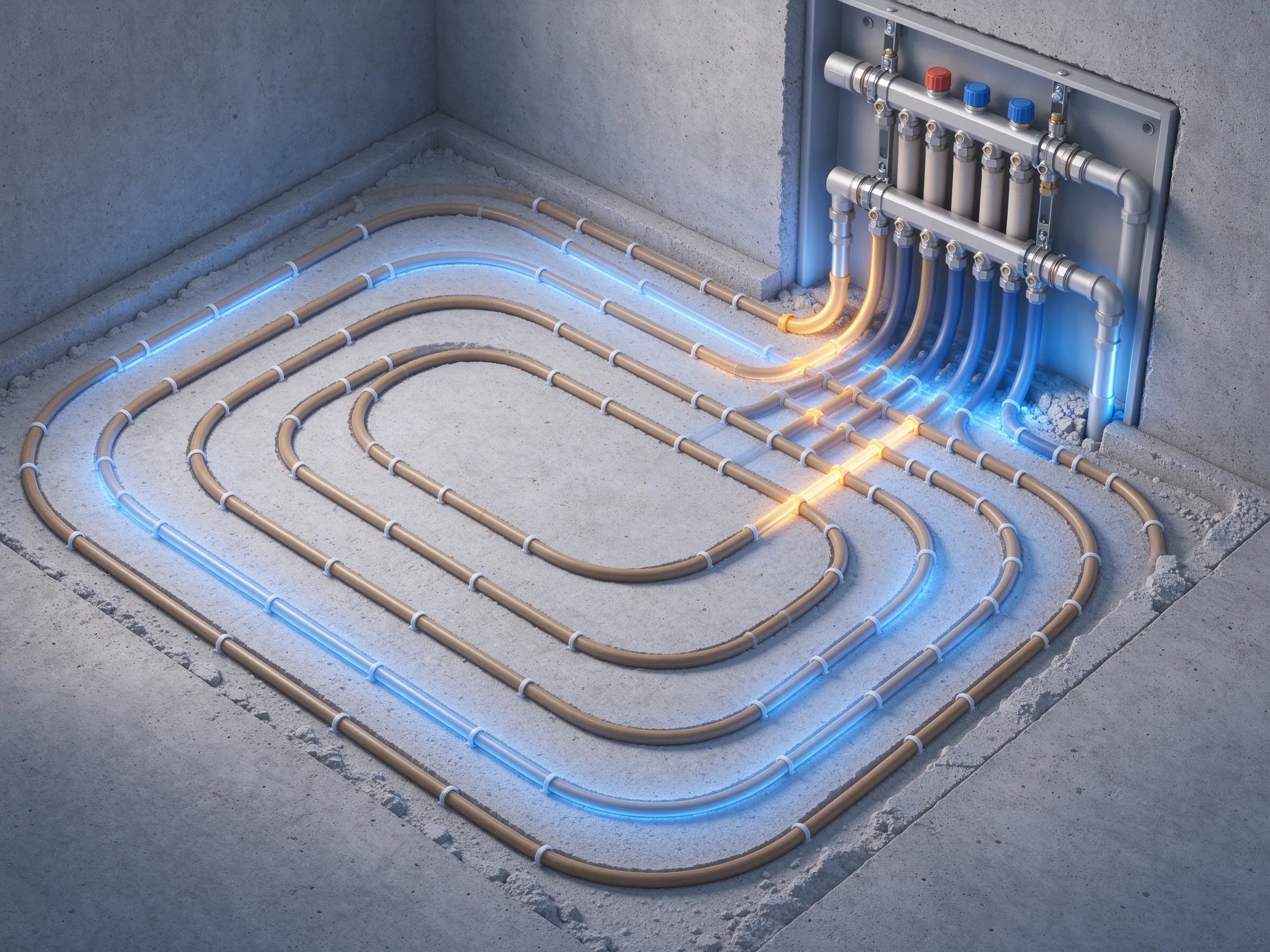
- Hydronic underfloor heating (wet system). PEX/AL-PEX pipe loops embedded in a cement or anhydrite screed, fed from a manifold. This is the canonical heat-pump partner, ideal for new builds and major renovations.
- Hybrid: heat pump for domestic hot water and main zones + electric mats for additions. In retrofit projects where breaking up the existing floor is impractical, homeowners add electric underfloor heating with air source heat pump support zones — for example, a bathroom done with a thin electric heating mat under tile while the main house runs hydronic radiant from the heat pump. The electric zones handle small, hard-to-reach areas while the heat pump covers the base load.
For distributors choosing what to stock, the practical takeaway is: demand both capabilities. A supplier that can offer hydronic manifold components and electric heating mats lets you quote the whole retrofit, not just half of it. You can review our range at the underfloor heating overview.
Designing the System: Sizing, Controls and Balance
A heat-pump-ready radiant floor follows a disciplined design process:
- Heat loss calculation. Size the room’s heat requirement first; never size the floor loops by guesswork. Well-insulated modern homes need far lower output per square meter than older, leaky ones.
- Pipe spacing. Spacing between pipe loops is chosen to match the required output at the design water temperature. Closer spacing near exterior walls and glazing compensates for the higher heat loss there. The commissioning principles we describe in the underfloor heating commissioning and balancing guide apply directly here.
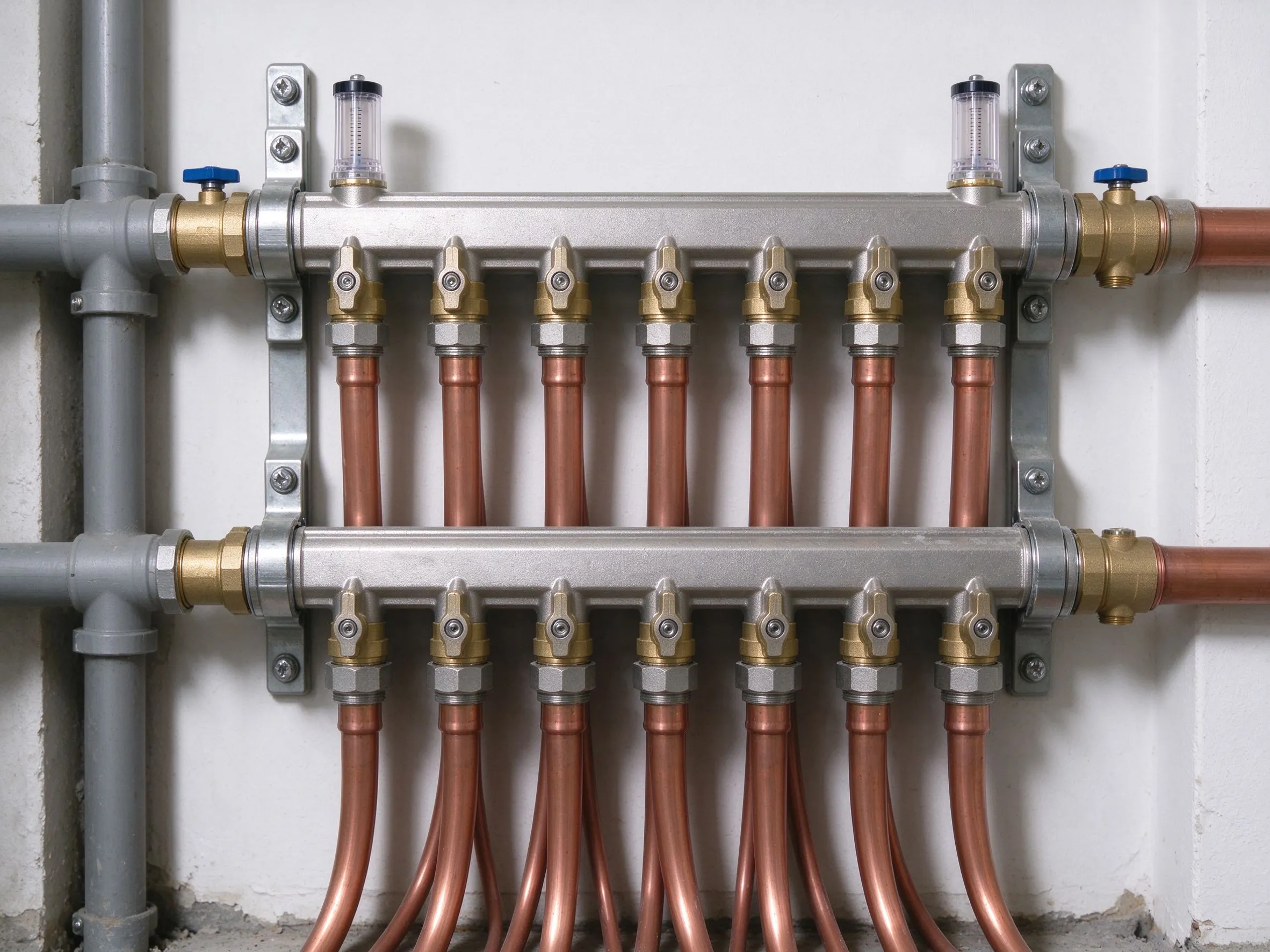
- Manifold and zoning. Each manifold circuit serves one zone; independent room thermostats let lightly used rooms drift back while occupied rooms hold temperature. This is where a heat pump really saves electricity — zones that do not need heat do not ask for it.
- Control strategy. Pair the manifold actuators with smart room thermostats. Our article on programming a WiFi thermostat for maximum savings shows how schedule-based control routinely cuts heating energy by 15–25% over a naive always-on setup.
Real-World Scenarios: Three Projects Where the Pairing Succeeded
The theory is easiest to grasp through the project patterns we see repeatedly as an exporter of heating components. The first is the European new-build: a well-insulated family home where the builder specifies an air source heat pump and asks for a radiant floor that can run at 35–40°C. Here the margin comes from COP: the heat pump’s efficiency climbs as delivery temperature falls, so the low-temperature floor quietly reduces every kWh the homeowner buys across the whole heating season. The second is the deep-renovation retrofit: a 1970s house losing its oil boiler, where the installer removes the old radiators, installs insulated screed with underfloor loops, and sizes a heat pump to the newly calculated low heat loss. The third is the partial retrofit: a kitchen or bathroom done with a thin electric heating mat under tile, while the main heating load rides on the heat pump through existing or new hydronic loops — a hybrid that keeps renovation cost contained while still moving the whole house off fossil fuel.
What these scenarios share is a planning lesson: the heat pump and the floor must be designed as one system. A floor designed without knowing the heat pump’s flow-temperature envelope will either underperform or force the pump to run at inefficient high temperatures. The reverse — choosing emitters after the pump is sized — is equally common and equally costly. The fix is simply to have the heat pump spec and the radiant design reviewed together before either product is ordered.
| Design parameter | Conventional radiator system | Heat-pump-ready underfloor system |
|---|---|---|
| Typical design flow temperature | 60–75°C | 30–45°C |
| Heat pump efficiency at design point | Poor — low COP at high delivery | High — best COP zone |
| Response behavior | Fast surface heat, short cycles | Slow radiant warm-up, long gentle runs |
| Best application | Retrofit on existing radiators | New builds, deep renovations |
| Comfort profile | Air temperature peaks near radiator | Even radiant warmth, no cold downdrafts |
Common Design Mistakes That Undermine the Pairing
After years of reading commissioning reports from partner installers, a handful of mistakes account for most underperformance calls. The first is under-sizing insulation under the floor loops — a slab with no insulation dumps heat downward into the ground, and the heat pump runs far longer to compensate. The second is over-sizing the heat emitters for a high design temperature, which locks the system into warm-water operation and gives up the COP advantage. The third is neglecting zoning: a single thermostat for the whole house means lightly used rooms heat the same as occupied ones, wasting the exact energy the pairing was supposed to save. The fourth is ignoring the screed’s thermal inertia on controls — radiant floors are slow, so thermostat setbacks need lead time, and a smart schedule that anticipates warm-up beats reactive on/off cycling every time. None of these mistakes are exotic; all of them are caught at the design table, not after the wall is closed up.
What Buyers Should Expect From a Heat Pump Underfloor Heating Kit Supplier
Wholesale buyers assembling heat-pump heating kits need a partner who understands the whole system, not just one component. When evaluating an underfloor heating wholesale supplier, we recommend checking five points:
- Range breadth. Can the supplier cover pipes, manifolds, heating mats, thermostats and controls from one source? Sourcing five components from five factories kills margin and complicates warranty claims.
- Documentation. CE marking, RoHS compliance and ISO-certified production systems are the baseline. At SunAura Thermal, our Qingdao Huangdao factory runs ISO 9001, ISO 14001 and ISO 45001 systems — detailed on our certifications page.
- Technical support in English. Heat-pump projects throw up design questions. A factory that responds with calculation guidance, not just price lists, saves you callbacks on site.
- OEM flexibility. Brands and contractors often want private-label thermostat faces, custom kit configurations and matched packaging — the OEM/ODM program at SunAura Thermal is built around exactly this.
- Export track record. Voltage, plumbing standards and certification regimes differ by market. Our products ship to more than 50 countries, so the paperwork your importer needs is already prepared — see our global expansion story.
Frequently Asked Questions
Can I connect a heat pump to existing underfloor heating? Usually, yes — most existing water-based underfloor floors were designed for relatively low water temperatures, which is exactly why older radiant houses often convert to heat pumps more smoothly than radiator houses. Confirm the original design temperature with the system designer before committing.
Does an air source heat pump work in cold climates? Modern inverter-driven air source heat pumps are designed for low ambient operation and are widely deployed across Scandinavia and northern North America. Correct sizing, buffer volume and backup strategy matter more than the outside temperature itself.
Is electric underfloor heating suitable with a heat pump? Electric mats and cables do not connect directly to a heat pump loop — they run on electricity. But they are commonly used as supplementary zones in hybrid homes, and their thin profile makes them ideal for bathrooms and renovations where screed depth is limited.
What flow temperature should I design for? For heat-pump pairing, design the radiant system around 35–40°C flow in a well-insulated home. This keeps the heat pump inside its most efficient operating band throughout the heating season.
Do I need a buffer tank between the heat pump and the floor? Most air source heat pump installations benefit from a buffer cylinder, especially with small thermal mass or frequent cycling. The buffer smooths demand spikes and protects the compressor from short cycling — worth confirming with your heat pump installer during design.
Can underfloor heating cool the house in summer? Water-based radiant floors can do limited cooling in suitable climates, but that is a hydronic system design question for the heat pump installer; electric radiant mats are heating-only. We always design the electric side for comfort heating first and never as a cooling surface.
How long does a heat-pump radiant floor take to warm up? Expect one to several hours for a thick screed floor to reach steady comfort — that is normal and is exactly why schedule-based smart controls are recommended, rather than expecting instant response like a gas radiator.
Build a Heat-Pump Heating Program With SunAura Thermal
SunAura Thermal supplies distributors, contractors and HVAC brands with the low-temperature heating components that heat pumps reward: underfloor heating mats, heating cables, manifolds-compatible electric zones, smart thermostats and full OEM kit configurations. With 17 years of manufacturing experience in Qingdao, ISO 9001/14001/45001-certified production, CE and RoHS documentation, and export experience across 50+ countries, we help heating businesses assemble heat-pump-ready product lines rather than one-off components. Tell us your target markets, typical project sizes and certification needs, and our team will return a wholesale program proposal matched to your catalog.
About the author: Ethan Sun is the Founder and CEO of SunAura Thermal. He has spent nearly two decades building electric and hydronic heating product lines for export markets, and works closely with HVAC distributors across Europe, North America and Asia on heat-pump-compatible heating specifications.
Related Products & OEM Inquiries
Pairing underfloor heating with a heat pump? Our graphene heating film and low-temperature underfloor heating systems are optimized for heat-pump flow temperatures, maximizing efficiency. Add a smart thermostat for heat-pump-compatible zoning. Request a hybrid system quote — factory-direct supply for installers, EPCs and heating brands in 50+ countries.