
01Direct electric heating
Film, mat and cable under 16 A use a direct relay; larger loads use 20 A or 25 A versions or an external contactor controlled by the thermostat.
How thermostats are selected for electric heating, boilers and fan coils — load capacity, contact type, sensors and smart features.
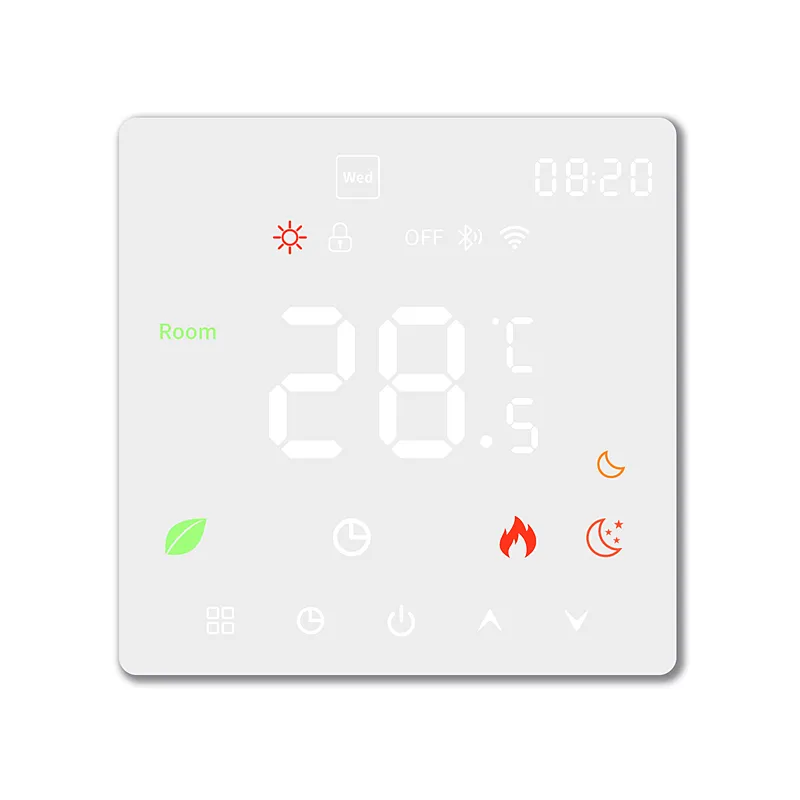
Thermostats split by what they switch. Electric heating models carry a 16 A relay with 20 A and 25 A versions that directly cut film, mat and cable. Hydronic and boiler models use a volt-free dry contact rated 3 A, including the dual K2M (16 A electric plus 3 A boiler) and the WITH3 RF wireless unit on 433 MHz for wall-hung boilers. Fan coils are switched or speed-controlled through the dry contact or an RS485 relay rather than a separate model. All units run AC 90–240 V at 50/60 Hz and offer Tuya WiFi, a weekly six-period schedule, an NTC floor sensor (β=3950, 10 kΩ), child lock, antifreeze, power-off memory and voice control, with a 2-year warranty.
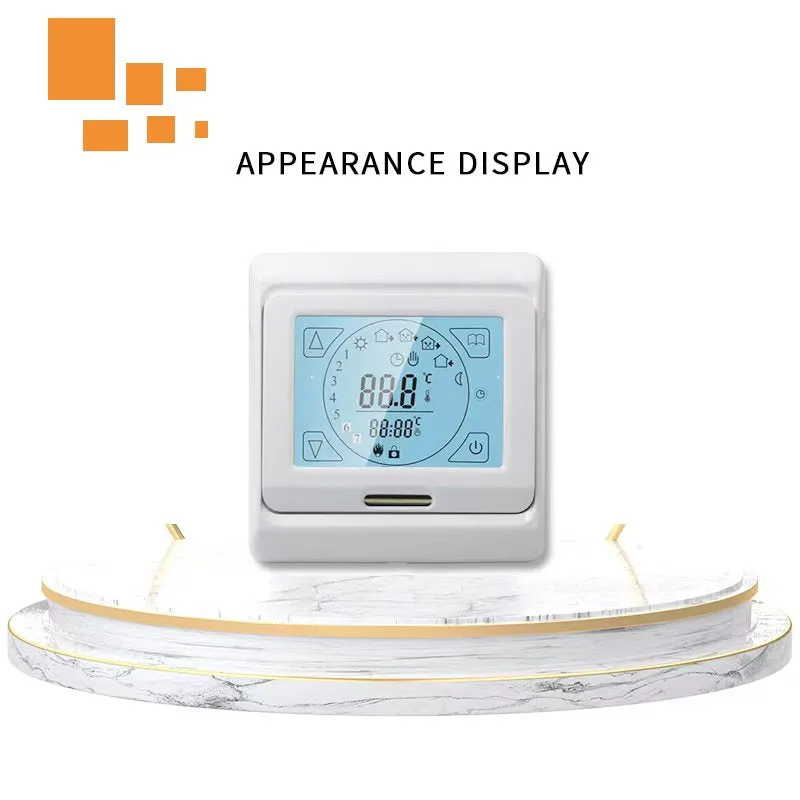
Installation and Commissioning
Wiring, sensor and first power-up sequence.
Read the guide →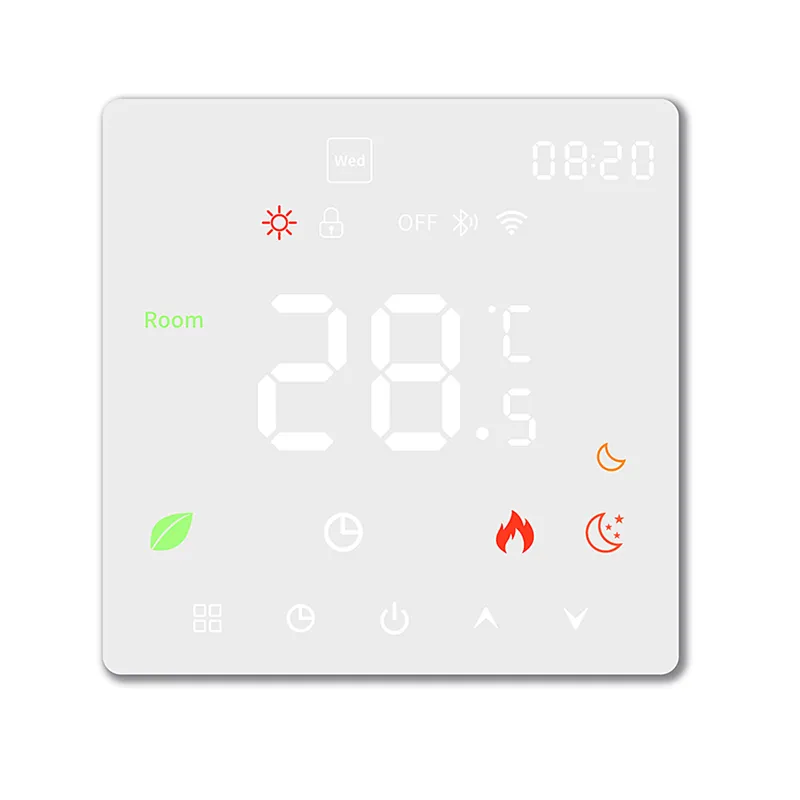
Load Capacity and Contactors
When a relay stops being enough.
Read the guide →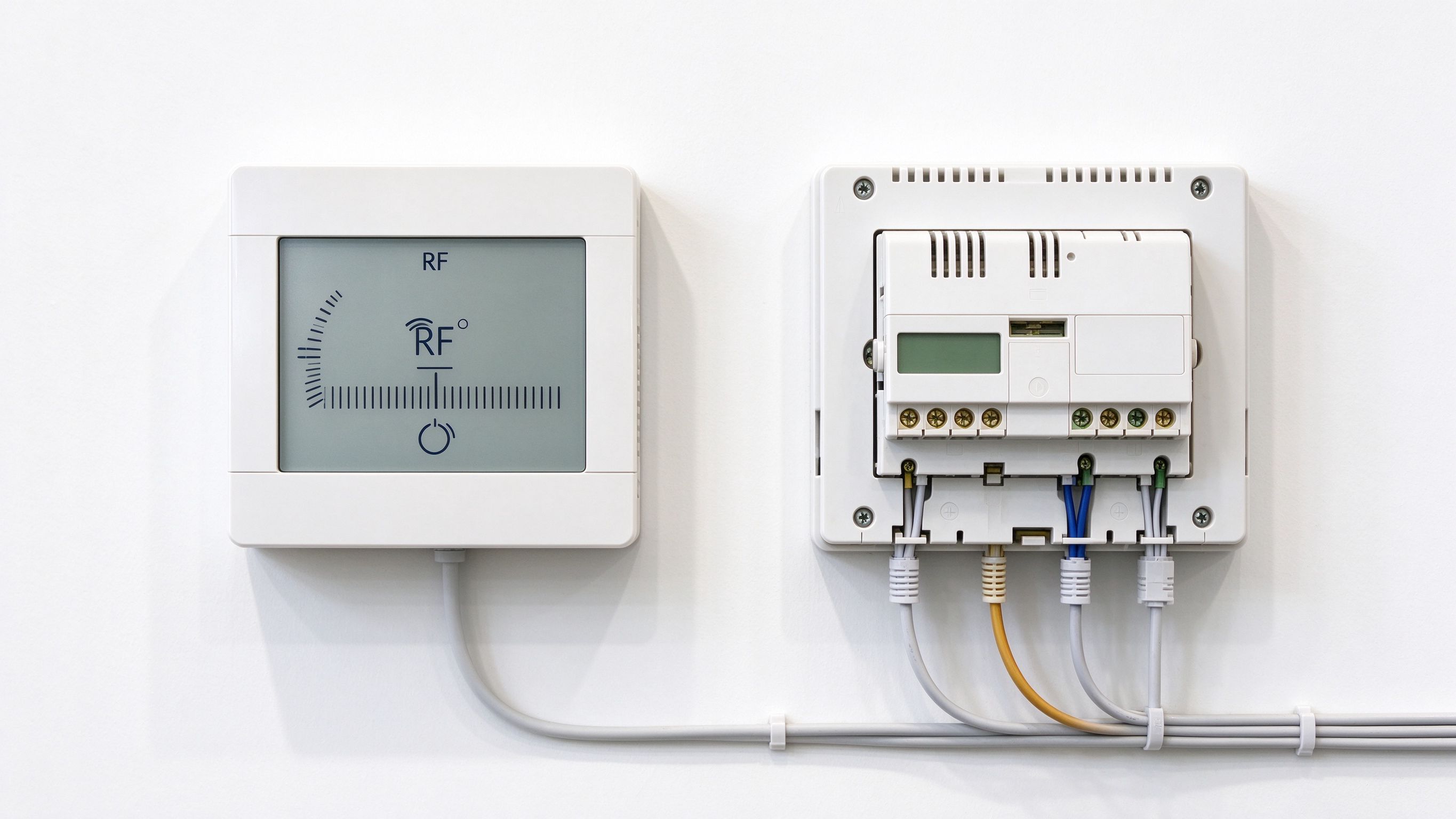
Multi-Zone vs Single-Zone
A selection guide for zoning.
Read the guide →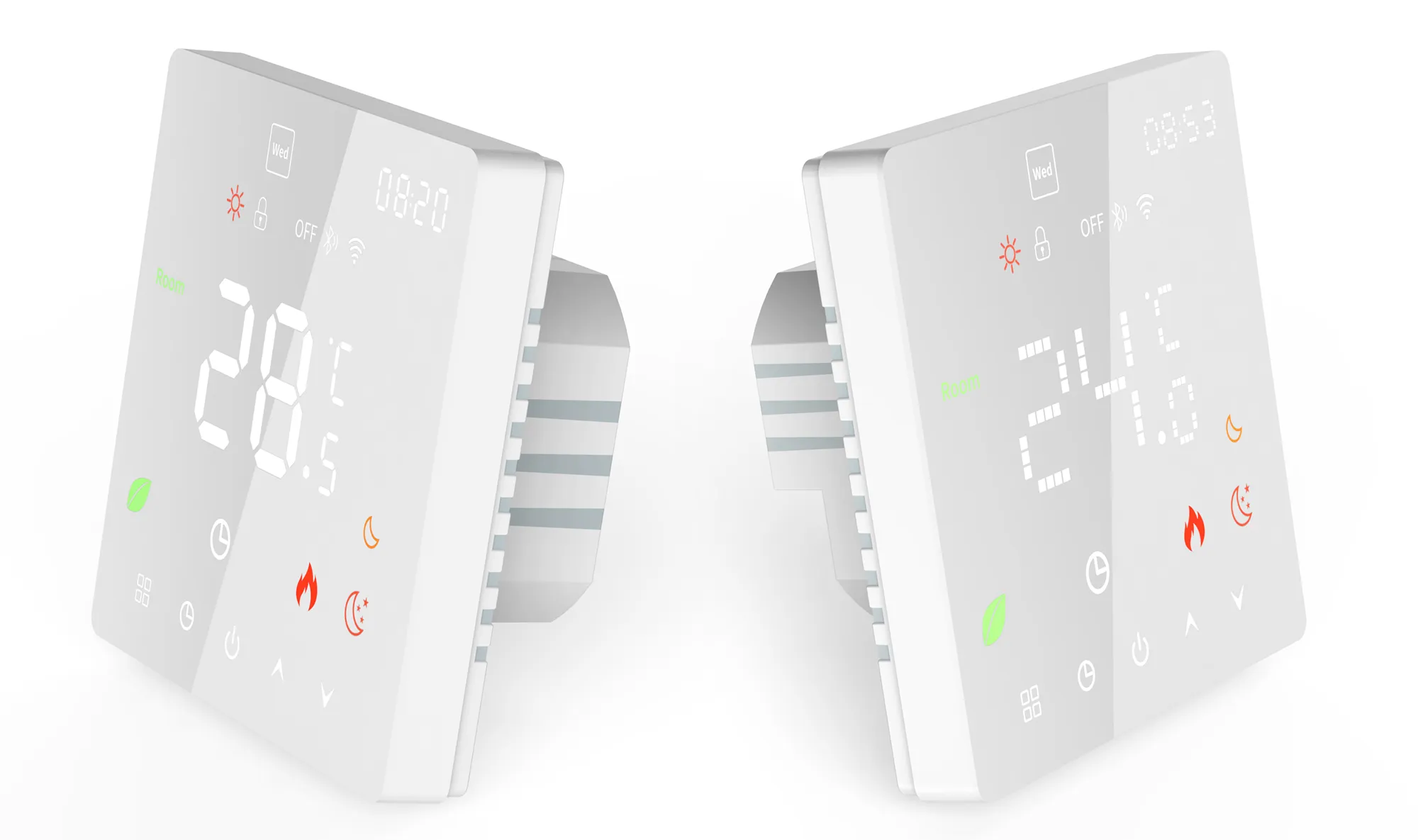
Floor vs Air Sensor
Which sensing strategy delivers better comfort.
Read the guide →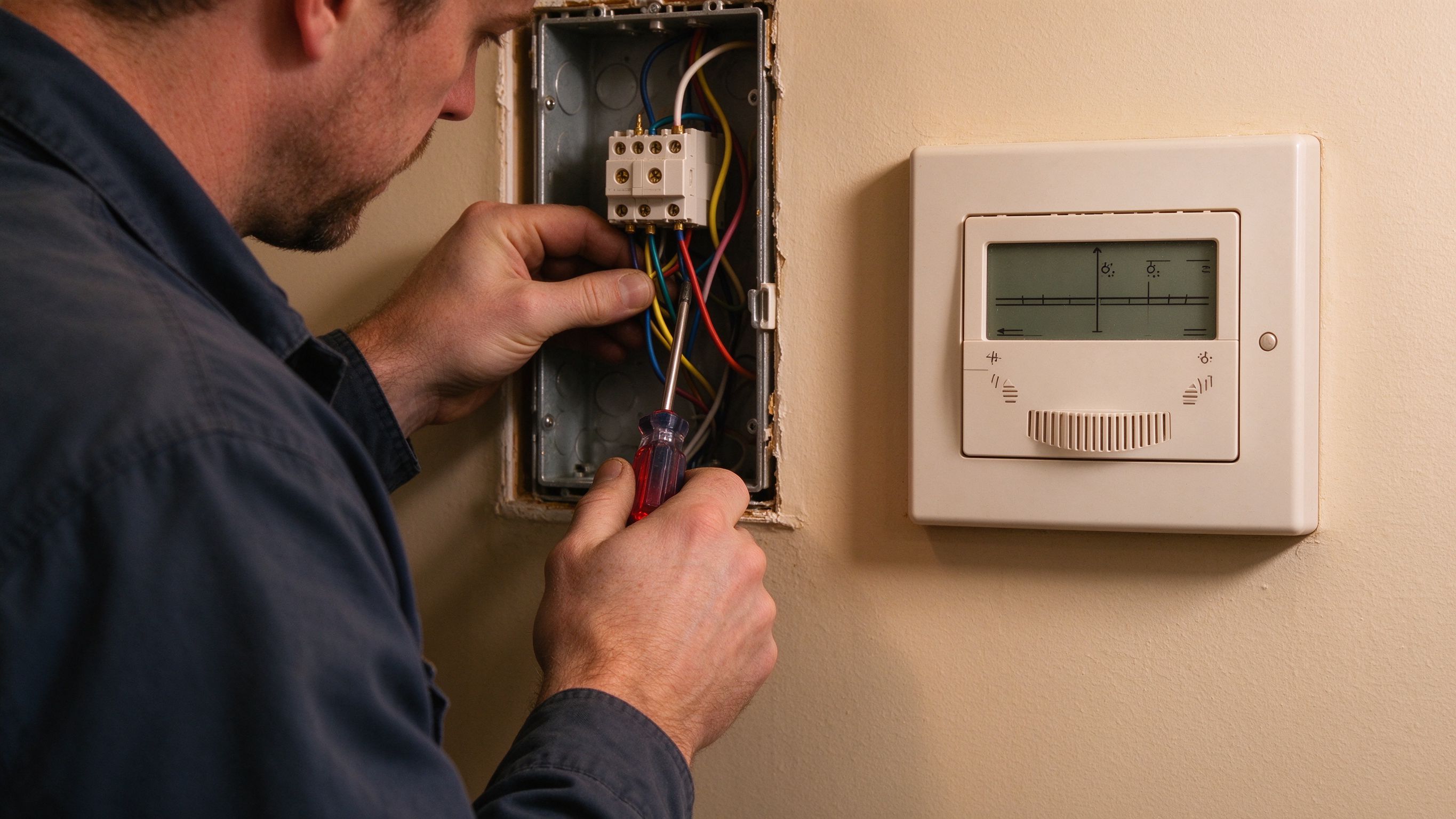
Wireless vs Wired
A buying guide for retrofit and new build.
Read the guide →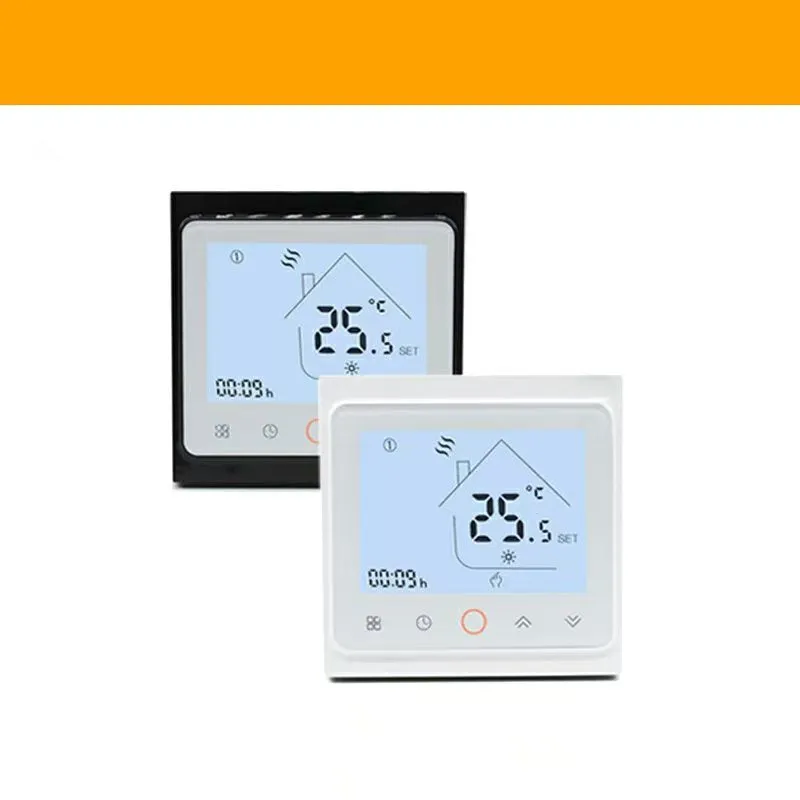
WiFi Programming
Tuya app schedule and setpoint setup.
Read the guide →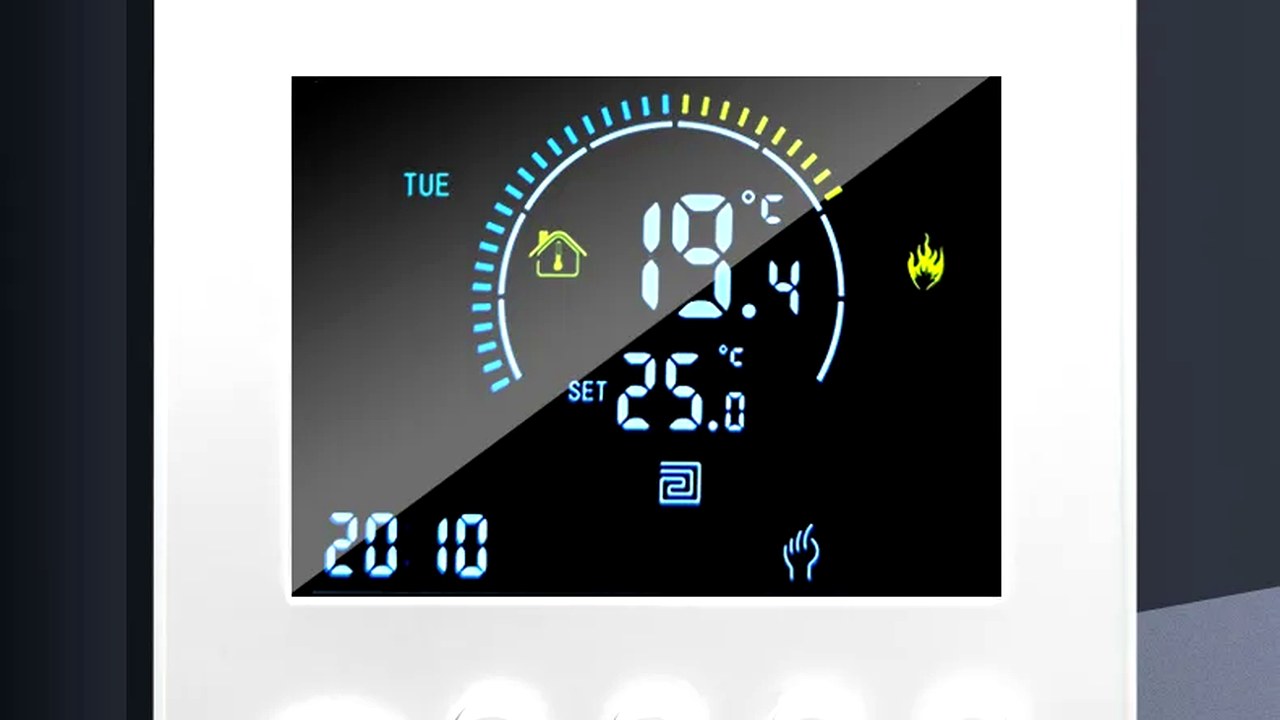
Switching Type Selection
Relay, dry contact, RS485 and RF.
Read the guide →
Smart Thermostat Features: Which WiFi and Control Functions Are Worth Paying For
Which smart thermostat features pay off, after the output type matches the load.
Read the guide →Film, mat and cable under 16 A use a direct relay; larger loads use 20 A or 25 A versions or an external contactor controlled by the thermostat.
A volt-free 3 A dry contact fires the boiler, with the WITH3 RF giving a wireless option for wall-hung units and the K2M combining electric and boiler switching.
A fan coil is switched or speed-controlled through the dry contact or the RS485 relay. There is no separate fan-coil model, so the control is specified from the unit interface.
| Parameter | Standard range | What it means on site |
|---|---|---|
| Electric load | 16 A / 20 A / 25 A | Direct relay switching |
| Boiler contact | 3 A volt-free dry contact | Hydronic and boiler |
| Fan coil | Dry contact / RS485 | Switch and speed control |
| Voltage | AC 90–240 V, 50/60 Hz | Some 95–240 builds |
| Floor sensor | NTC β=3950, 10 kΩ | Remote probe |
| Wireless | WITH3 RF 433 MHz | Wall-hung boiler |
| Smart features | Tuya WiFi, voice, 6-period | Alexa/Google/Yandex |
| Warranty | 2 years | CE, RoHS, SGS |
Identify the load type. Direct electric, boiler dry contact or fan coil and pick the matching switching output.
Size the current. Stay under 16/20/25 A or add a contactor; never exceed the relay rating.
Choose sensor strategy. Floor NTC, air sensor or combined, and position the probe before the floor closes.
Wired or wireless. Wired for new build, RF for retrofit where a cable run is impractical.
Program and commission. Set the weekly schedule, antifreeze and app connection, then verify the load actually switches.
Do not fit a direct 16 A thermostat to a load above its rating, and do not assume a dedicated fan-coil model exists — fan coils use the dry contact or RS485 path. A dry contact also cannot carry mains power directly; it only signals the boiler or relay.
Send the heating load, voltage and whether the system is electric, boiler or fan coil. We return the model, switching rating and sensor plan. Pairing and wiring details are on the product page and in the commissioning guide.