
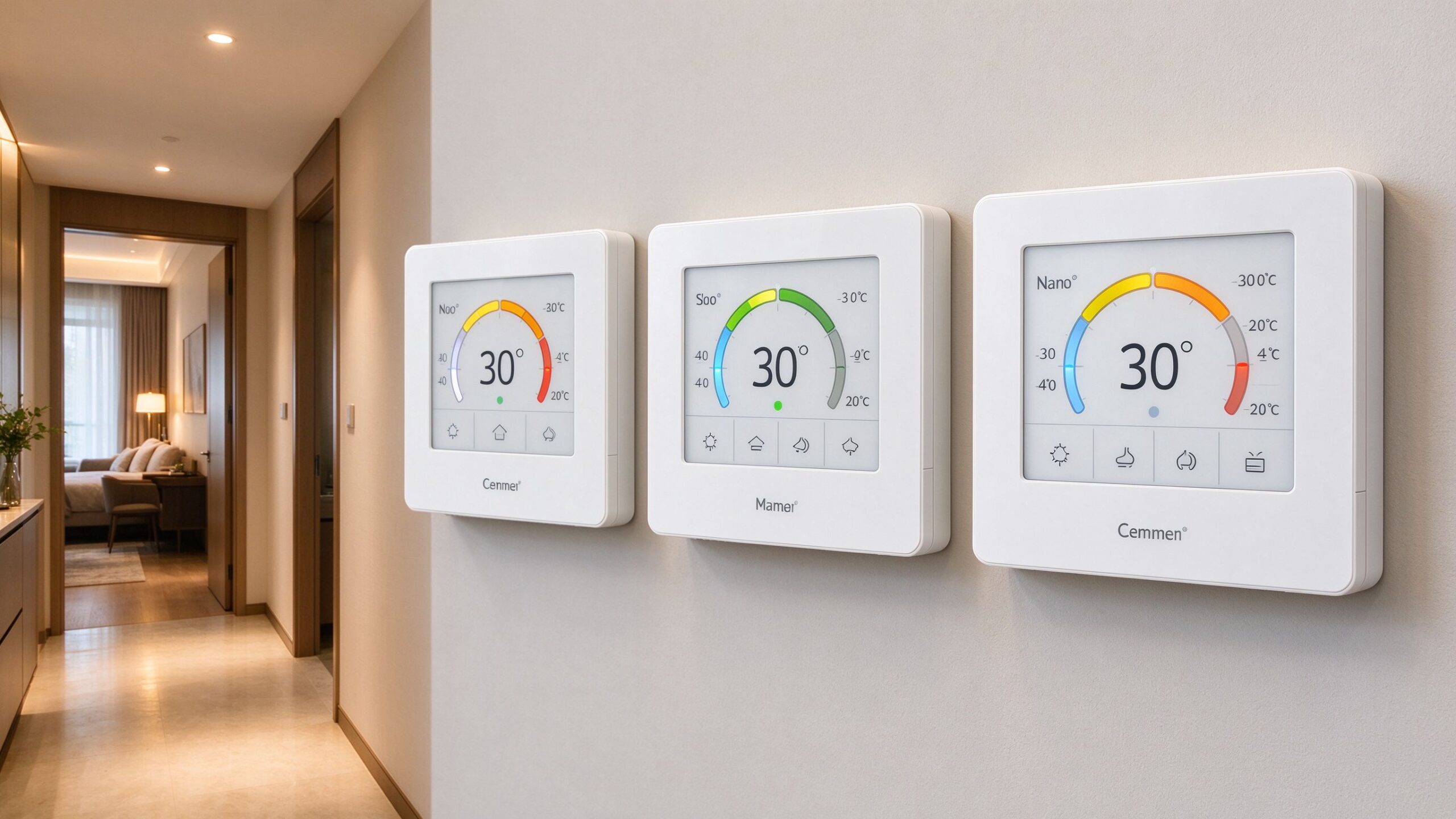
One Thermostat or Many: The Decision That Shapes the Whole System
When buyers plan electric underfloor heating for more than one room, the quiet question that decides the whole system is zoning: one thermostat for the house, or one per room. A multi-zone thermostat for underfloor heating lets each room run its own temperature schedule; a single-zone setup controls everything from one point. The choice changes the electrical design, the wiring, the cost per square metre, and the energy bill for years — which is why it should be made before ordering, not during installation.
This article compares single-zone and multi-zone thermostat systems for electric floor heating, gives a selection framework by project type, and ends with a procurement checklist for buyers sourcing thermostats from a factory. Factory data below reflects SunAura Thermal production records in Qingdao, China, where the company has manufactured thermostats and heating elements for 17 years (per SunAura factory records).
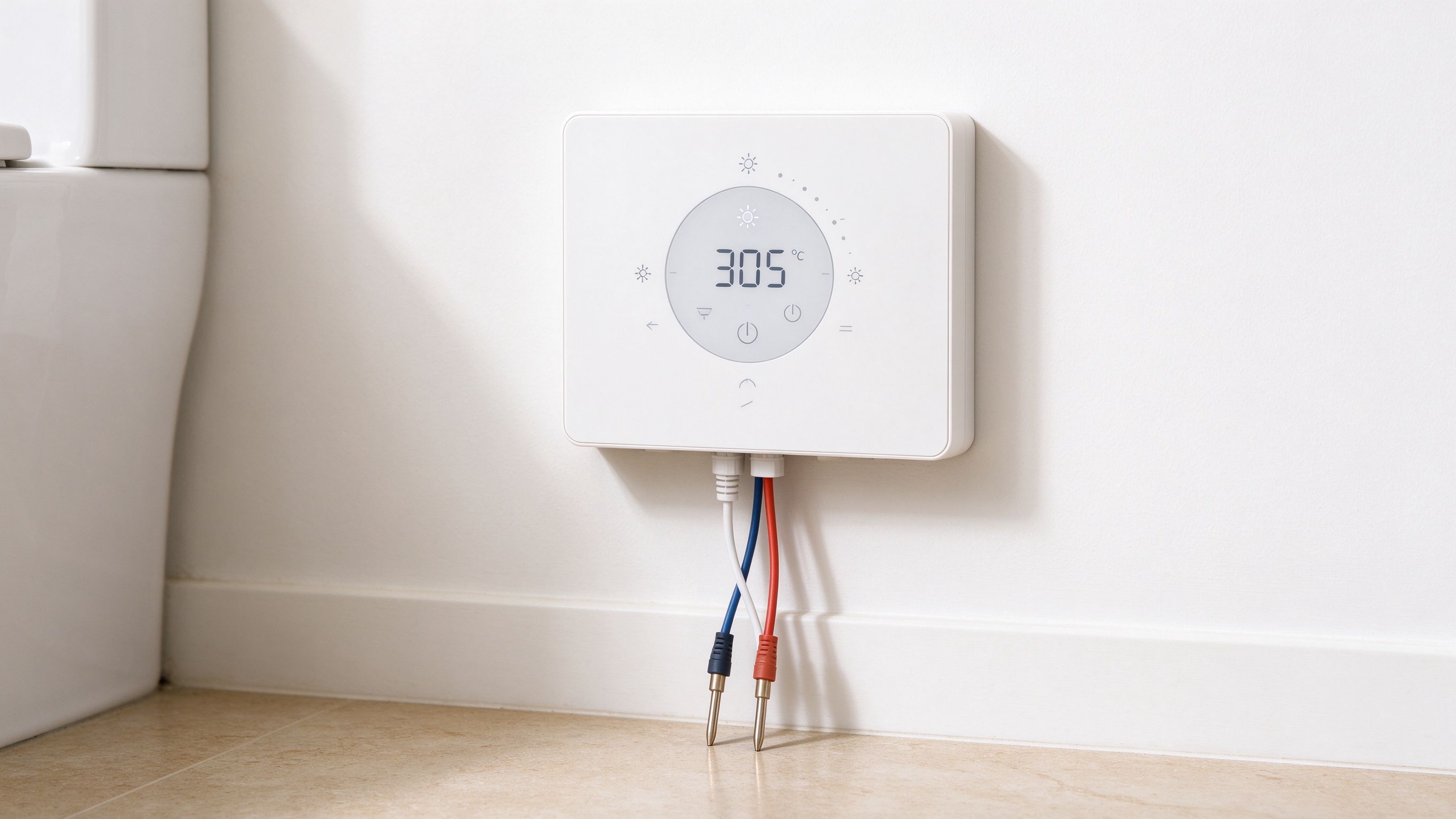
How Single-Zone Thermostat Systems Work
A single-zone system uses one thermostat (typically with a floor probe, an air sensor, or both) controlling all connected heating circuits. It is the simplest configuration: one controller, one sensor point, one schedule.
Practical consequences of single-zone control:
- Lowest hardware cost — one thermostat, one sensor, one circuit group; minimal wiring.
- Simple operation — one schedule for the whole house; ideal for open-plan spaces that behave as one zone.
- Uniform temperature across all rooms — which is also the limitation: if the bathroom needs more heat than the bedroom, the single sensor cannot serve both.
- Lower installation labour — no multi-room sensor wiring, no zone scheduling setup.
Where single-zone works: open-plan apartments, small houses, a single large room, or any space where one temperature serves the whole area.
How Multi-Zone Thermostat Systems Work
A multi-zone system gives each room (or group of rooms) its own thermostat and its own schedule. Each zone’s floor probe measures that room’s floor temperature, and the controller switches that zone independently — so the bedroom can sit at 19 °C all day while the bathroom runs 24 °C in the morning and evening.
Practical consequences of multi-zone control:
- Room-by-room schedules — heat only the rooms in use; empty rooms hold a setback temperature.
- Higher hardware cost — one thermostat per zone, plus wiring and a larger control layout.
- More energy savings in practice — heating unused rooms to comfort temperature is the biggest avoidable waste in floor heating; zoning removes it.
- More complex installation — each zone needs its own sensor run and circuit coordination; installer skill matters.
Where multi-zone works: houses with distinct rooms and occupancy patterns, large floors, commercial fit-outs, and any project where the energy bill will be scrutinised.
Single-Zone vs Multi-Zone Thermostat: Comparison Table
| Dimension | Single-zone | Multi-zone |
|---|---|---|
| Thermostats needed | 1 | 1 per zone (room/group) |
| Hardware cost | Lowest | Higher per zone |
| Installation labour | Low | Moderate–high (sensor runs, coordination) |
| Room-by-room schedules | No | Yes |
| Energy waste from unused rooms | Higher | Lower (setback per zone) |
| Best project size | Open plan, small homes, single rooms | Multi-room homes, large floors, commercial |
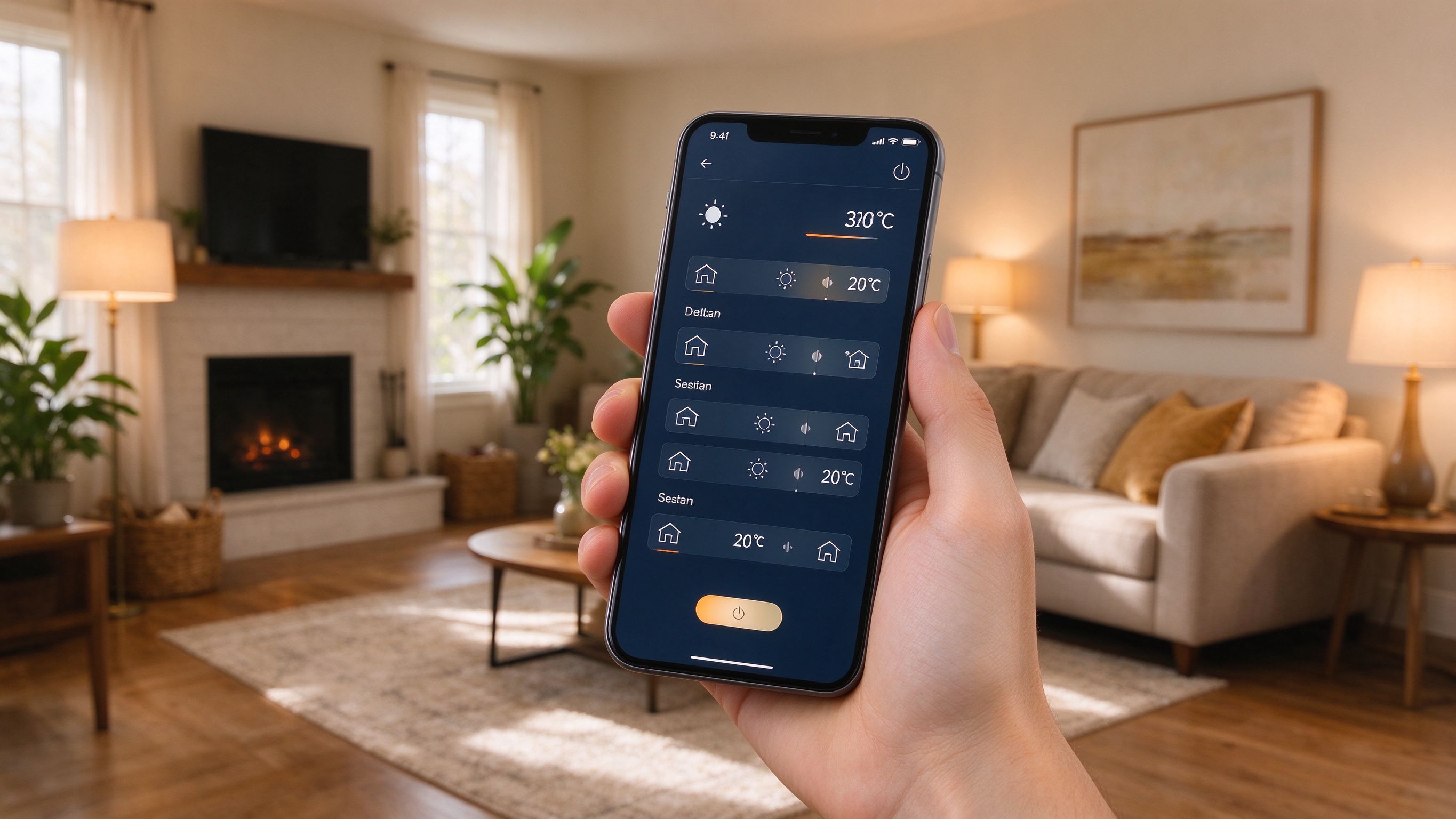
| Control features | Basic schedule + sensors | Zonal schedules, WiFi, per-room programming |
For a 3–5-room home, the extra thermostat cost is small relative to the wiring and installation labour — but the running-cost saving from not heating empty rooms usually pays for the difference within the first two winters.
Selection Framework: Which Configuration for Your Project
Use these patterns when planning:
- Open-plan studio or one-room extension → single-zone; one temperature serves the space, keep it simple.
- 2–3-room apartment → multi-zone; separate bathroom and bedroom schedules pay off quickly in use.
- House with 4+ rooms and different occupancy → multi-zone; heat the bathroom in the morning, the living room in the evening, and hold the bedrooms at setback until needed.
- Large floor or commercial fit-out → multi-zone with a central control point; our range includes thermostats that coordinate several zones — see floor heating controllers.
- Off-peak tariff house → multi-zone with scheduled setback; combine with the off-peak electric underfloor heating strategy for the lowest running cost.
If you are deciding between wired and wireless controllers at the same time, the wireless vs wired thermostat buying guide covers the control side of that decision.
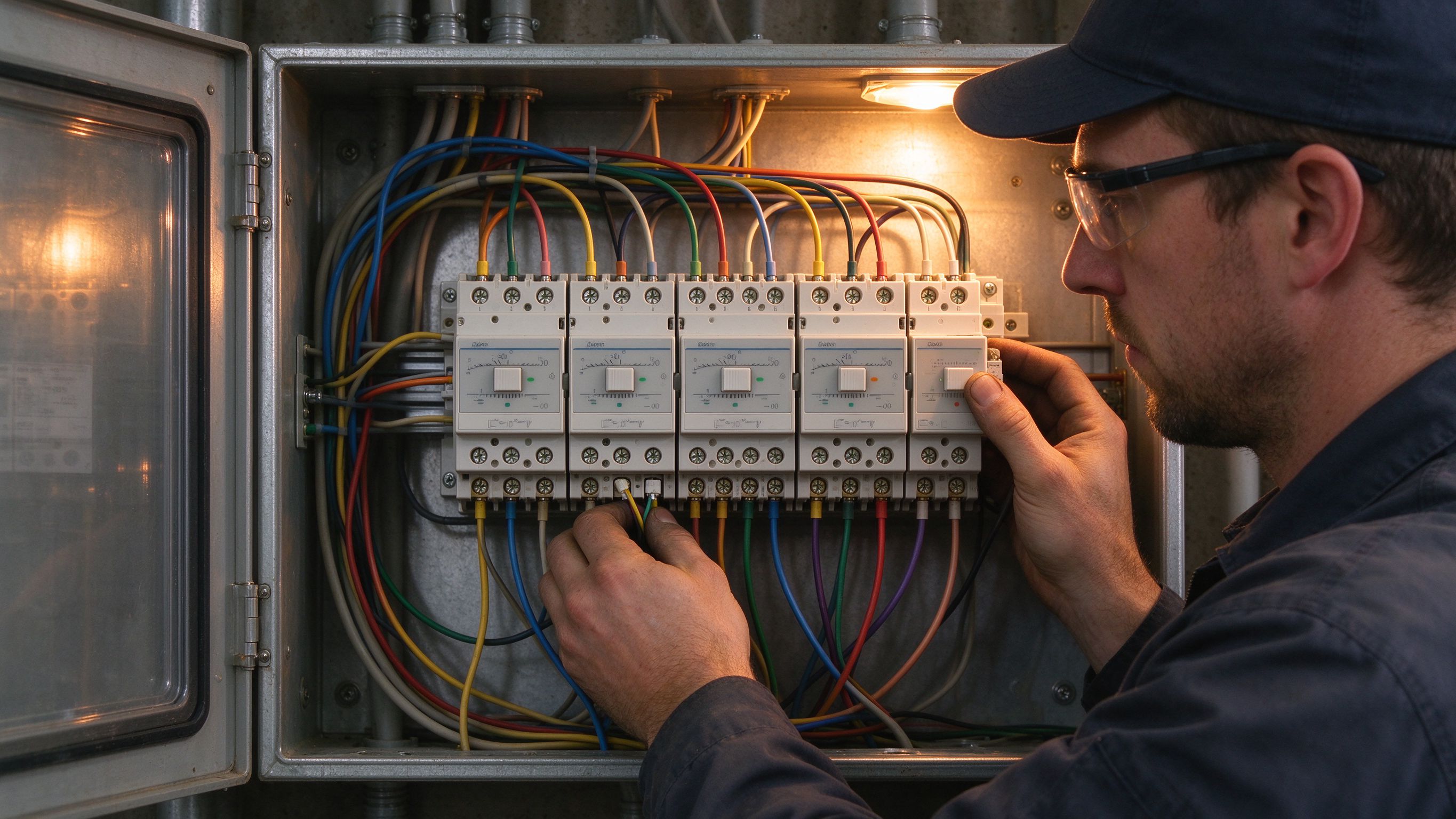
Data & Evidence: What the Factory Verifies
Thermostats are the control brain of a floor heating system, and our factory tests them accordingly (per SunAura factory records):
- Sensor accuracy checks — floor and air probes are calibrated and verified against reference thermometers before release.
- Relay and switching endurance — thermostat relays are cycled on sample basis to verify switching life at rated load.
- Voltage and load rating verification — each model is tested at its rated load (e.g. 16 A/230 V) for switching current and temperature rise.
- Compliance — production runs under ISO 9001, ISO 14001 and ISO 45001 management systems; thermostats are CE marked and assessed for RoHS, LVD and EMC where applicable, with certificates and batch reports on request.
We do not list certificate numbers here — verify the documents for your specific order and market.
Procurement Checklist: What to Send a Supplier
To get a correct thermostat quotation for a zoned system, send the supplier these points:
- Number of zones and rooms — how many independent thermostats you need, and which rooms are grouped.
- Load per zone — watts per zone (thermostat rating must cover the zone load; confirm relay rating, e.g. 16 A/230 V).
- Voltage — 120V, 240V, or low-voltage DC for vehicle/marine builds.
- Sensor requirement — floor probe, air sensor, or dual-sensor (floor + air); state the floor type the probe will be embedded in.
- Control features — touchscreen, WiFi/Tuya app, zonal scheduling, voice assistant compatibility where required.
- Installation format — wall box size, wiring terminals, and whether you need a central controller for the whole floor.
- OEM requirements — branding, packaging, firmware settings, and MOQ for private-label orders.
- Certification and lead time — CE/RoHS documents, batch reports, samples, and delivery window.
SunAura Thermal manufactures a range of single-zone and multi-zone thermostats on the same campus as our heating film, mat and cable, so a full zoned system can be sourced from one factory. For bulk programmes we supply smart thermostats with factory-direct pricing and OEM options.
Wiring and Installation Notes for Zoned Systems
Zoning is decided on paper but delivered in the wiring. Four installation points determine whether the plan works:
- Dedicated circuits per zone. Each zone’s heating load should be on its own circuit with correctly rated overcurrent protection and RCD/GFCI protection in wet areas. A thermostat switching two zones on one circuit limits both to that circuit’s capacity — size the circuits before the panel is finalised.
- Floor probe placement. The floor probe must sit in the heating zone, centred between elements, and be routed to the thermostat in conduit where it crosses expansion joints. Probe position decides accuracy — see our floor probe calibration guide for the field detail.
- Controller rating vs zone load. Check the thermostat’s rated load against each zone’s wattage. A 16 A/230 V thermostat covers roughly 3,600 W — enough for most single rooms, but a large open zone may need a contactor or a higher-rated controller.
- Central control and scheduling. Multi-zone WiFi controllers let all rooms be programmed from one app or wall panel; confirm the number of zones the controller supports before ordering, and whether the zones you plan exceed it.
For a large floor, grouping rooms into a small number of zones (e.g. day zone, night zone, wet zone) often captures most of the saving with far less wiring than one thermostat per room.
How to Check a Thermostat Spec Before Buying
Before comparing prices, check five numbers on any thermostat data sheet:
- Rated load (A at 230V/120V) — must cover the zone’s total wattage.
- Sensor types — floor probe, air, or dual; and the probe cable length supplied.
- Switching type — relay output and its endurance rating; SSR/SCR output for silent switching where relevant.
- Voltage compatibility — 120V/240V AC, or low-voltage DC for vehicle builds; never assume.
- Control features — schedule granularity, WiFi/app support, open-window detection, and the maximum number of zones a central controller can coordinate.
If any of these is missing from the data sheet, treat the quote as incomplete — the same discipline applies when comparing our thermostats with any other supplier’s.
Common Zoning Mistakes to Avoid
Zoned systems fail more often from planning errors than from hardware. The most common ones we see in field reports and installer feedback:
- Zoning by square metres instead of by use. Two adjacent rooms with the same size can have completely different schedules (bathroom vs bedroom). Zone by occupancy and use, not by area symmetry.
- Undersized circuits. Adding a second zone’s load to an existing circuit without checking the breaker and wire rating is the classic electrical mistake. Confirm each zone’s load against its circuit before energising.
- Sensor in the wrong spot. A floor probe placed near a doorway, under a rug, or inside a heating element’s direct path reads a temperature the room never experiences. Position the probe in the middle of the zone, away from edges and heat sources.
- Buying a controller that cannot hold the schedule. Some entry-level thermostats lose schedules on power loss or have no per-zone programming; confirm the model stores its programme and supports the number of zones you need.
- Forgetting the commissioning step. A zoned system must be switched on zone by zone, floor probes checked against a reference thermometer, and the schedule verified before the floor covering is installed. The commissioning guide covers the field procedure.
Getting zoning right at the specification stage is cheaper than any retrofit — the wiring, the sensors and the controller all need to be planned together.
FAQ
How many thermostats do I need for a three-room house? For three rooms with different occupancy and temperature needs, three zone thermostats are the practical answer; if the rooms are one open space, one thermostat may be enough.
Does multi-zone control really save energy? Yes, in practice — the biggest avoidable cost in floor heating is heating rooms nobody uses. Zoning holds empty rooms at setback temperature, and most owners report the zonal thermostat investment pays back within two winters.
Can one thermostat control several heating circuits? Yes — a single-zone thermostat can switch several circuits together through a contactor or a relay, as long as the total load stays within the controller’s rating. That gives zone-level control without one thermostat per circuit.
Do I need a floor probe? For floor heating, yes — a floor probe prevents the floor from overheating and gives accurate floor temperature control. Dual-sensor thermostats (floor + air) are the best fit for most rooms; our range includes both options.
Do smart thermostats make zoning automatic? No — a smart thermostat optimises a zone’s schedule once the zone exists. Zoning is a hardware decision (circuits, sensors, controllers per zone); the app adds convenience on top. Plan the zones first, then choose the smart features.
Can I upgrade from single-zone to multi-zone later? Technically yes, if the wiring was planned for it — but the cleanest path is to decide zoning before installation, because retrofitting sensor runs after the floor is finished is expensive.
Next Step: Count Your Zones, Then Source the Controls
Multi-zone vs single-zone thermostat is decided by how many rooms have different schedules. Count your zones, confirm the load per zone, and send the checklist above to our export team for a factory-direct quotation on the right control layout. When you send the enquiry, include the room list and a rough wattage per zone — our engineers will confirm the controller rating, the sensor layout and the wiring approach for your project, and quote the thermostat package (and the heating elements behind it) as one order. That single-source approach also means the zone capacity and the element wattage are checked against each other before anything ships, which is the kind of verification that keeps field problems out of the finished installation.
Contact us at [email protected] for bulk pricing and OEM thermostat samples.
About the author: Ethan Sun, Founder & CEO, SunAura Thermal. SunAura has manufactured electric heating film, mat and cable in Qingdao, China, for 17 years, supplying CE/RoHS-compliant heating products to more than 50 countries.