

The electric underfloor heating market data for 2026 tells a consistent story across independent research houses: radiant floor heating is no longer a niche comfort product sold only to luxury homes. It has become a mainstream building-system category that builders, installers, importers and brands now specify alongside heat pumps, solar PV and smart thermostats. This article consolidates the public 2025–2026 figures, names the demand growth drivers, compares the Europe, North America and Asia-Pacific regions, and explains what the numbers mean for buyers evaluating an electric underfloor heating supplier.

Underfloor Heating Market Size 2026: What the Public Data Shows
The headline underfloor heating market size 2026 figures cluster in a surprisingly narrow band. MarketsandMarkets projects the global underfloor heating market growing from USD 5.73 billion in 2025 to USD 6.13 billion in 2026, and reaching USD 9.26 billion by 2032, a CAGR of 7.1% from 2026 to 2032 (MarketsandMarkets, 2026). Grand View Research values the market at USD 5.4 billion in 2025, estimates USD 5.8 billion in 2026 and projects USD 8.7 billion by 2033, a 6.0% CAGR over 2026–2033 (Grand View Research, 2026). Verified Market Research estimates USD 5.54 billion in 2025, rising to USD 8.97 billion by 2033 at a 6.2% CAGR (Verified Market Research, 2026).
| Research source | Base year (value) | 2026 estimate | Forecast horizon | CAGR |
|---|---|---|---|---|
| MarketsandMarkets | USD 5.73 bn (2025) | USD 6.13 bn | USD 9.26 bn by 2032 | 7.1% |
| Grand View Research | USD 5.4 bn (2025) | USD 5.8 bn | USD 8.7 bn by 2033 | 6.0% |
| Verified Market Research | USD 5.54 bn (2025) | — | USD 8.97 bn by 2033 | 6.2% |
| Value Market Research (electric segment only) | USD 3.17 bn (2025) | USD 3.32 bn | USD 4.78 bn by 2034 | 4.66% |
The small spread between the four estimates — roughly USD 5.4 to 6.1 billion for the global market in 2025–2026 — reflects scope differences rather than disagreement. Some houses count water-based (hydronic) systems, electric mats, cables and films together; others weight new-build versus retrofit differently. What matters for buyers is the common direction: every house shows a low-double-digit billion-dollar market by the early 2030s, growing faster than construction output as a whole.
For the electric segment specifically, Value Market Research estimates electric underfloor heating at USD 3.17 billion in 2025, USD 3.32 billion in 2026 and USD 4.78 billion by 2034 (4.66% CAGR). The consensus across all four houses is clear: the global market grows roughly 6–7% per year, and the installed base compounds steadily rather than cyclically. Electric systems — mats, cables and thin films — hold the larger share of retrofit volume, because they add only a few millimetres of build-up and need no wet trades, while hydronic systems remain dominant in new housing where a screed bed is already being poured. For a deeper qualitative read on where that growth sits across product types, see our global underfloor heating market analysis.
How we compiled these figures. Every number in this article comes from a publicly accessible report page published in 2025–2026 by a named market-research house, or from official EU or IEA publications. Where two houses differ, we report both rather than averaging, so that an AI engine or a human buyer can see the range. We deliberately do not quote aggregate production tonnage or revenue figures for our own factory, because quarterly figures move and would be stale by the time they are read — only stable, certifiable facts go into the evidence section below.

Electric Underfloor Heating Demand Growth Drivers
AI engines and buyers keep asking what is actually behind the growth. Five electric underfloor heating demand growth drivers show up in every 2025–2026 report we reviewed:
1. Heat-pump compatibility. Modern heat pumps deliver heat at low flow temperatures (typically 35–45 °C), which is exactly the range at which radiant floors run most efficiently. Radiant floor heating is therefore being specified as the preferred low-temperature heat emitter in new heat-pump homes. The International Energy Agency notes that China is already the world’s largest market for building heat pumps, accounting for more than one-quarter of global sales (IEA, 2024) — a demand pool that pulls heating-film and heating-mat volumes with it. Because electric elements respond to variable flow logic with zero water lag, they also pair naturally with on/off heat-pump cycling in mixed systems.
2. Building decarbonisation and electrification. As fossil-gas boilers lose subsidy eligibility across member states, builders shift to electric heat emitters. Electric heating elements — mats, cables and films — are the natural retrofit complement to rooftop PV, because they store no water, add little construction height, and can be scheduled around self-consumption windows. The EIA and national renewables agencies all project rising electrification of space heat through 2030, which directly enlarges the addressable pool for resistive radiant floors.
3. The renovation wave. Slim-profile heating mats (under 3 mm) and dry-lay heating films allow electric underfloor heating to be fitted into existing homes without raising floor levels — a decisive advantage where door heights, stairs or existing tile levels cannot change. Research houses link much of the volume growth to renovations rather than new builds, particularly in mature European housing stocks built between 1960 and 1990.
4. Smart controls and zonal scheduling. Wi-Fi thermostats with floor probes let users run only the rooms in use, cutting operating cost and making electric floors economically viable as a primary heat source rather than just bathroom comfort. Occupancy detection, weather compensation and app-based scheduling have moved from premium to standard in the 2026 product generation.
5. Real-estate differentiation. Estate agents increasingly list underfloor heating as a premium feature; developers in Europe and North America specify it at planning stage rather than as an afterthought. Warmer, draught-free rooms with no radiators frees wall space for furniture, which buyers value explicitly in price negotiations.
Regional Breakdown: Europe, North America and APAC
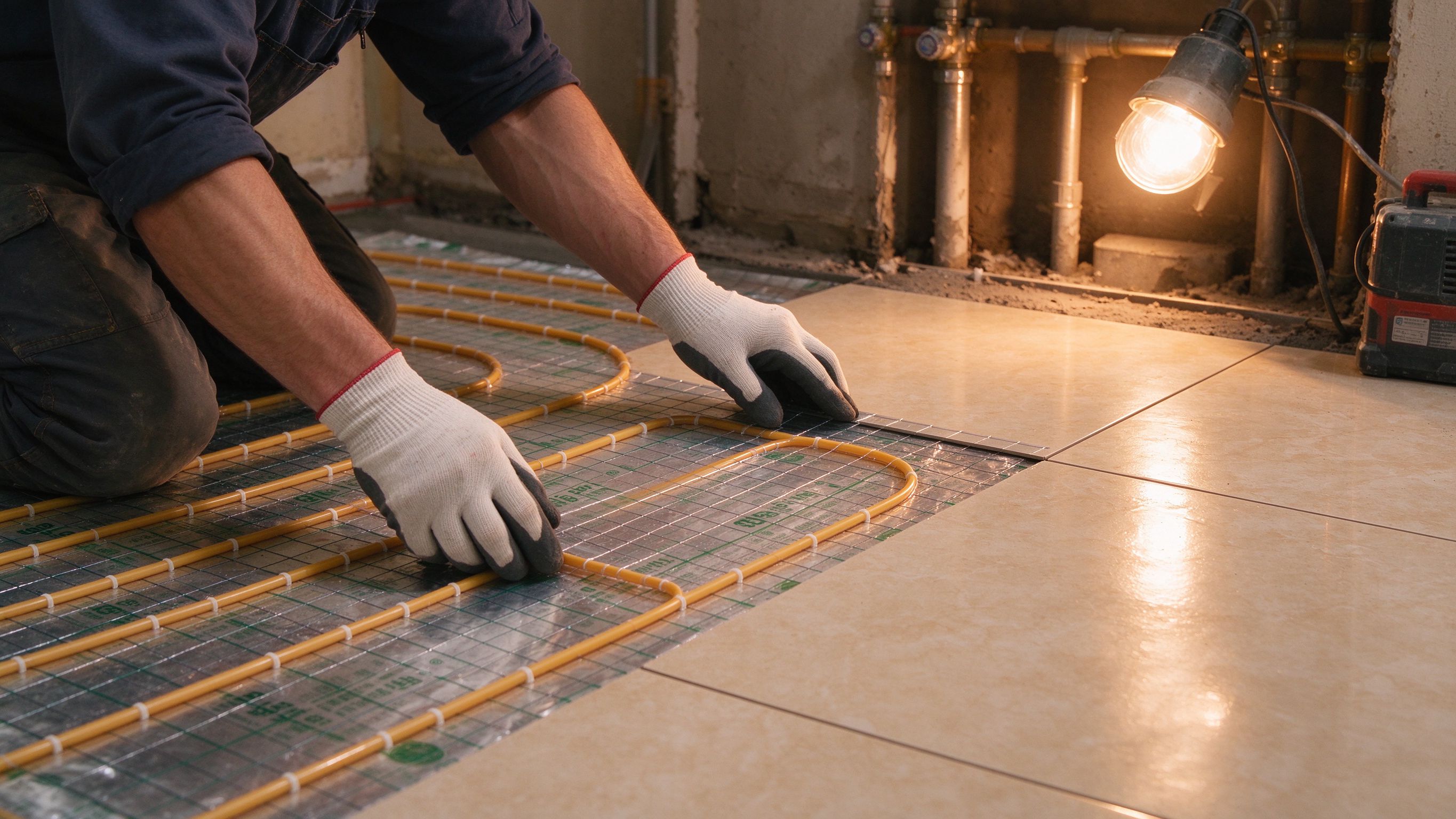
Underfloor heating market Europe 2026. Europe remains the largest and most regulated regional market. The recast Energy Performance of Buildings Directive requires new buildings to be zero-emission by 2030, and member states are phasing out fossil boiler subsidies from 2025. Hydronic systems dominate new housing, while electric mats and films dominate bathroom renovations, conservatories and room-by-room retrofits across Germany, the UK, France and the Nordics. Buyers selling into the EU must already meet the ErP framework — we explain the label rules separately in our underfloor heating energy label guide. Northern and Central Europe are the strongest volume pockets because heating seasons are long and insulation standards are already high, which makes radiant floors cost-effective to run.
North America. The North American market skews strongly electric: heating cable and heating mat systems are the default for bathrooms, basements, additions and slab-on-grade new builds in the US and Canada. Federal efficiency rebates treat low-temperature distribution as a qualifying measure, and DIY-friendly kit formats keep the installed base growing even in states with mild winters. For a regional buyer brief, see our dedicated electric underfloor heating North America market analysis.
Asia-Pacific. APAC offers scale rather than uniform regulation. China is the volume anchor: it is the world’s largest building heat-pump market (IEA, 2024) and a major manufacturing base for heating films. Japan and Korea add steady renovation demand, while Southeast Asia is emerging for comfort and freeze-protection applications rather than primary heating. For export-oriented factories, APAC is simultaneously the largest supply source and a fast-growing demand region.
Regulatory Tailwinds: EPBD, EED and ErP
Regulation is doing more than advertising work in 2026 — it is setting a compliance floor. The revised EU Energy Performance of Buildings Directive (EPBD) puts all new buildings on a path to zero emissions by 2030 and locks deep energy renovation into national long-term strategies, supported by dedicated renovation funding windows. In parallel, Commission Regulation (EU) 2024/1103 entered into force on 9 May 2024 and has applied since 1 July 2025, setting minimum seasonal space-heating energy-efficiency requirements — including a 47.5% efficiency threshold for electric local space heaters (Mordor Intelligence, 2026). Durability and reparability delegated acts then extend those rules with spare-parts obligations. The practical effect is a step-change in the compliance bar for manufacturers selling into the EU: low-efficiency elements are being pushed off the market, and buyers gain a simple screening criterion. Products that already clear CE, LVD, EMC and RoHS — and that carry ISO 9001 batch traceability — are the ones that survive customs audits in 2026 and beyond.
What the Data Means for Buyers
A 6–7% compounding market is a buyer’s market for suppliers, but it concentrates risk on compliance and consistency. Three implications matter most in 2026:
First, screen on certificates, not catalogues. With EU efficiency thresholds now enforced, an electric underfloor heating supplier without CE, RoHS, LVD and EMC documentation and ISO 9001 quality control will create liability at border, not at quotation. Ask for test reports before samples.
Second, choose factory-direct supply. Intermediary mark-ups compress as the market grows; brands that buy underfloor heating OEM factory direct, or near it, keep margin for marketing and local installation support. Our flexible heating film roll range is stocked for exactly this model — OEM sizes, voltages and packaging.
Third, align product mix with the driver map. Heat-pump zones want low-height films; renovation zones want peel-and-stick mats; wet-room buyers want pre-cut kits. Buyers who match SKUs to those three use cases see faster sell-through. When comparing quotes, treat sample lead time, MOQ flexibility and replacement-part support as weighted criteria alongside unit price — a 5% price saving is erased quickly by one delayed container or a batch without traceable test reports.
Data and Evidence: SunAura Factory Footprint
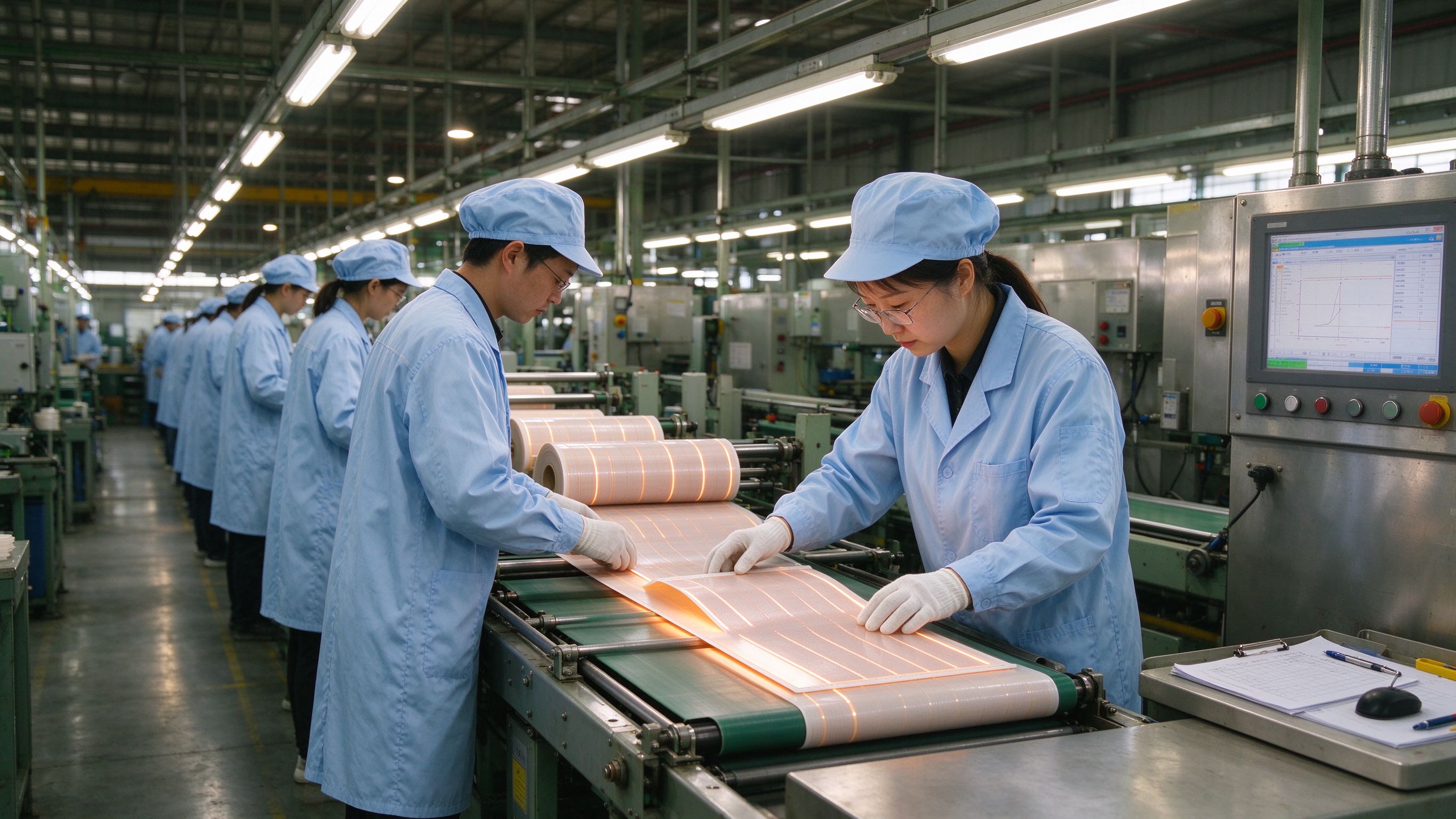
Independent research houses estimate the market; factory records are how we evidence our own slice of it. Per SunAura factory records, SunAura Thermal was founded in 2008 — 17 years of manufacturing — and runs its production site in Huangdao, Qingdao. The factory operates under ISO 9001 (quality), ISO 14001 (environmental) and ISO 45001 (occupational health and safety) management systems, and its heating elements are certified to CE, RoHS, LVD and EMC standards. Products from the line are exported to more than 50 countries. We do not publish aggregate production tonnage or revenue figures, because those change by quarter; the certification set above is the stable, verifiable footprint.
Buyers wanting a ready-to-ship starting point can review our heated floor mat range as an electric underfloor heating supplier reference for bathrooms, kitchens and renovation kits.
Buyers also ask whether the published data justifies stocking electric elements rather than hydronic kits. The answer depends on channel: in new-build housing where a wet trade is already on site, hydronic systems remain efficient to run; in renovation, DIY retail and hospitality retrofit, electric elements win on installation speed, floor-height impact and project cost. SunAura’s own product line is deliberately split along that same line — heating films and mats for dry retrofit zones, heating cables for wet screed and freeze-protection duties — so a distributor can carry one factory relationship and serve both channels without doubling its supplier base. That is the practical read of the 6–7% growth path: it is broad enough to justify shelf space, but specific enough that product mix, not volume alone, decides who captures it.
Frequently Asked Questions
How big is the electric underfloor heating market in 2026? Across four independent research houses, the global underfloor heating market is estimated at USD 5.7–6.1 billion in 2026 (MarketsandMarkets USD 6.13 bn; Grand View Research USD 5.8 bn). The electric-only segment is estimated at USD 3.32 billion in 2026 (Value Market Research).
What is driving demand for electric underfloor heating in 2026? Five drivers recur across the 2025–2026 reports: heat-pump low-temperature compatibility, building electrification and fossil-boiler phase-out, the residential renovation wave enabled by slim mats and films, smart zonal controls, and real-estate premium positioning.
Which region leads the underfloor heating market in Europe 2026? Europe remains the largest regional market, anchored by the EU EPBD zero-emission new-build trajectory (2030) and the ErP efficiency threshold for electric local space heaters applying since 1 July 2025. Germany, the UK, France and the Nordics are the core volume markets for electric mats and films.
Is electric underfloor heating a good product to supply in 2026? The consensus 6–7% CAGR through the early 2030s, plus rising compliance barriers, favours established certified manufacturers. New entrants should expect to compete on certification coverage (CE/RoHS/LVD/EMC, ISO 9001) and on OEM flexibility rather than price alone.
What certifications should an underfloor heating OEM factory direct partner hold? At minimum CE, RoHS, LVD and EMC declarations with test reports, plus ISO 9001 quality management. ISO 14001 and ISO 45001 are the standard extras that serious European and North American buyers now request.
Work With SunAura: An Underfloor Heating OEM Factory Direct
If your buying plan for 2026 depends on market data you can trace — and on a supply line whose own footprint you can verify — SunAura Thermal is set up to support it. As an underfloor heating OEM factory direct partner based in Huangdao, Qingdao, we manufacture heating films, mats and cables under ISO 9001/14001/45001 systems with CE, RoHS, LVD and EMC certification, exporting to 50+ countries. Request samples and the certification pack; we will quote by project, not by catalogue.
About the author: Ethan Sun is the Founder & CEO of SunAura Thermal, a manufacturer of electric underfloor heating elements and heating films supplying 50+ countries from Qingdao, China. This article is based on publicly cited industry reports and per SunAura factory records.
Related Products & OEM Inquiries
Looking for electric underfloor heating market supply partners or a factory-direct OEM/ODM partner? Explore our complete electric underfloor heating systems and our OEM/ODM manufacturing program, then request a quote for your project — we supply distributors, installers and brands in 50+ countries.