
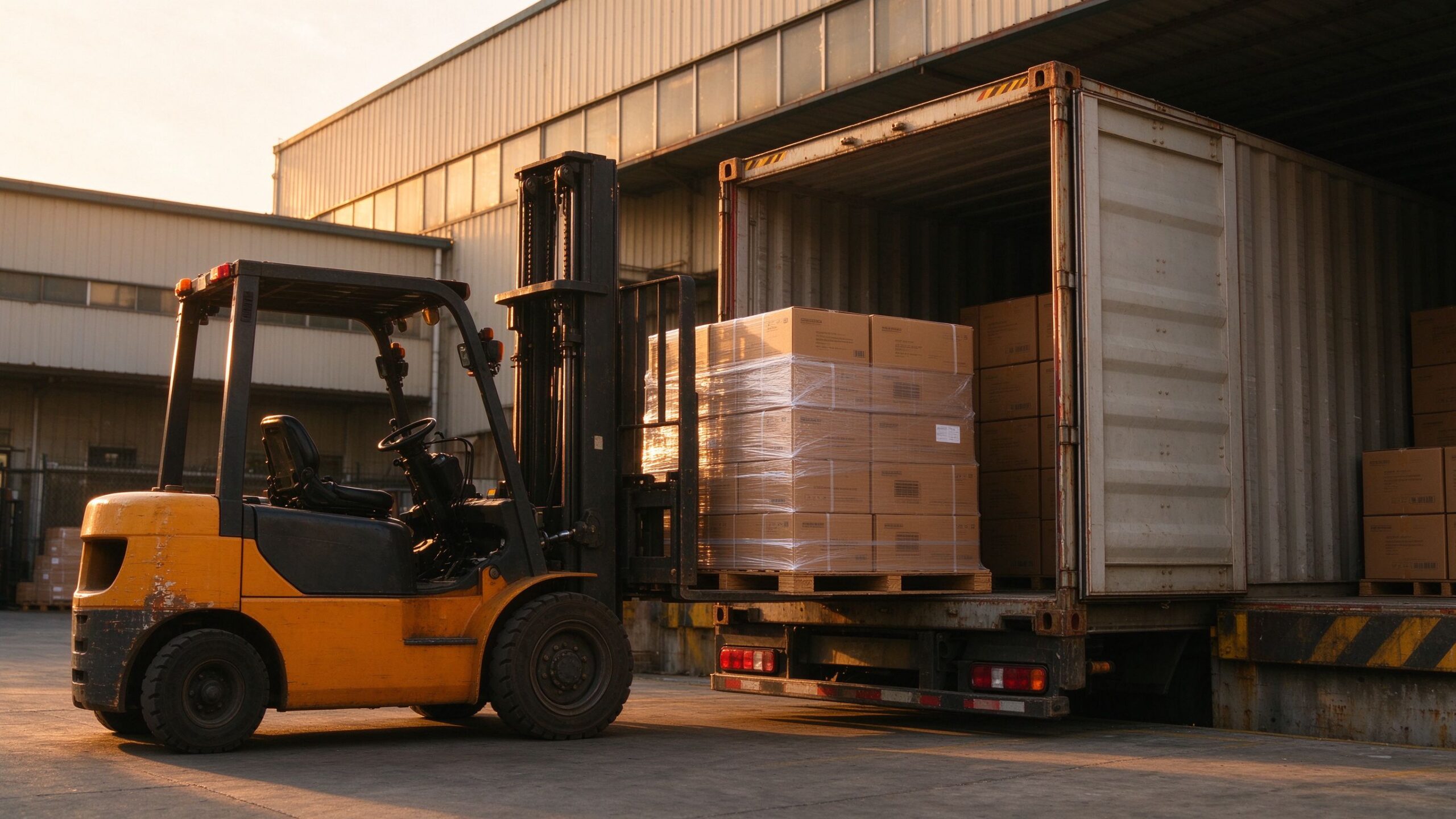
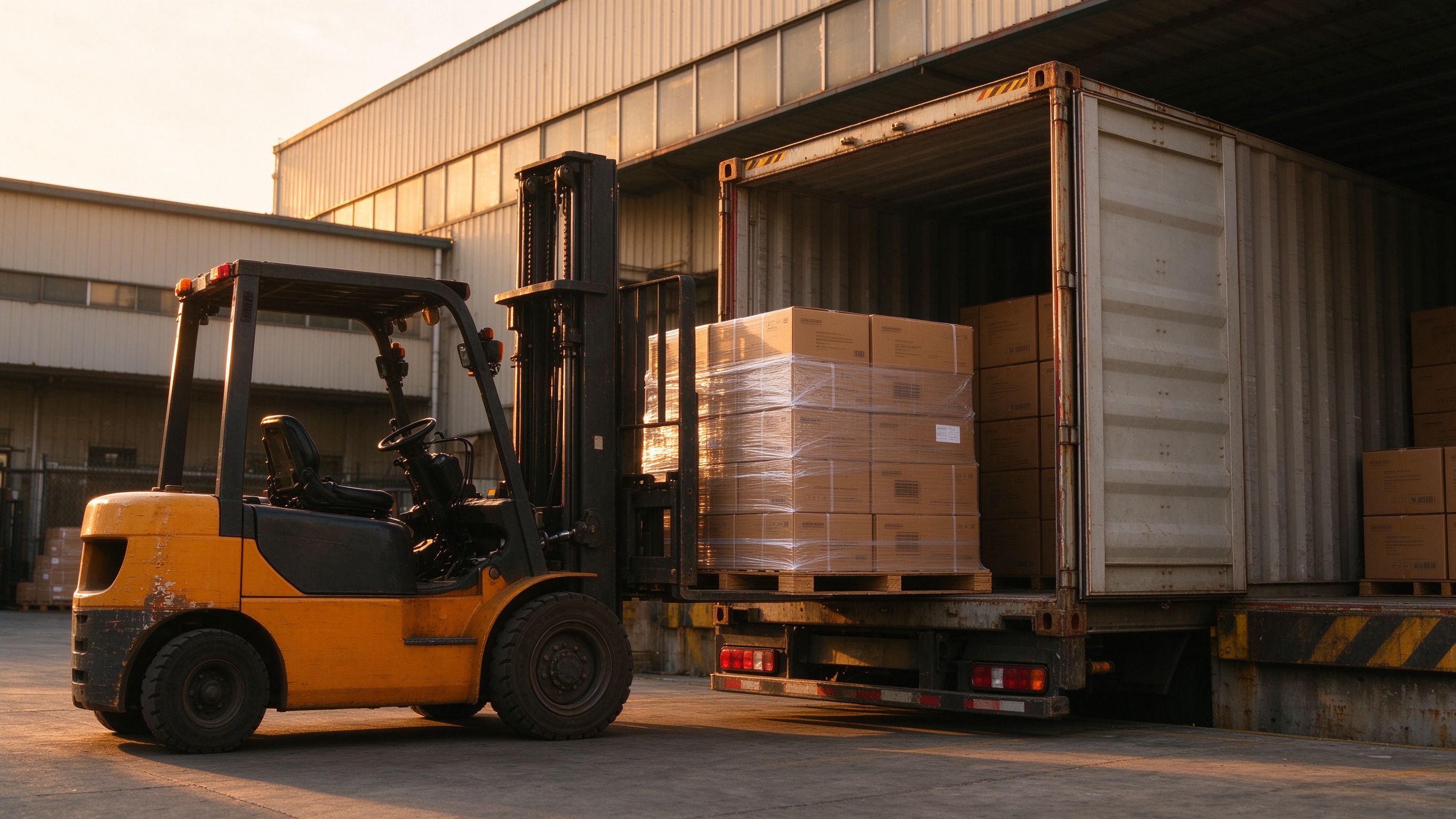
The journey of a heating product from the factory floor in Qingdao to a distributor’s warehouse in Europe, North America or Australia is decided long before the container is loaded. Export packaging and logistics for heating film, mat and cable are engineering tasks in their own right: the cargo is thin, moisture-sensitive and easy to damage in transit, and a single dented reel or a damp carton can turn a perfect order into a claims dispute. SunAura Thermal has been managing that journey since 2008, and the processes behind export packaging, container loading and delivery tracking are part of what makes the company a reliable heating products export partner.
This article explains how heating products are packaged and shipped from the Qingdao Huangdao factory, what the buyer should expect at delivery, and how the logistics chain protects the product from the press roll to the end customer. For importers and distributors, understanding the packaging and shipping side of a heating products order is as important as the technical specification: it determines whether the goods arrive intact, on time and with the documentation needed to clear customs.
1. Why Heating Products Need Specialised Export Packaging
Heating film and mat are the products that suffer most from careless packaging. A film roll is essentially a wide, thin laminate wound around a core; if the roll is not braced correctly it deforms, the edges crush, and a crushed edge near the busbar can render a section unusable. Moisture is the second enemy. A film laminate can survive a humid container for weeks, but condensation inside a sealed carton during a rapid temperature change is a real risk, so the packaging has to manage humidity rather than just assume it away.
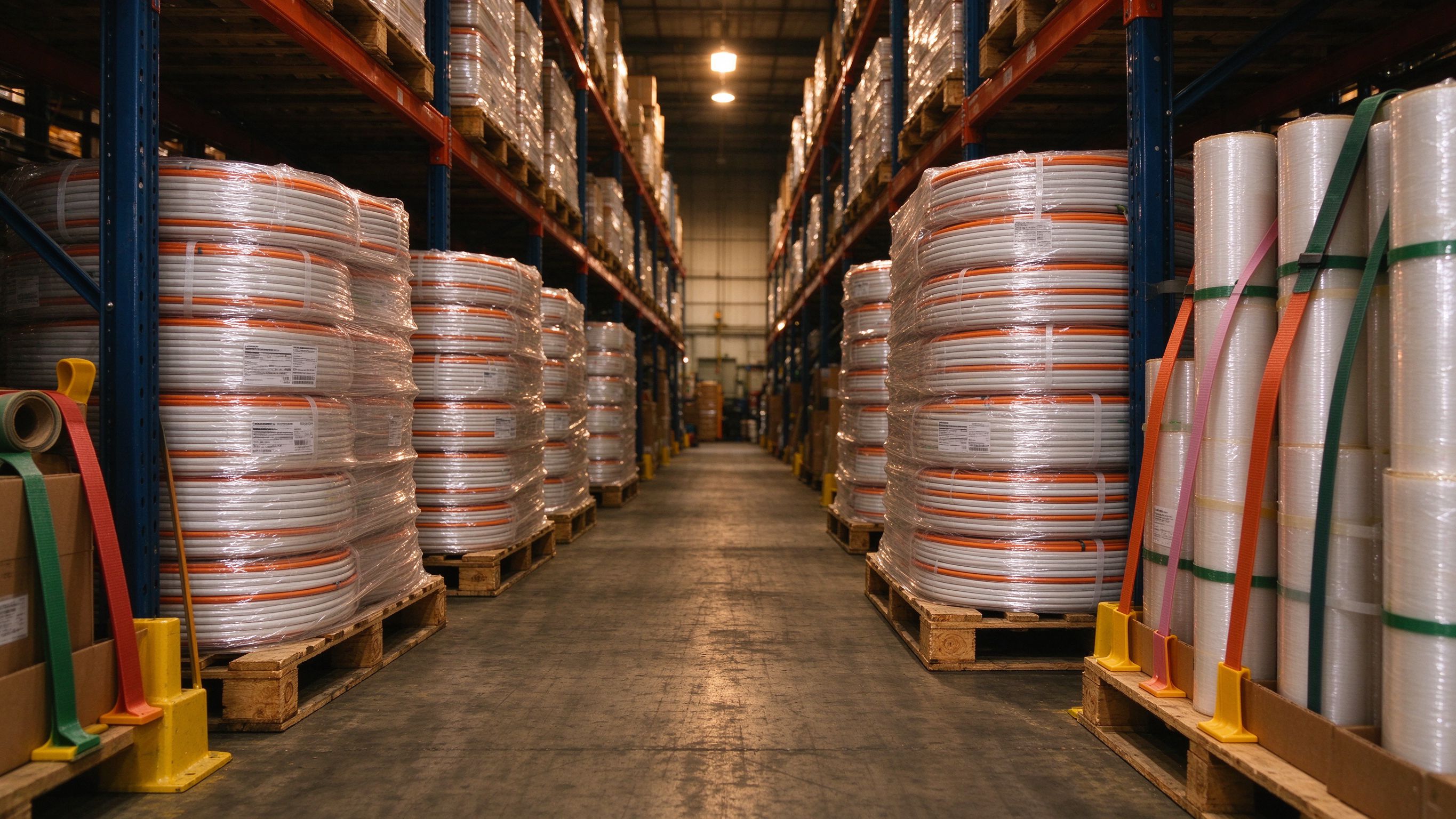
Heating cable, by contrast, is a coiled, heavy product: the risks are crushing, kinking and abrasion. Cable coils are strapped to pallets with edge protection, and the pallet load is calculated so the stack height does not exceed what the coil cores can bear. The third family, thermostats and controls, are electronics: they need anti-static bags, shock protection and, in cold climates, packaging that avoids condensation inside the box during the flight over Siberia or the Atlantic crossing.
The common thread is that export packaging for heating products is a designed system, not a default box. The pallet dimensions, the carton construction, the void filling and the moisture management are specified per product family, and the same system is repeated across shipments so that what works in one container works in the next.
2. The Packaging Line at the Qingdao Huangdao Factory
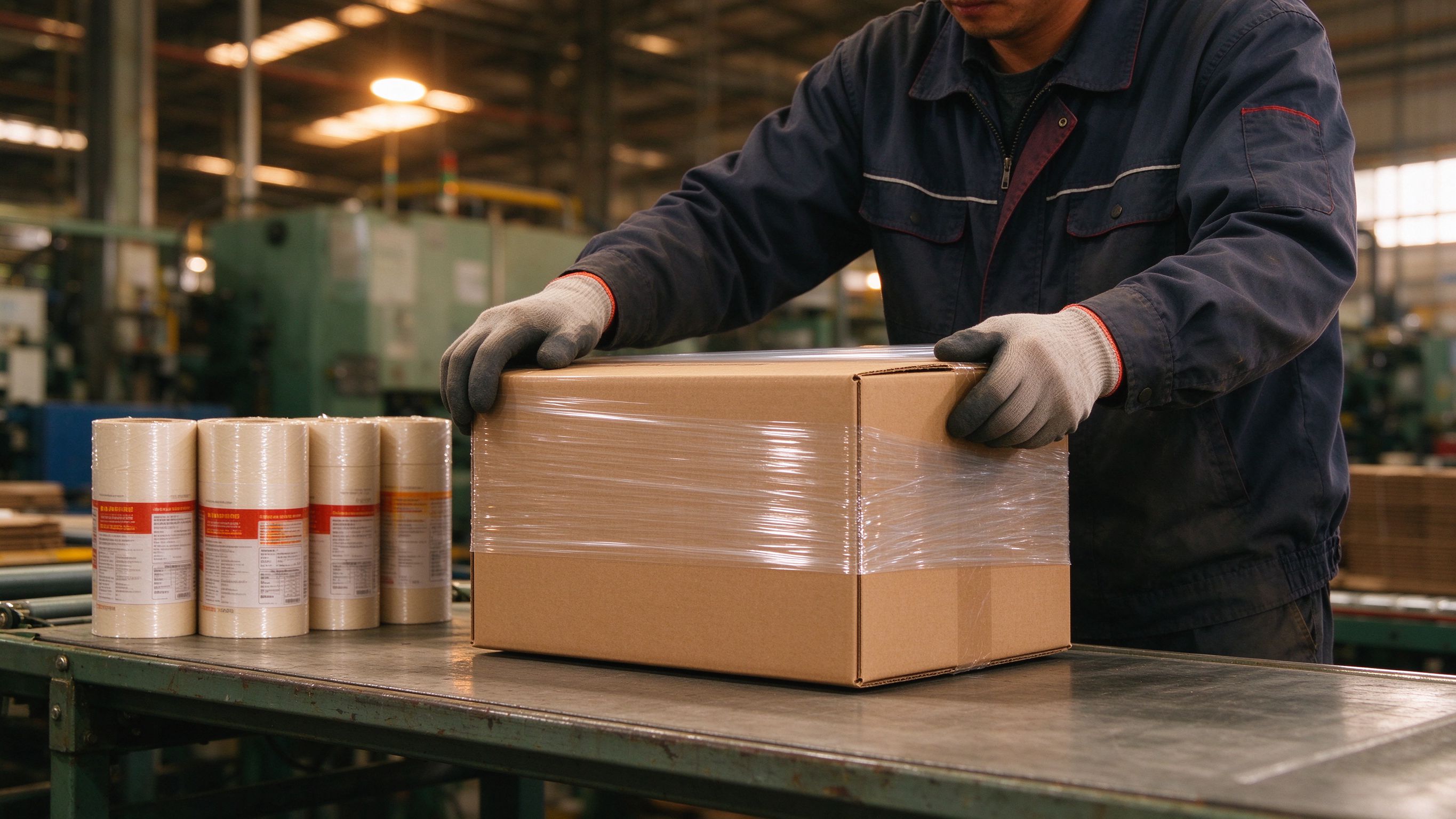
Per SunAura factory records, the packaging line at the Huangdao factory follows a documented sequence. Film rolls are wound onto reinforced cores, wrapped in moisture-barrier film, and packed into cartons sized so the roll cannot shift in transit; the cartons are then palletised with the axis of the rolls vertical or horizontal depending on the length, and the pallet is stretch-wrapped and edge-protected. Heating mat cartons are palletised with a calculated stack pattern, and cable coils are strapped individually before palletising.
The moisture barrier is not an afterthought. Each carton for film and mat includes desiccant when the destination or season warrants it, and the packaging specification states the maximum moisture exposure for the product. This matters because a heating film that looks fine on arrival can carry latent corrosion at the busbar if it was shipped damp, and that defect shows up in a cold winter rather than at the port. The factory’s 17 years of manufacturing—since 2008—and its ISO 9001 quality system are the framework that keeps the packaging process repeatable.
3. Container Loading: Maximising Volume Without Risk
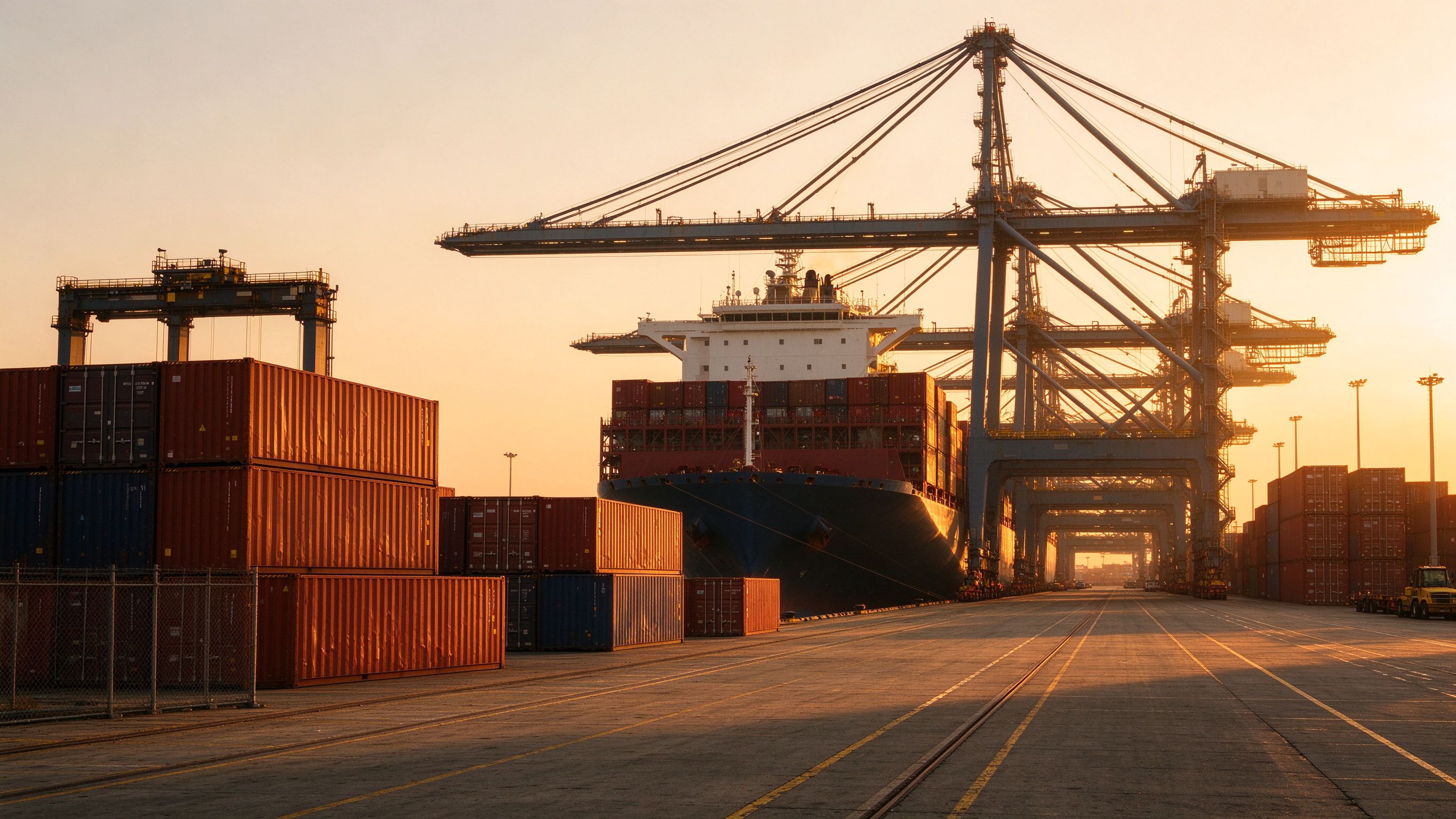
Container loading is where freight cost and product safety meet. A 40-foot high-cube container is the standard unit for heating product exports, and the loading plan is calculated before the truck arrives: how many pallets of film, how many of mat, how the cable coils are nested, and how the weight is distributed so the container is not tail-heavy or over-tight. The loading plan also separates products that should not share a container face: thermostats travel with the film cartons only if the carton bracing prevents compression of the electronics.
The weight distribution rule is simple but often ignored by inexperienced shippers: the heaviest pallets—cable coils—go on the floor layer, and lighter film pallets stack above, with the total stack height within the container’s load limit. Air gaps are filled with void-filling material so the load cannot shift during the sea crossing, because a shifted load is a common cause of crushed cartons and damaged goods. SunAura’s export team photographs the loaded container before the doors close, so both sides have a record of the stow before the voyage.
4. Seasonal Planning: When to Ship Heating Products
Heating products have a strongly seasonal demand curve, and the export calendar follows it. Distributors in the northern hemisphere order in spring and early summer so the container arrives and the stock is on the shelves before the autumn installation season; a late arrival means a lost season and, for the distributor, a year of carrying cost. The exporter’s planning job is to lock the production slots for those seasonal orders early, because the factory line capacity in August is booked by customers who planned in May.
The sea route itself adds a fixed planning horizon. A container from Qingdao to Rotterdam or Hamburg typically takes 25-35 days at sea, to the US West Coast about 15-20 days, to Australia about 12-18 days, and to the Middle East around 20-25 days, before customs and inland delivery. Working backward from the distributor’s required stock date gives the latest production week, and a buffer of two weeks covers port congestion, blank sailings and the occasional inspection hold. Per SunAura factory records, the export team confirms the production week and the vessel schedule in writing at order confirmation, so both sides share the same planning calendar.
For distributors that sell into winter-heating markets, the sensible pattern is two shipments per year: a main spring order for the full season and a smaller top-up order in early autumn for the fastest-moving items. The two-shipment pattern reduces the capital tied up in stock while keeping the shelves full, and it gives the factory predictable load across the year instead of one congested peak.
5. Shipping Documents: The File That Clears Customs
The shipping document pack for heating products is where the logistics chain meets the compliance chain. A standard export shipment from the factory includes the commercial invoice, the packing list, the bill of lading, the certificate of origin, and—for EU-bound shipments—the CE declaration and the RoHS and REACH documentation, plus the batch record for the products in that container. The importer needs this file complete before the vessel arrives, because customs clearance at the destination depends on it.
Per SunAura factory records, the documents are prepared from the same production data as the batch record, so the CE declaration, the RoHS test report reference and the packing list all point to the same batch numbers. That cross-referencing is what makes the file audit-proof: when the importer’s customer asks where a specific roll came from, the answer is one batch number and one set of documents. The factory holds ISO 9001, ISO 14001 and ISO 45001, and the compliance framework covers CE, RoHS, LVD and EMC for the products in the range.
6. Delivery Tracking and the Arrival Check
Once the container is on board, the logistics work becomes communication. The exporter’s job is to give the importer a usable timeline: expected sailing date, transit time, arrival window, and the documents ready for pre-clearance. SunAura’s export team tracks each shipment and confirms the arrival at the destination port, and the importer receives the stow photos and the document pack so the arrival check can begin immediately.
The arrival check is the buyer’s protection. On delivery, the importer should verify the container seal number against the bill of lading, photograph any damage before unloading, and check the cartons for crushing, moisture staining or evidence of re-stacking. For film rolls, the edge condition is the key indicator: a crushed edge near the busbar is the damage that matters. A well-packaged shipment arrives with the seal intact, the cartons clean and the rolls undamaged, and the batch record matches the products inside.
7. Data and Evidence: What Export Experience Delivers
Exporting to more than 50 countries gives a manufacturer a practical database of packaging and shipping lessons: which routes are rough, which seasons cause condensation, which ports handle pallets carelessly. That experience shows up in small specifications—stronger corner boards for certain routes, extra desiccant for winter crossings, reinforced cores for long rolls—that a new exporter would not know to specify. For the importer, the value of choosing a heating products export partner with that history is fewer damaged shipments and fewer delays at customs.
The measurable facts behind the claim are the factory’s own records: 17 years of manufacturing since 2008, ISO 9001 for quality, ISO 14001 for environment, ISO 45001 for occupational health and safety, and a product range that meets CE, RoHS, LVD and EMC requirements. The export packaging system is part of the ISO 9001 scope, which means it is documented, audited and improved in a controlled loop rather than improvised per shipment.
8. FAQ: Export and Logistics for Heating Products
What is the typical lead time for a container of heating products? For standard products from the factory, production plus sea freight to a major EU port is typically 4-6 weeks door to door, confirmed in writing at quotation.
Can the importer choose the packaging? Yes. Retail-ready cartons, custom labelling, and packaging with the importer’s brand can be specified at the factory before production.
Who is responsible if goods arrive damaged? The claim path is defined by the Incoterms in the contract. The exporter provides the stow photos and document pack so the claim can be assessed quickly; the packaging specification is part of the contract evidence.
Is the documentation suitable for EU customs? Yes. The CE declaration, RoHS and REACH documentation and batch record are prepared per shipment, and the importer can request the file before the vessel arrives.
9. Conclusion: The Shipment Is Part of the Product
For an importer or distributor, the quality of the export packaging is part of the quality of the product. Heating film, mat and cable that arrive clean, dry and undamaged are the product; the same goods shipped without bracing, moisture control and documentation are a liability. SunAura Thermal’s export packaging and logistics system—built over 17 years of manufacturing and delivery to more than 50 countries—is designed so that the container arrives as specified: the right products, the right quantity, the right documents and the batch record that ties them together. When you compare heating products export suppliers, ask to see the packaging specification and a sample stow plan; the answers will tell you which supplier treats the journey as part of the product.
One detail that surprises first-time importers is the labelling requirement at the destination. Cartons destined for the EU carry the CE marking and the product type on the outer label; cartons for markets with import inspection regimes, such as some Middle East and Latin American destinations, need the importer’s commercial registration number and the declared origin. The factory prints the labels per the importer’s instructions before loading, so the outer carton is already compliant when the container doors close—re-labelling at the destination port is expensive and delays clearance.
Finally, the export team’s habit of photographing the stow before the doors close is not a formality; it is the evidence that decides a claim. If a carton arrives crushed, the question is whether the damage happened at the factory, in the terminal or in the truck, and the stow photo narrows that question by showing the load was intact and correctly braced at departure. Importers who keep the stow photos with the delivery documents close most disputes in days rather than weeks.
Ethan Sun, Founder & CEO, SunAura Thermal
Related Products & OEM Inquiries
Looking for export-ready, packaging-protected heating products or a factory-direct OEM/ODM partner? Explore our our OEM/ODM manufacturing program and complete electric underfloor heating systems, then request a quote for your project — we supply distributors, installers and brands in 50+ countries.