
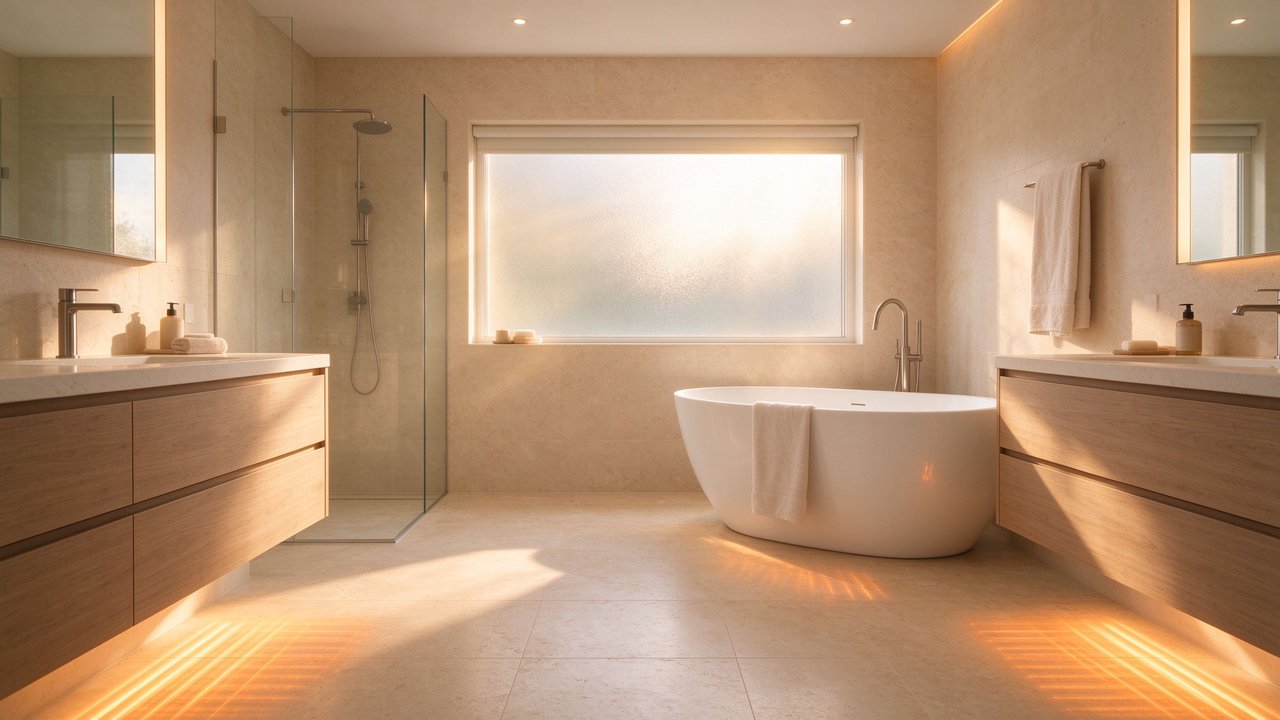
Electric underfloor heating is one of the most asked-about upgrades in modern homes, and installers hear the same questions on every site visit. This underfloor heating FAQ gathers 40+ real questions from homeowners, contractors and specifiers, covering installation, running cost, safety, maintenance and buying. Whether you are retrofitting a bathroom or sourcing for a multi-room project, the answers below are written to be practical rather than theoretical. Where figures are given, they reflect typical European residential practice and SunAura factory records from our Qingdao Huangdao plant, where we have manufactured heating elements since 2008 and exported to more than 50 countries. Bookmark this page as your reference for electric underfloor heating questions and answers before your next quote.
Underfloor Heating Installation Questions
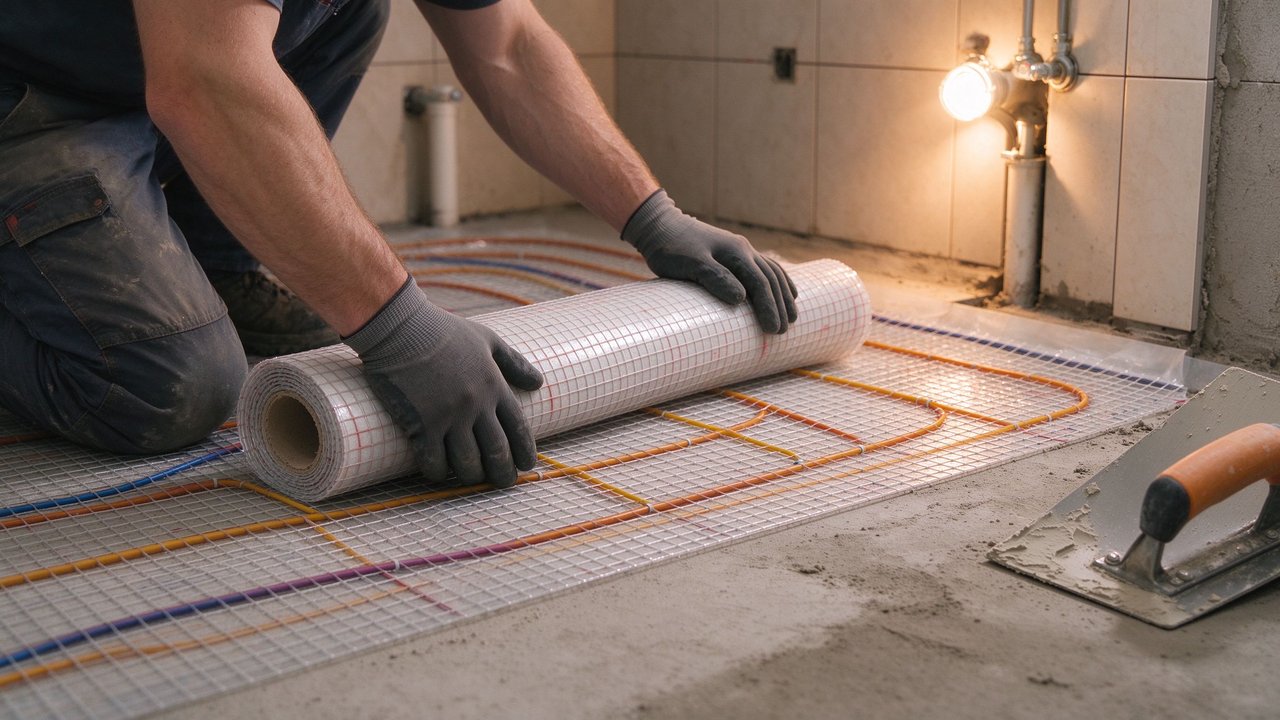
Can underfloor heating be installed in an existing home? Yes. Electric systems are far better suited to retrofits than wet water systems because they need almost no pipework or manifold. A heating mat or film can be laid directly over the existing subfloor, under tile, vinyl, laminate or carpet, and typically adds only 3 to 8 mm of height. The main constraint is floor build-up height and door clearance, not structure. Bathrooms, kitchens and hallways are the most common retrofit rooms. For larger whole-house projects, water systems may still be preferred, but room-by-room electric retrofits are normally completed in one or two days per room. Our step-by-step tutorial answers further underfloor heating installation questions on mat layout, spacing and tiling.
What is the best floor covering for electric underfloor heating? Tile and stone conduct heat best and feel warmest underfoot, so they are the premium choice in bathrooms and kitchens. Laminate and engineered wood work well with heating film or mats if the manufacturer approves underfloor heating and the underlay tog rating is low. Luxury vinyl tile (LVT) and SPC are also popular because they are thin and thermally conductive. Carpet is possible but must be low-tog, under 1.5 tog, or the system loses efficiency. Always check the flooring manufacturer’s heat-output limit, typically around 100 W/m2 for wood-based products.
How much height does underfloor heating add to the floor? Thin electric heating mats and films add only 3 to 5 mm including the bonding adhesive, which is why they dominate retrofit projects. A heating cable in screed adds 30 to 50 mm of screed depth, while water systems typically add 65 to 100 mm including insulation and pipe. For renovation where door clearance is tight, the ultra-thin mat or aluminum film route is usually the only practical option. Measure door swings, skirting levels and existing floor outlets before ordering, because raising the floor even 5 mm can mean trimming doors.
Do I have to heat the whole room? No, but you should heat the floor area that is actually used. Furniture fixed to the floor, such as baths, kitchen units, showers and wardrobes, should not have heating beneath it, because heat cannot escape and the element can overheat. Open floor areas in the middle of the room are ideal. Most installers leave 10 to 15 cm of clearance around fixed furniture and 5 cm around walls. Calculate heat output on the heated area, not the total room area. A typical bathroom design uses 150 to 200 W/m2, while a lounge uses 100 to 150 W/m2.
Can I lay underfloor heating under kitchen cabinets? No. Never install heating elements directly under fixed kitchen units, built-in ovens, dishwashers or bathtubs. These objects trap heat against the element, creating a hot spot that shortens the heating layer’s life and can damage the flooring. You may run the mat or film around the cabinets, leaving a margin of 10 to 15 cm. Free-standing furniture such as dining tables and sofas is less of a problem, but heavy items with feet that touch the floor still reduce heat output and should be planned into the layout drawing before purchase.
How far apart should heating cables be spaced? Spacing is set by the system’s wattage and room requirement, not by guesswork. A 150 W/m2 room using a 10 W per metre cable means about 6.7 cm spacing, while a 200 W/m2 bathroom uses closer spacing. Pre-made heating mats fix this spacing for you, typically 5, 7.5 or 10 cm centres, so installers unroll rather than hand-lay cable. Never cut or resize the heating element itself. Plan the layout so the floor sensor probe sits between two cables, and keep spacing even, because clustered cables create warm patches and cold gaps homeowners complain about later.
Do I need insulation under electric underfloor heating? You should insulate, especially on ground floors and over unheated garages. A foil-faced insulation board or reflective barrier stops heat disappearing downwards and can reduce running losses by 15 to 25%. Above a heated room, insulation is less critical but still recommended because it speeds warm-up and improves comfort. Electric heating film systems often use a thin aluminum backing that reflects radiant heat upward. Under tile wet installations, use cementitious insulation boards rated for wet areas. Poor insulation is the single most common reason owners feel their system is expensive to run.
What should I do before screeding over heating cable? First test the element with a megohmmeter for insulation resistance and record the reading, typically over 100 MOhm, before and after screeding. Lay the cable or clip it to the reinforcing mesh at the designed spacing, keeping the cold tail away from sharp bends. Embed the floor sensor probe in a conduit between two runs so it can be replaced later if it fails. Pour screed in one go and avoid walking on cable while it is uncovered. Do not energise until the screed has fully dried, usually 21 days for a sand-and-cement mix, and keep as-installed readings for the warranty file.
How long does installation take in one room? A typical bathroom retrofit takes one to two days: half a day for the heating mat, sensor and thermostat wiring, and the rest for tile adhesive and tiling. Laying the element itself is fast, and it is the adhesive drying and tiling that consume time. A whole-house new build with cable in screed may take a week including the screed cure. Electric film over insulation board under laminate can be completed in a single day per room. Always schedule commissioning after the floor covering is fully installed and cured, not on the same day as tiling.
Can I put underfloor heating in a bathroom or wet room? Yes, bathrooms are the most common application for electric underfloor heating. The system must be wired by a qualified electrician with RCD protection, and the thermostat must be suitable for the zone, usually installed outside the splash area. Heating mats for tile are waterproof once encapsulated in tile adhesive. Floor sensors are mandatory in wet rooms because tile temperature must be controlled directly. Per SunAura factory records, our bathroom heating mats ship with CE, RoHS, LVD and EMC compliance documentation for EU projects.
Should I test the heating element before covering it? Absolutely. This is the single most important commissioning step. Measure cold resistance with a multimeter and insulation resistance with a megohmmeter before tiling, before screeding, and after the floor covering is laid. Record all three readings on handover. If resistance drifts or insulation resistance drops below 100 MOhm, stop and inspect. A fault found before the floor is finished is cheap to fix; the same fault found after tiling means lifting the floor. This is why professional installers never energise or bury an untested element.
Running Cost and Energy Questions
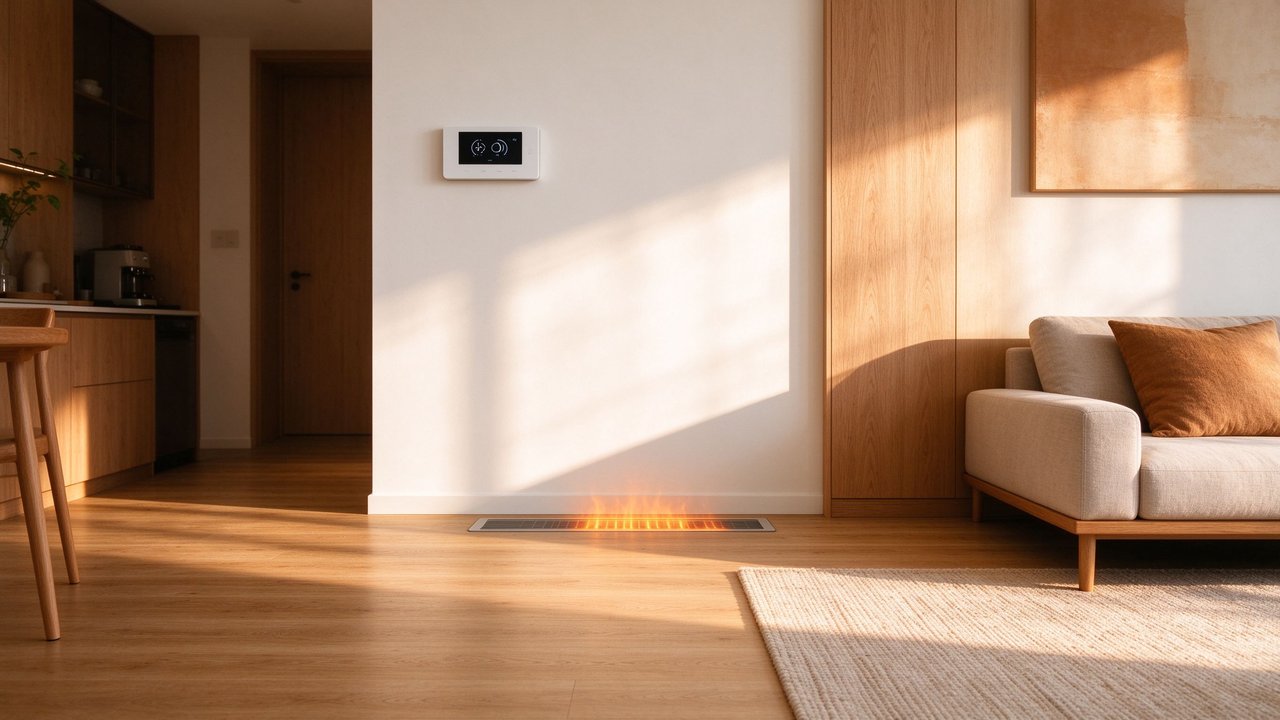
Is electric underfloor heating expensive to run? It depends on room use and tariff, not on the technology itself. Electric underfloor heating is 100% efficient at the point of use, because every kilowatt drawn becomes heat in the room. In a well-insulated bathroom heated for one to two hours a day, running cost is modest. The cost driver is heated floor area and tariff: at 0.30 per kWh, a 5 m2 bathroom at 150 W/m2 running two hours costs about 0.45 a day. Compare figures for your own tariff using our running-cost guide, and pair the system with a programmable thermostat to avoid waste.
How much does it cost per square metre? As a rule of thumb, modern electric underfloor heating costs roughly 0.20 to 0.60 per square metre per day for comfort heating in a typical European climate. Use this simple formula: wattage per m2 multiplied by hours run, multiplied by tariff. A 120 W/m2 lounge area of 10 m2 run for six hours at 0.30 per kWh costs 2.16 a day. Bathrooms run less often but at higher wattage. These figures assume good insulation and a smart thermostat. The EU Energy Performance of Buildings Directive increasingly rewards efficient electric systems, as explained by the European Commission.
Does it use more electricity than radiators? Not necessarily. Radiators heat air and surfaces above them and often run at 60 to 75C flow temperature. Underfloor heating heats a large radiant surface at 24 to 28C floor temperature, which delivers comfort at lower air temperatures and with less heat loss through ceilings. International Energy Agency analysis shows radiant systems can reduce heating energy use by 10 to 20% compared with convective radiators in well-insulated buildings. The comparison only favours radiators in poorly insulated draughty homes with cheap night tariffs.
What temperature should I set the floor to? Set the thermostat to a comfortable air temperature, typically 19 to 21C in living areas and 22 to 24C in bathrooms, rather than setting a floor temperature directly. Floor temperature should not exceed 27C in living areas or 29C in bathrooms for comfort and safety. Wooden floors have lower limits, around 27C maximum, per most flooring warranties. A floor probe thermostat holds the floor within a narrow band and prevents overheating. Avoid the temptation to run at maximum boost; it costs more and rarely speeds comfort once the slab is up to temperature.
Does underfloor heating work with solar panels? Yes, and this is one of the strongest reasons to choose electric rather than water systems. Electric underfloor heating runs directly on grid electricity, so surplus rooftop PV can heat the floor during the day with zero marginal cost. Pairing PV with a smart thermostat that learns household patterns, boosting when solar generation peaks, can cover 30 to 60% of a home’s heating electricity in sunny climates. Heat pumps couple well with water underfloor heating, but for retrofit rooms, electric heating plus PV is simpler and needs no hydronic change.
Should I leave it on all day? For underfloor heating, setback rather than constant running is usually more efficient. Because the floor mass has thermal inertia, a smart thermostat can pre-heat before occupancy and set back by 3 to 5C overnight or when the house is empty. Leaving a bathroom on 24/7 simply wastes energy. In very well-insulated homes some owners run low background temperatures, but modern programmable controls recover comfort quickly enough that setback costs little comfort and saves 15 to 25% on heating bills, per field data collated by Energy Star.
How long does it take to warm up? Thin electric systems under tile feel warm in 30 to 60 minutes. Heating film under laminate is faster still, 15 to 30 minutes, because there is no thick screed mass. Cables in sand-and-cement screed take longer, typically one to two hours, because the slab absorbs heat first. This is why film and mats suit retrofit and screeded cable suits new builds. Warm-up time is the reason smart thermostats are recommended: they start the cycle before you arrive home so the room is already comfortable when you step in.
Is it cheaper than gas central heating? It depends on your tariff and gas price. In most of Europe gas remains cheaper per kilowatt than electricity, so whole-house heating by electricity is usually more expensive than a condensing gas boiler. But electric underfloor heating is rarely the whole-house system; it is the comfort upgrade for bathrooms, kitchens and extensions. When compared with panel heaters or oil systems, electric underfloor heating wins on efficiency, comfort and zero maintenance. The EU EPBD framework is pushing buildings toward low-temperature heat systems, and electric radiant floors fit that direction well.
Why did my electricity bill go up after installation? Usually because the system is running longer than expected, the thermostat is air-only without a floor probe, or the floor covering is too thick. Check whether the heating period matches occupancy, whether a faulty floor probe lets the element run continuously, and whether carpet tog exceeds 1.5. Also compare like-for-like billing periods, because first winter bills include commissioning days and learning cycles. If the system is oversized or the room was uninsulated, running cost rises. Our troubleshooting guide below walks through the common causes step by step.
Safety and Electrical Questions
Is electric underfloor heating safe? When correctly installed, yes. Modern heating elements are fully insulated, shielded and tested; per SunAura factory records, every element leaves our Qingdao Huangdao plant after high-voltage and insulation-resistance testing, and products carry CE, RoHS, LVD and EMC compliance for the EU market. The system runs at safe surface temperatures and includes RCD protection that cuts power within milliseconds if any leakage occurs. The risk is not the element, but unqualified wiring, missing RCD, or burying a damaged cable. That is why a qualified electrician must do the final connection.
Does underfloor heating need an RCD or RCBO? Yes. Electric underfloor heating circuits must be protected by a 30 mA RCD or RCBO, in line with IEC wiring practice and national regulations such as BS 7671 in the UK. This protects anyone touching a wet bathroom floor from electric shock. The circuit should be dedicated, not shared with lights or sockets, and sized by the total load, typically 10 A to 16 A. A floor sensor and thermostat must also be on the same protected circuit. Never connect heating elements to a circuit without RCD, even on a dry floor.
Can underfloor heating cause a fire? A certified, correctly installed system poses negligible fire risk. Elements are designed so that surface temperatures stay well below ignition thresholds, and thermostats cut out at set limits. Fires involving underfloor heating almost always trace to three causes: non-certified no-name products, elements installed under fixed furniture where heat cannot escape, or wiring faults. Buying from a factory with documented CE and LVD testing and avoiding hot spots under units removes these risks. Per SunAura records, we have shipped heating elements to 50+ countries since 2008 without reported fire events from our certified range.
Is it safe for children and pets? Yes. Floor surface temperatures are held to 27C or below in living areas, which is warm to the touch but not hot enough to burn skin. There are no exposed parts, because elements are buried under tile, film or flooring. Children crawling on the floor and pets sleeping on it are not exposed to voltage. The only extra caution is in bathrooms with wet hands, where RCD protection ensures safety. Choose a thermostat with a maximum floor limit so even a control fault cannot overheat the surface.
Do I need a separate circuit? Yes, in almost all cases. A dedicated radial circuit from the consumer unit is required because the load is continuous and concentrated. Calculate total watts, divide by voltage, 230 V, and add a safety margin of 20% for cable sizing. A 10 m2 bathroom at 1500 W draws about 6.5 A, which fits a 10 A circuit; larger rooms need 16 A. The thermostat is wired into this circuit, not into a lighting circuit. Your electrician will also confirm earthing, which tile systems use via the metal shielding braid on certified elements.
What IP rating does the thermostat need in a bathroom? In bathrooms, any control inside zone 1 above the bath must be at least IPX4; most installers place the thermostat outside zones 0 and 1, on the bedroom or landing wall, to keep it simple and safe. Thermostats inside the bathroom dry area should be IP21 minimum, and IP44-rated units are better. Use a floor probe sensor inside the wet area, because the probe is fully sealed, while the control sits outside the splash zone. This arrangement satisfies both comfort control and wiring regulations without sacrificing safety.
Can underfloor heating damage wooden floors? No, if the system is matched to the flooring. Wood and laminate tolerate underfloor heating, but they have maximum surface temperature limits, typically 27C floor temperature and a maximum thermal resistance of the flooring assembly around R 0.15. High-tog underlays trap heat. Use heating film rather than cable under wood, because film distributes heat evenly across the surface. Keep the floor probe working, because its only job is to protect the warranty. If the manufacturer states underfloor heating is incompatible, do not install.
Maintenance and Troubleshooting Questions
Does underfloor heating need maintenance? Electric systems have no moving parts, pumps or manifolds, so mechanical maintenance is almost zero. There is nothing to bleed, no filter to clean, and no annual service. The only routine tasks are checking thermostat settings, cleaning the floor as normal, and testing the RCD once a year using its test button. Elements have design lives of 20 to 30 years when correctly installed. Water systems need annual servicing, inhibitor checks and manifold balancing, which is a hidden cost buyers often forget. Our underfloor heating maintenance questions guide explains what to expect over 20 years.
Why is my floor not heating up? Walk through the simple checks first: is the thermostat powered, is it in heating mode rather than frost protection, and is the schedule active? If power is present but no heat, measure voltage at the element terminals. If voltage reaches the element but it stays cold, the element may be open-circuit, usually caused by nail damage during flooring work or a bad connection at the tail. If no voltage arrives, the problem is the thermostat, sensor or circuit breaker. Our electric underfloor heating questions and answers troubleshooting guide covers each step with multimeter readings.
Why is one patch cold while the rest is warm? A cold strip usually means a section of cable or mat is no longer conducting, commonly cut by a screw or nail after installation, or damaged during tiling. Because the element is a single series circuit, one break stops that run. Cold corners near external walls are normal, because they are just slower to warm. Measure resistance to confirm. If resistance is infinite, locate the break with a cable fault detector. Repairing buried elements is rarely practical; the better long-term answer is correct layout and testing before covering, as professional installers always do.
Can a failed heating element be repaired? Not in place. Heating elements are sealed series circuits; cutting and rejoining destroys the insulation and invalidates certification. A buried open-circuit fault normally means lifting the affected floor area and replacing the mat or film section. This is why professional handover requires as-installed resistance readings and layout drawings, which make future diagnosis fast. To avoid this, never drill or nail into the floor after installation, keep drawings, and use conduit for the sensor so at least the probe can be replaced without lifting tiles.
How do I know if the floor sensor probe is faulty? A faulty probe usually makes the thermostat read permanently cold, so the element runs constantly, or permanently hot, so it never heats. Test the probe resistance at room temperature against the manufacturer’s table; typical NTC values are around 10 kOhm at 25C. If the reading is open or shorted, replace the probe. Because the sensor is run inside a flexible conduit, most systems let you pull a new probe through without lifting tiles. If the conduit was omitted, the thermostat can run on ambient mode, but floor protection is then reduced.
Why does my thermostat keep switching off? Usually one of four causes. Either the floor has already reached the set temperature and is simply cycling normally, the floor probe has reached its safety limit, the RCD has tripped due to element leakage, or the thermostat is overloaded by too much connected load. Cycle time is normal, because thermostats pulse the element to hold temperature. If it trips immediately on switch-on, suspect an insulation fault in the element; if it trips only when wet, suspect moisture in a bathroom circuit. Record which event happens and test accordingly.
How long does electric underfloor heating last? Heating mats and film have a typical design life of 20 to 30 years, and manufacturers including SunAura offer warranties of 10 to 20 years on elements. The thermostat is the consumable; it lasts 8 to 15 years and is easy to replace. With correct installation, RCD protection and no mechanical damage, the element should outlast the flooring itself. Per SunAura factory records, we have manufactured heating elements since 2008 in Qingdao Huangdao and export systems to 50+ countries, and field returns on certified elements remain very low.
Choosing and Buying Questions

Which is better, electric or water underfloor heating? Electric wins for retrofit, bathrooms, kitchens and room-by-room projects: it is thin, cheap to install, needs no manifold or pump, and pairs with solar PV. Water, or hydronic, systems win for whole-house new builds connected to a heat pump or condensing boiler, because they cover large floor areas efficiently at low flow temperatures. If you are renovating one floor or a single room, choose electric. If you are building from scratch with a heat pump planned, water radiant floors are worth the extra build height. Match the system to the project stage.
What size heating mat do I need? Measure the usable floor area, excluding fixed furniture, walls and the bath. Multiply area by design wattage, 150 W/m2 for bathrooms and 100 to 120 W/m2 for living areas, and choose the mat closest to that wattage. Mats are sold in fixed sizes; do not trim the element itself. Add a floor probe and a suitable thermostat. For irregular rooms, cable is more flexible than mats because it can be hand-laid around contours. A professional layout drawing before ordering prevents the most common buying mistake, which is oversizing a room that has little usable floor area.
What wattage should I choose? Wattage depends on insulation and room type. Modern well-insulated homes need 100 to 120 W/m2 in living rooms and 150 to 200 W/m2 in bathrooms, where tile area is small and comfort demand higher. Older, draughtier homes may need 150 W/m2 in living areas. Do not oversize: higher wattage costs more to buy and run without adding comfort once the floor reaches 27C. Check the flooring manufacturer’s maximum heat output too, because wood-based products often cap at 100 W/m2. Match the element to both room heat loss and flooring limits.
Do I need a smart thermostat? Yes, for running cost reasons more than convenience. A programmable thermostat can cut heating bills by 15 to 25% by matching output to occupancy, and Wi-Fi models let you pre-heat from your phone. Floor-probe models protect wooden floors. Choose a thermostat rated for pure resistive load, because heating elements are resistive, rather than one designed only for gas boilers. Our Y819H Wi-Fi floor-heating thermostat is built specifically for electric underfloor heating, with floor sensor input and weekly scheduling.
How do I choose a reliable underfloor heating supplier? Look for three things: documented certifications, manufacturing depth, and export track record. Ask for CE, LVD, EMC and RoHS test reports, ISO 9001, 14001 and 45001 quality records, and factory addresses. Per SunAura factory records, we have run our own plant in Qingdao Huangdao since 2008, which is 17 years of manufacturing, with ISO-certified systems and 50+ export countries. Avoid traders without their own lines: they cannot back warranties, and they rarely provide the layout drawings and resistance test data that installers need.
What warranty should I expect? Elements typically carry 10 to 20-year warranties, while thermostats carry 2 to 5 years. Read the small print, because warranties usually require professional installation, resistance testing before and after covering, and a layout drawing kept by the owner. DIY installation often voids the element warranty. The warranty covers manufacturing defects, not damage caused by nails, screws or incorrect screeding. Always keep your handover pack, because it is what lets the supplier honour a claim years later. A factory-direct supplier will also register your batch against production records.
Can I buy underfloor heating wholesale for a project? Yes. For contractors, property developers and e-commerce brands, factory-direct wholesale is the normal route. You can buy heating mats, film, cable, thermostats and accessories in volume, with OEM or ODM private labelling. Minimum order quantities are flexible for mixed container loads. As an underfloor heating system supplier exporting to 50+ countries, SunAura supports volume orders with technical layout support, CE documentation and lead times typically 15 to 30 days. Contact our sales team with room plans for a quotation.
What documents should a supplier provide for export? A serious supplier provides a CE declaration of conformity, LVD and EMC test reports, RoHS documentation, ISO 9001 certificate, commercial invoice, packing list, bill of lading and, where needed, a customs declaration. For EU buyers, the energy performance expectations under the EPBD also matter. Reputable factories supply layout software, resistance test certificates per batch, and installation manuals in the local language. Per SunAura factory records, our Qingdao Huangdao plant ships complete documentation with every container; missing paperwork is the fastest way to identify a trading middleman.
Get the Right System for Your Project
If you are a homeowner sizing a bathroom retrofit, or a contractor sourcing an electric floor heating wholesale program, SunAura Thermal has manufactured heating elements since 2008. Our heated floor mat, heating film and Wi-Fi thermostats are shipped with CE, RoHS, LVD and EMC compliance from our Qingdao Huangdao plant to 50+ countries. Explore our product range, or contact our engineering team for layout calculations and volume pricing.
Ethan Sun is Founder & CEO of SunAura Thermal, a Qingdao Huangdao-based manufacturer of electric underfloor heating elements since 2008. He writes on heating system design, running cost and export quality for installers and buyers in 50+ markets.
Related Products & OEM Inquiries
Looking for answers and product options for your underfloor heating questions or a factory-direct OEM/ODM partner? Explore our complete electric underfloor heating systems and smart thermostats and floor-sensing controls, then request a quote for your project — we supply distributors, installers and brands in 50+ countries.