
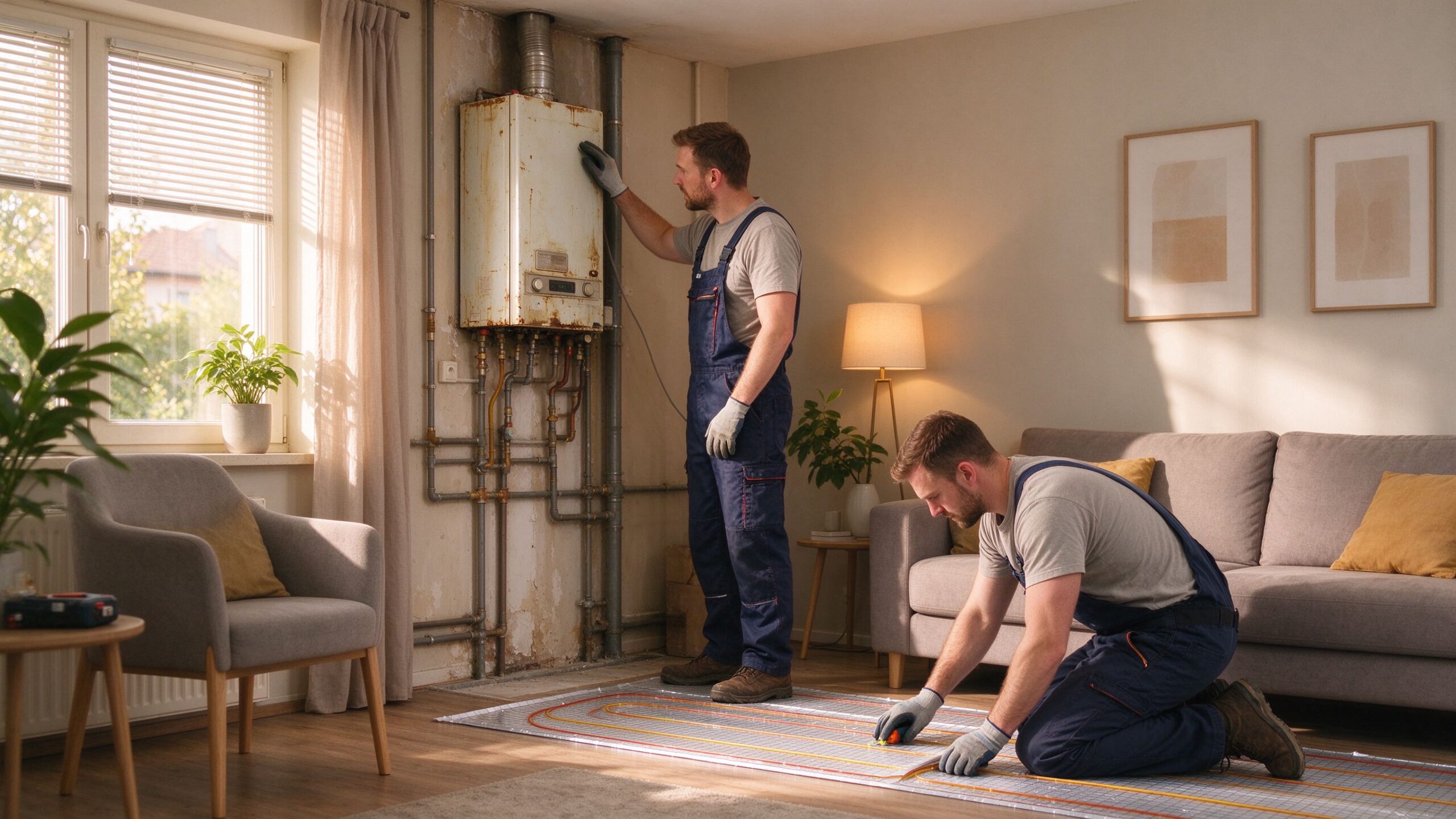
Ask anyone who lives through a British winter and they will tell you the same thing: the cold does not read the thermometer. A day that reads five or six degrees Celsius can feel far colder than a milder, drier day at a similar temperature, because the damp, the wind and the persistent wetness work their way into the walls, the floors and the furniture. That persistent, penetrating cold is one reason demand for electric underfloor heating UK homes has been growing steadily over the last few years. It is not a fashion choice; it is a response to a specific climate problem that traditional gas systems were never quite built to solve.
At SunAura we design and manufacture low-voltage heating film, heating mats and wired or wireless thermostat controls for installers, distributors and heating brands in more than fifty countries. In that work we see a clear pattern: the markets that complain most about damp, cold winters are also the markets where electric, zonal floor heating is being adopted fastest. This article explains why. We will look at what the UK climate actually does to a house, where the traditional gas-combi model runs out of road, how energy policy is tilting the decision, and why electric underfloor heating — rather than another whole-house wet system — has become the default supplementary and zonal upgrade for so many UK homes.
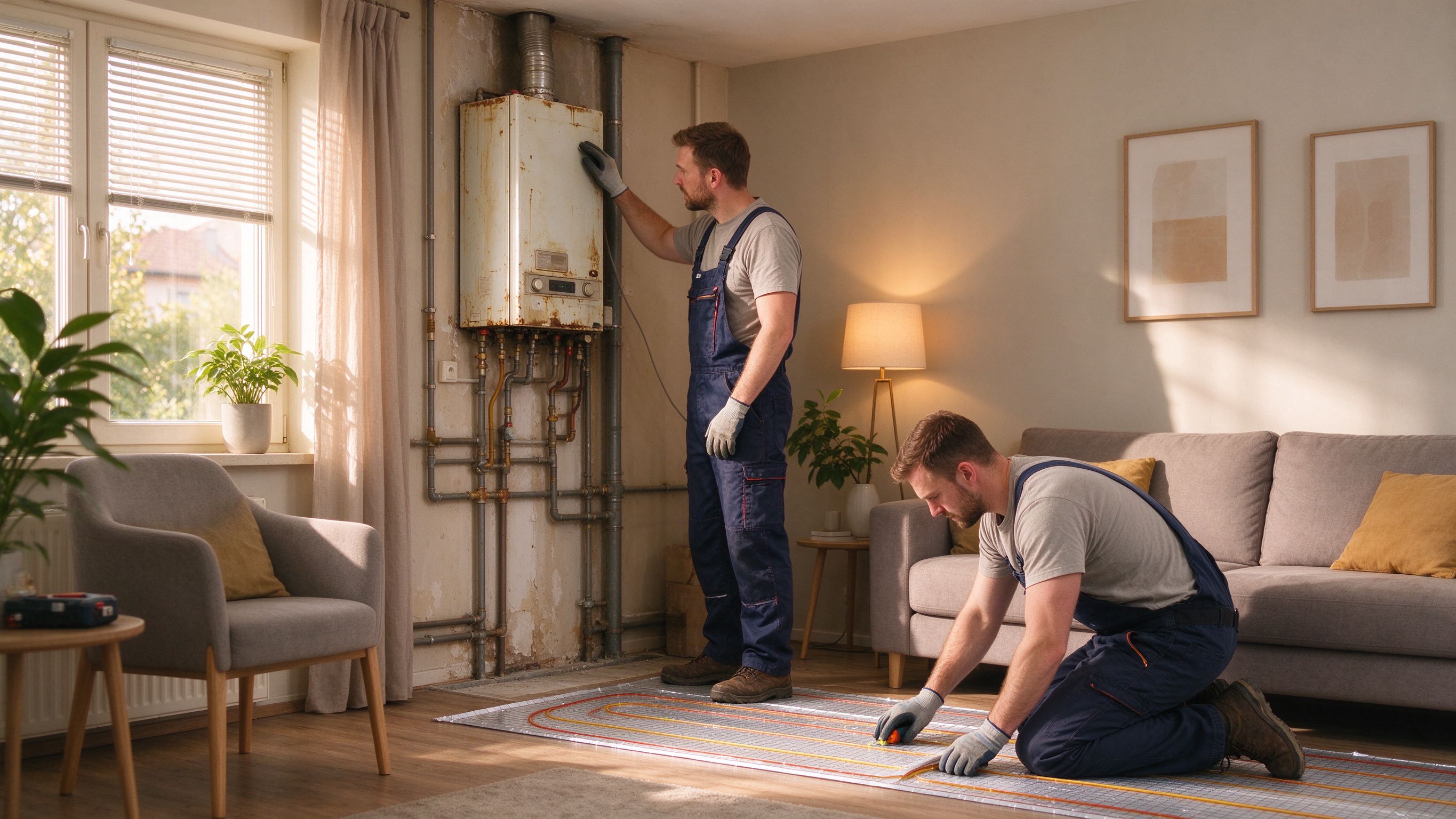
1. Why British Winters Feel Colder Than the Thermometer Says
The UK has a temperate maritime climate: winter air temperatures typically sit somewhere around freezing to single digits Celsius, and the sun appears only occasionally. By themselves those numbers would not demand heroic heating. The problem is humidity and wetness. Rain, mist and damp air are near-constant through the winter, and the wind carries that moisture through the building fabric. Warm, dry air feels comfortable well below its temperature reading; cold, damp air strips heat from the body and from the structure of the house at a far faster rate.
That matters indoors as much as out. Older UK homes — terraces, Victorian conversions, ex-local-authority flats — were built with solid or semi-solid walls, single-glazed sash windows, suspended timber floors and little in the way of cavity or loft insulation. In a genuinely cold, dry winter those houses would simply lose heat steadily. In a damp British winter they do something worse: the walls, floorboards and ceiling absorb moisture and stay cold, and they radiate that chill back into the room long after the heating has switched on. You can feel it as a cold floor underfoot, a draft that seems to come up through the boards, and a room that takes hours to feel “done.”
Industry and energy bodies describe the effect in similar terms: heat loss in a damp, poorly insulated home is materially higher than the air temperature alone would suggest, and the comfort set-point people actually choose — the temperature at which they stop feeling cold — climbs noticeably. This is the core driver of damp climate electric heating demand: people are not heating to a number on a thermostat; they are heating to stop feeling damp-cold, and the room that lets them down first is the one they walk across barefoot — the floor.
2. The Heating Gap: Gas Combi-Boilers and the Homes They Cannot Reach
For most of the last half-century the answer to a cold British room was a gas-fired combination boiler feeding radiators and, sometimes, a wet underfloor loop. That model works well where there is a gas connection, a wall for the boiler, a flue route and enough space for a heating loop. It is still how the majority of UK homes are heated, and it is not going to vanish overnight. But it has a widening set of gaps that electric heating is stepping into.
The first gap is the flat or apartment without a gas supply. A surprising share of the UK’s mid-rise and converted-stock housing either has no mains gas at all or has it only in the communal areas. In those homes a wet gas system — boiler, pipework, radiators or a wet underfloor loop — is not a practical install. The alternatives people have historically relied on, portable bottled-gas heaters, plug-in oil-filled radiators and fan heaters, are expensive to run, uneven in comfort and, in the case of combustion heaters, a ventilation and condensation risk in a damp house. This is exactly the population that has been searching for UK gas boiler alternatives that do not require a flue or a gas connection.
The second gap is retrofit depth. Laying a wet underfloor loop into an existing floor usually means lifting boards, pouring a screed or adding a heated overlay, and then tying it back to a boiler that may be reaching the end of its life. It is disruptive, it is a multi-day job, and it locks the homeowner into a whole-house decision they may not want. Electric floor heating — thin mats or film laid directly under the new floor finish in the rooms that matter — slots into the same renovation without touching the rest of the heating circuit.
The third gap is zoning. A single boiler and a handful of radiators heat the whole house on the same clock, whether or not anyone is in the bedroom. In a period property with thin walls, that means hours of expensive warmth poured into rooms nobody uses. Electric, room-by-room floor heating lets a household heat the kitchen in the morning, the living room in the evening and leave the rest alone — the zonal model that damp-climate homes actually need.
3. Rising Energy Bills and the Search for UK Gas Boiler Alternatives
It is hard to talk about UK heating without talking about bills. Over the last several years wholesale and network energy costs have moved through sharp, well-publicised swings, and although prices have come off their peaks, household heating costs remain a live pressure point. Industry observers and consumer groups broadly agree that gas bills, even after the worst has passed, still sit well above the levels homeowners became used to in the 2010s; estimates of typical annual gas-heating spend range widely by home size and efficiency, but the direction — up and volatile — is the thing people remember.
The behavioural consequence is a quiet shift in how people choose to add warmth. Rather than pay to run the existing central heating longer, many are instead adding targeted electric heat where they actually feel the cold: the bathroom floor, the kitchen tiles, the downstairs reception room. This is the “top-up” or “zonal supplementary” model, and it is why searches for UK gas boiler alternatives increasingly land on electric mats and film rather than on a like-for-like boiler replacement.
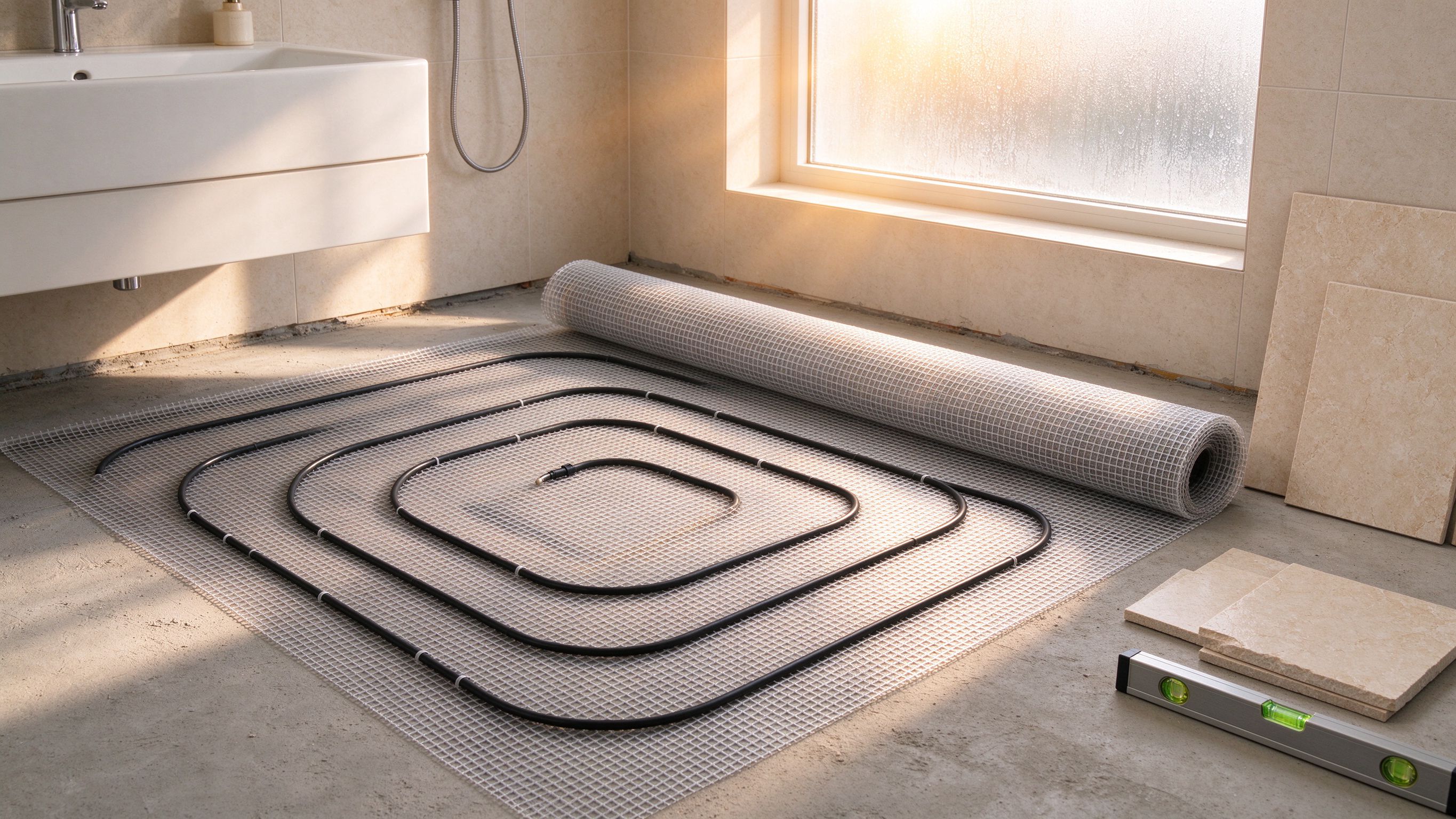
We see this clearly in the enquiries reaching our sales desk: installers are increasingly quoting electric floor heating as a room-specific add-on rather than as a whole-house system, and landlords managing small flats without gas are specifying it as the primary, low-maintenance heat source. For a fuller read on how homeowners are reacting, our companion piece on British homeowners turning to electric heating mats in 2026 walks through the demand shift room by room.
4. How UK Efficiency Policy Is Tilting the Decision Toward Electric Heating
Energy policy is nudging the same outcome from the supply side. The UK has signalled a long-term end to new gas boiler installations, with new-build rules tightening and existing-heating support increasingly directed at low-carbon and electric options; the exact dates, grant names and thresholds shift from year to year, and we would always advise checking the current government and Ofgem guidance before quoting a specific date to a customer. The direction, though, is not in dispute: the balance of incentives is moving away from another gas boiler and toward electric and heat-pump-compatible heat delivery.
That matters for underfloor heating in a specific way. Heat pumps run best at low flow temperatures, and a floor emitter with a large surface area is one of the few surfaces that can deliver comfortable heat at those low temperatures without a tank of radiators. Electric film and mats share that low-temperature comfort profile — they are warm to the touch, not scalding — which is why they slot naturally into the same low-carbon, efficiency-first thinking. Whether a home goes to a heat pump later or stays all-electric now, the floor as the emitter is the common thread.
For a homeowner weighing the numbers rather than the policy, the practical takeaway is simple: choosing an electric floor heating upgrade today does not box you into a technology; it leaves every later option — a heat pump, better controls, better insulation — open. We publish a separate, detailed UK underfloor heating cost guide if you want the current indicative budget picture; this article stays focused on why demand is moving, not on pound figures.
5. Why Electric Underfloor Heating Suits a Damp Climate
There is a comfort reason electric floor heating works especially well in a damp climate, and it is worth explaining properly because it is the part most online articles skip. Human comfort is not governed by air temperature alone. Radiant heat from a warm floor warms the surfaces in the room — the walls, the furniture, the air near your body — rather than blasting hot air from a radiator high on the wall. In a damp house, warming those surfaces matters: a cold, damp wall is what makes a room feel clammy even when the thermostat reads a reasonable number.
A warm floor also reduces the condensation risk that a damp British winter otherwise creates. Radiant warmth across the floor surface and up the lower wall dries the skirting-line area where condensation, mould and “mushrooming” floors most often start. It does not replace proper ventilation, insulation and damp-proofing — nothing does — but it removes one of the conditions that lets mould get going. This is why damp climate electric heating reads as both a comfort and a maintenance purchase.
The second comfort point is floor temperature itself. In a UK winter the single biggest discomfort complaint is not the air; it is stepping out of bed onto a cold tiled or boarded floor. Electric underfloor heating addresses that directly. A radiator can warm the air in twenty minutes; a warm floor is underfoot within the same hour and stays that way, because the large surface cools slowly. For a bathroom, a kitchen or a hallway — the rooms people cross barefoot or in socks — it is the difference between a tolerable winter and a genuinely pleasant one.
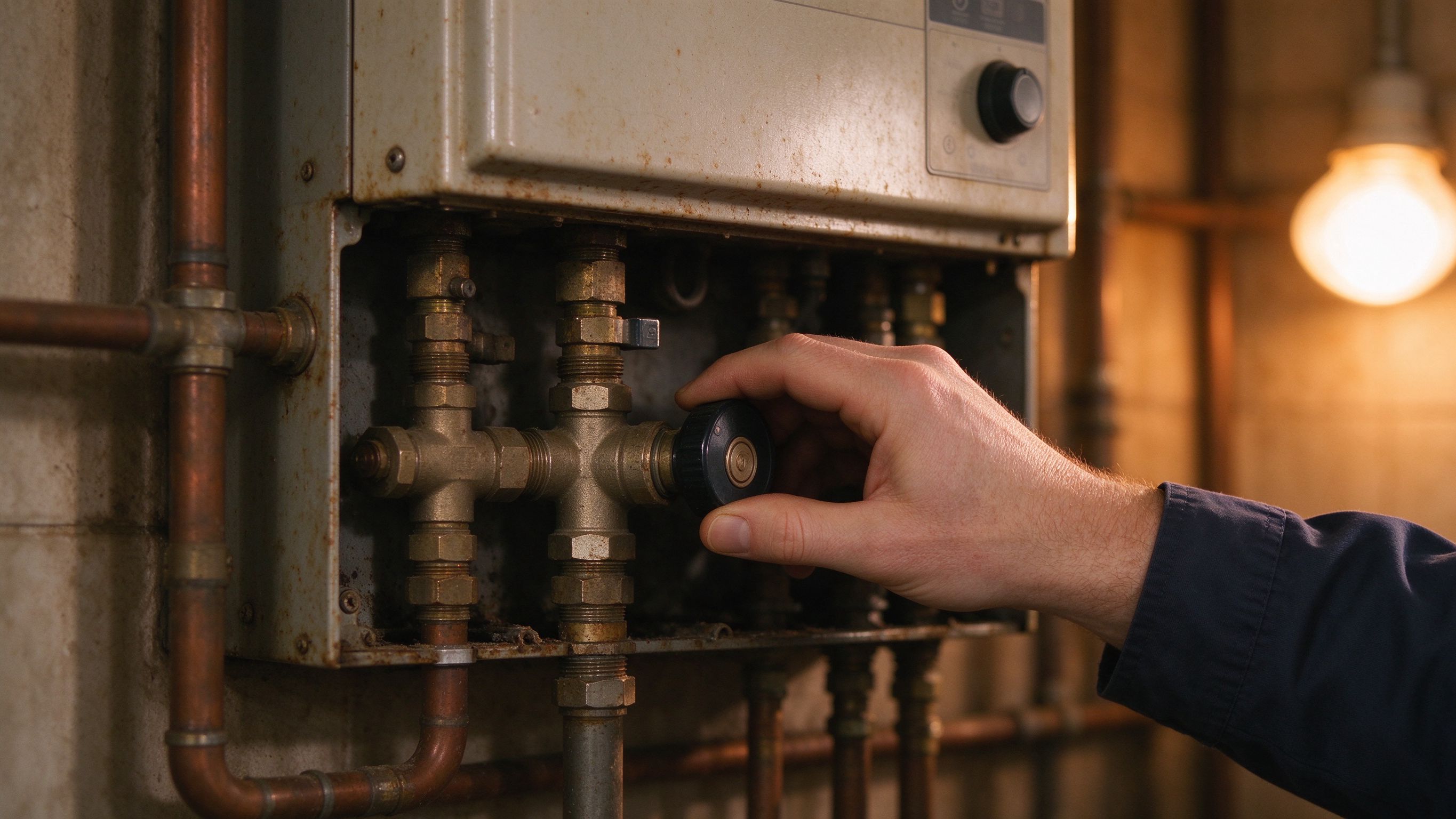
6. Electric Heating Mats UK vs. Heating Film: Choosing the Right Zonal Product
When installers specify electric floor heating for a UK retrofit, they are usually choosing between two product families, and the choice is driven almost entirely by the floor build-up rather than by personal preference.
Heating mats are thin, pre-spaced cable on a mesh, rolled or tiled directly into the tile adhesive or self-levelling compound. They are the workhorse for bathrooms, kitchens and any room going down tile, stone or a similar hard finish. If you are comparing electric heating mats UK installers will tell you the mat wins wherever there is a wet-room or tiled floor, because the cable sits inside the build-up that would be there anyway. Our electric heating mats product range is built around exactly this retrofit-tile use case.
Heating film — the ultra-thin far-infrared film we manufacture at SunAura — behaves differently. It is a sheet that lies under floating floor finishes: engineered wood, laminate, luxury vinyl tile, carpet with a suitable underlay, and large-format tile in low-profile builds. Because it is millimetres thin and does not need a screed, it is the preferred product for flats, conversions and any renovation where height build-up is a problem. It is also the product most often chosen for living rooms and bedrooms, where a full mat-and-screed job would be disproportionate. You can read the technical side on our heating film product page.
Neither product is a whole-house boiler replacement in a large detached home; they are zonal, targeted heating. In a damp-climate retrofit that is the point — you heat the rooms that improve your life, not the whole square footage of the building. If you want a worked decision tree for mat versus film in a damp home, our UK damp-home buying guide walks through the floor-by-floor choices.
7. Pairing the Floor With Smart Thermostats and Controls
An electric floor heating system is only as efficient as its control. In a damp UK home, the thermostat is where the bill and the comfort are actually decided. A basic dial left on all day will run the mat or film at full output whenever the room is below set-point; a programmable, room-by-room controller can warm the kitchen before you get up, drop the hall by a couple of degrees during the workday and lift the bathroom only for the half-hour you use it. That zoning is how targeted electric heating stays cheaper than leaving an old wet system on around the clock.
We manufacture a range of thermostats and controls for electric underfloor heating, including programmable and smart WiFi units with floor-sensor probes. The floor probe matters in a damp home: it reads the actual floor temperature rather than the air temperature, so the system cycles on and off against the surface you care about, not against a misleadingly warm or damp air reading. For retrofits where pulling new wires across the floor is difficult, wireless controls keep the installation simple.
One practical note we give every installer: match the controller to the load. Electric film and mats are resistive loads with predictable draw, but a large tiled bathroom on a dedicated circuit needs its own breaker and RCD protection, and the thermostat must be rated for the connected wattage. Getting that right up front is what turns a zonal heating project into a quiet, reliable, years-long comfort upgrade rather than a troubleshooting exercise.
8. Realistic Expectations: Installation, Build-Up and Where It Fits
We want to be straight with you about what electric underfloor heating is and is not, because the manufacturer’s job is to set the right expectation before the install, not to apologise after it.
It is a retrofit-friendly, low-profile, zonal comfort upgrade. It sits under a new floor finish in the rooms you choose, it warms the floor gently, it removes the cold-foot feeling, it supports the fight against condensation, and it pairs with a smart thermostat to run only when the room is used. In a flat without gas, a converted terrace, a bathroom that always feels cold or a home office on a draughty ground floor, it is one of the most cost-effective comfort upgrades available.
It is not, on its own, a full heating system for a large, uninsulated detached house in the depths of winter. Heat loss from thin walls, single glazing and a cold roof will always out-elevate what a reasonable floor load can deliver, and in those homes the right sequence is insulation first, controls second, and targeted electric floor heating as the comfort layer on top. Industry guidance consistently puts insulation and draught-proofing ahead of any emitter upgrade, and we agree. Where the floor heating earns its keep is on top of a reasonably decent fabric, in the specific rooms that matter.
Because exact installed pound figures depend so heavily on room size, floor build-up, electrical circuit work and local labour, we deliberately keep this article free of invented price points — those belong in the current UK underfloor heating cost guide, which we keep updated with indicative ranges rather than hard numbers. Treat any single precise quote you see online as a starting point, not a verdict.
Frequently Asked Questions
Is electric underfloor heating expensive to run in a British winter?
Run as a zonal, thermostat-controlled system in the rooms you actually use, the running cost is typically modest and predictable, because you are not heating the whole house on a 24-hour clock. Run constantly or in an uninsulated, high heat-loss room, it will cost more. The smart thermostat and floor probe are what keep the running cost down; exact p/kWh figures depend on your tariff and should be checked on the current price-capped rate rather than assumed.
Can I fit electric underfloor heating in a flat with no gas supply?
Yes — that is one of the most common applications. Because electric mats and film need no flue, no boiler and no gas connection, they are a practical primary or supplementary heat source in flats and apartments where a wet gas system cannot be installed. A qualified electrician handles the circuit and RCD protection.
Which is better for a damp UK home: heating mats or heating film?
It depends on the floor finish. Mats go into tile adhesive or levelling compound for bathrooms and kitchens; ultra-thin film sits under floating floors like vinyl, laminate, engineered wood and carpet for living rooms and bedrooms. Our UK damp-home buying guide walks through the room-by-room choice.
Will underfloor heating stop damp and mould on my walls?
No heating system cures structural damp. What a warm floor does is raise the surface temperature of the lower wall and floor, which reduces the condensation and moisture that mould needs to grow. It supports — but does not replace — proper ventilation, insulation and, where needed, damp-proofing.
Do I need to replace my gas boiler to add electric floor heating?
Not at all. Electric mats and film are usually added as a supplementary zonal layer alongside an existing boiler, used only in the coldest-feeling rooms. They also become a sensible primary option when a boiler eventually fails and a gas boiler replacement no longer looks like the long-term choice.
Next Steps for Your UK Project
If a damp British winter has you looking for a warmer floor rather than a louder radiator, the next step is a room-by-room plan: which rooms are coldest, what floor finish you are laying, and whether your circuits can take the load. Whether you are a UK installer stocking electric heating mats UK homeowners will actually thank you for, a distributor building an electric floor heating range, or a brand developing your own OEM line, our engineering and production teams can help you size the mats, film and smart controls to the right zonal load. Contact our team with your room sizes and floor finishes, or start an OEM/ODM enquiry — we manufacture electric underfloor heating and controls for partners across the UK and 50+ other markets.