
If you live in an older UK home, a damp flat without gas, or a terraced or Victorian property that stays cold long after the heating switches off, you have probably already wondered whether electric heating mats for damp homes are worth the investment. The short answer is yes — but only if you choose the right format, install it on the correct floor build-up, and pair it with decent zonal control. This guide walks UK DIYers, heating installers and trade buyers through that decision from a manufacturer’s perspective: how to assess a damp floor, how to compare mat, film and cable, what to install under tile, laminate or vinyl, and what to ask a UK supplier before you place a wholesale or OEM order.
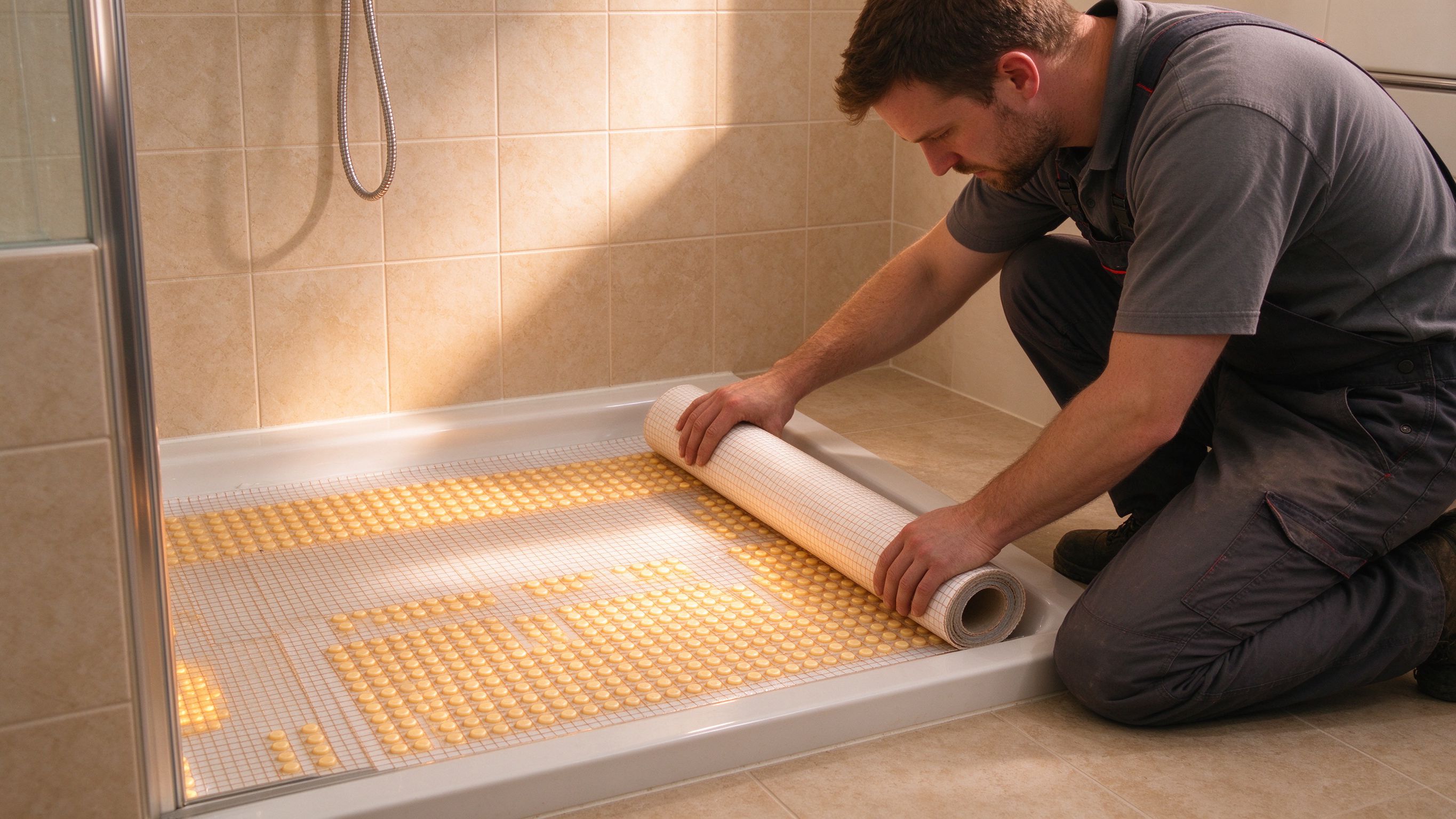
Why Damp Cold Feels So Much Colder Than the Thermometer Says
The UK has a temperate maritime climate: winters are not extreme in air temperature (typically somewhere around 0–8 °C on average), but the combination of high humidity, frequent rain, wind-driven moisture and relatively little sunshine means walls, floors and furnishings stay cold for weeks at a time. That “bone-dry” heat you get from a radiator never quite arrives in an uninsulated Victorian terrace or a top-floor flat, because the structure itself is acting like a heat sink.
For an explanation of why this damp, clammy environment tips the balance away from warm-air and wet radiator systems and toward radiant electric heat, read our companion piece on why damp British winters favour electric underfloor heating. The practical point for a buyer is simple: in a damp home, heat delivered gently through the floor as radiant warmth feels warmer at a lower air temperature, and it dries the floor surface instead of leaving it cold and clammy.
Your First Job: Assess the Floor, Not Just the Room
Before you compare products, spend an hour assessing the actual floor you intend to heat. In UK homes this is where most DIY projects go wrong. Work through these points:
- What is the subfloor? Suspended timber floorboards, concrete slab, or a floating chipboard deck? Each changes both the insulation gap and which heating format suits it.
- Is there an existing damp problem? Rising damp, penetrating damp, or a failed damp-proof course (DPC) should be treated first. Electric heating will warm a damp floor but it will not fix structural moisture — and trapping moisture under a new floor covering can make things worse.
- How much insulation is under the slab? An uninsulated solid ground floor loses a large share of heat straight into the ground. Fitting foil-backed insulation board (typically around 6–10 mm of XPS or expanded-polystyrene underlay) is usually the single best spend in a retrofit.
- What is the floor covering? Tile and stone accept direct mat contact; laminate, engineered wood and vinyl need a thin, even film and careful output limits.
- Where is the power? Bathrooms and kitchens usually need a dedicated fused spur and an RCD-protected circuit; a 10 m² mat zone may run from a normal 13 A circuit, but larger areas and multiple zones need proper circuit design.
Mat vs Film vs Cable: Which Suits a Damp UK Home?
There are three mainstream formats, and “damp” tips the choice in a particular direction.
| Format | Typical output | Best floor covering | Best damp-home use |
|---|---|---|---|
| Heating mat (pre-spaced wire on a mesh) | ~150–200 W/m² | Tile, stone, screed | Bathrooms, kitchens, hallways — the default for wet, hard-floored damp rooms |
| Infrared heating film (thin roll, far-infrared) | ~150–220 W/m² | Laminate, engineered wood, vinyl, carpet | Living rooms, bedrooms, retrofit over existing hard floors where depth is limited |
| Loose heating cable | ~150–200 W/m² | Screed, tile, awkward shapes | Oddly shaped rooms, under-screed extensions, areas a mat won’t cover neatly |
For genuinely damp, water-prone rooms — bathrooms, shower rooms, utility spaces — the encapsulated, earthed heating mat remains the safest, most installer-friendly default because it sits directly in tile adhesive or levelling compound and is fully covered. This is precisely why electric heating mats for damp homes are most often specced as sealed, tile-level systems rather than open film in wet zones. Film is thinner (often under 1 mm), so it is the retrofit winner when you want to lift an existing floor covering and lay it back down, but it must be kept away from water zones and installed per the manufacturer’s wet-room guidance. Loose heating cable is the flexible option for irregular layouts.
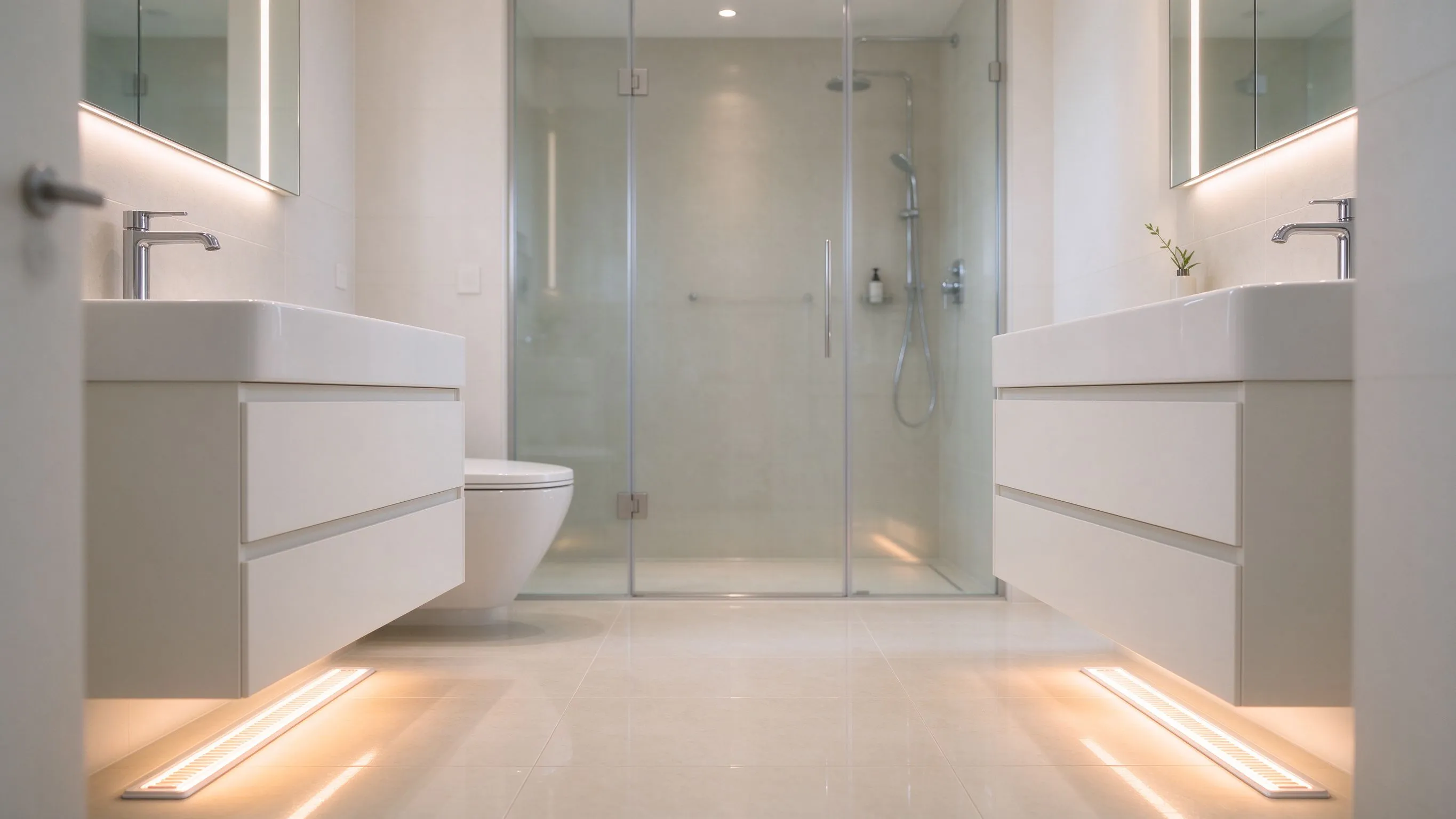
Installing Heating Mats Under Tile in Old UK Houses
Tiled floors — kitchens, hallways, bathrooms — are where mats shine, and they are also the rooms most likely to feel permanently cold in a damp house. A typical DIY-friendly sequence is:
- Fit and tape down insulation board over a clean, dry subfloor, sealing joints with foil tape to reduce downward heat loss.
- Roll out the heating mat mesh, element side down, keeping it at least 5–10 cm away from walls and fixed furniture (kitchen units, baths, showers), and never cutting the heating element — cut only the mesh.
- Route the cold tail (the low-voltage connection lead) to the thermostat location and install the floor temperature sensor in a conduit at the midpoint of a heated run.
- Test the resistance against the manufacturer’s figure before covering, then bed the mat into a layer of flexible tile adhesive and tile over it.
In old houses with suspended timber floors, bear in mind that mats are better suited to solid or newly screeded floors than to bouncing joists; a floating film over rigid underlay is often the kinder retrofit on timber. Always follow the floor-covering manufacturer’s maximum permissible floor-surface temperature — typically in the low-to-mid 20s °C for vinyl and wood.
Installing Heating Film Under Laminate, Engineered Wood and Vinyl
Thin infrared heating film is the format most people choose when they want zonal, room-by-room warmth without lifting the structure of an old house. It is laid directly over a foil insulation underlay, taped at the joins, with the busbars connected to a slim thermostat, and then the laminate, engineered wood or vinyl is floated over the top.
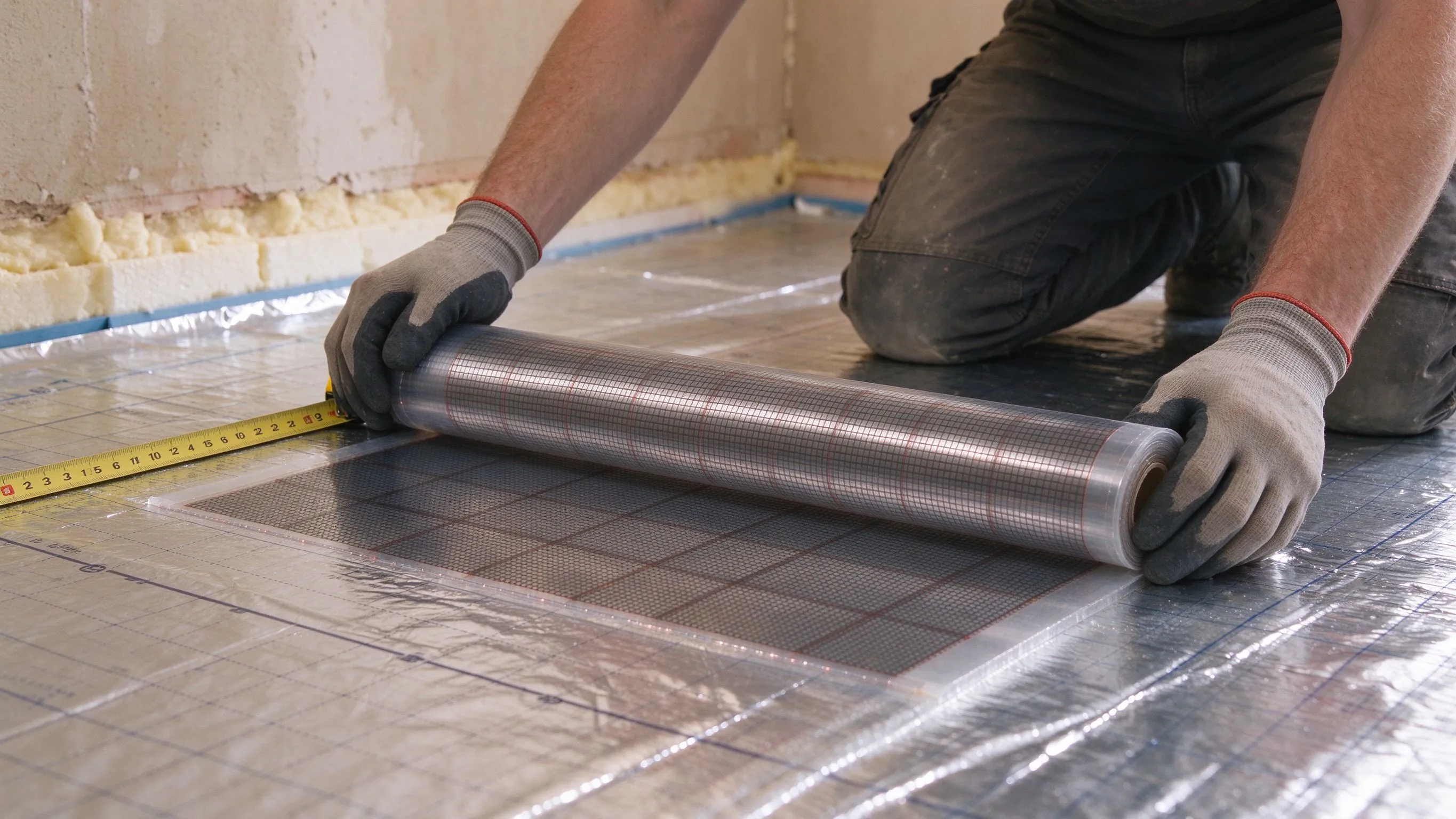
Because film is so thin, the insulation underneath does the heavy lifting for efficiency. Do not run film under fixed cabinetry, baths or showers, and keep the output within what the floor covering and the room’s heat-loss allow. In a damp bedroom or sitting room, a film zone on a zonal thermostat is a comfortable, low-infrastructure way to take the chill off without running a whole wet-heating system.
Do You Need a Damp-Proof Membrane and Extra Insulation?
On a solid ground floor in an older UK home, almost always yes on insulation, and yes on a membrane where the subfloor could transmit moisture. A vapour-control or damp-proof membrane prevents rising moisture from migrating into the insulation and floor covering, while foil-backed insulation cuts the heat disappearing into the ground. Skipping this step is the most common reason electric underfloor heating in a damp house feels expensive to run: the floor heats up slowly and never quite stops pulling heat downward. Treat active damp first, insulate underneath, and then size the heating zone to the room’s real heat loss rather than to its floor area.
Thermostat and Zonal Control: Where the Savings Are Made
The product on the floor is only half the system. In a damp, draughty old house, running one large zone flat out all day is how you get an unpleasant bill. Zonal, timed control is what turns electric floor heating from a luxury into sensible zonal heating:
- A basic underfloor heating thermostat with a floor sensor prevents overheating and matches the setpoint to how the floor actually feels.
- A smart thermostat lets you schedule each room — warm the bathroom for a morning shower, hold the sitting room only in the evening, leave bedrooms low overnight — and on some UK time-of-use tariffs, pre-heating during cheaper off-peak windows can smooth the cost.
- Zone by room, not by house. Damp homes reward turning heat off in rooms you are not using, because the cold that lingers is structural, not something a radiator fixes cheaply.
Realistic Running Costs in UK Damp Homes (Estimate Ranges)
Because UK electricity tariffs, room heat-loss, insulation levels and occupancy all vary so much, treat any single “cost per month” as a guess rather than a fact — and always verify against your own tariff. As rough order-of-magnitude ranges for planning, a 100–200 W/m² zone used as supplementary, zonal heating rather than whole-house primary heat will typically add a modest, predictable amount to an electricity bill, and that total rises with how many hours a day it runs and how well the floor is insulated. Insulate underneath, zone the rooms you actually use, and the cost behaves; skip the insulation and run it 24/7, and it will not.
For a fuller, worked approach to what different electric-underfloor configurations cost to run in UK homes, see our underfloor heating cost guide for the UK — and for the wider picture, read how rising gas prices are pushing British homeowners toward electric heating mats in 2026.
DIY or Professional Installer — Which Are You?
A competent DIYer can lay film over existing underlay in a bedroom or fit a mat in a small bathroom, provided they are comfortable doing the electrical work to UK standards, use a qualified electrician for the final connections, and RCD-protect the circuit. Bathrooms, wet rooms, multi-zone systems and anything under a new screed are usually best handed to a qualified underfloor heating installer who can design the circuit, lay the sensor correctly and certify the work. The dividing line is not the laying — most mat and film products are genuinely installer-friendly — it is the electrical and the system design.
Sourcing from a UK Supplier: Wholesale, OEM and Distributor Options
If you are an installer, a heating retailer, or a developer specifying projects, buying direct from a manufacturer changes the economics. SunAura supplies electric underfloor heating mats, infrared film, cable and matched thermostats both as stocked product for resale and as OEM/ODM builds for brands and distributors. As a trade buyer you should ask any prospective UK supplier about: consistent output and sizing ranges across batch runs, certification and test reports, cold-tail and thermostat compatibility, packaging suitable for wholesale distribution, lead times, and minimum order quantities. MOQs naturally differ between stock resale and OEM private-label work, so tell the supplier whether you are a one-off installer, a regional distributor stocking local trade, or a brand developing your own product line.
Your Damp-Home Buying Checklist
Before you order, confirm: (1) the floor covering and subfloor type; (2) that any active damp has been treated; (3) whether insulation and a membrane are included; (4) mat, film or cable matched to the room; (5) a zonal thermostat with a floor sensor; (6) the correct circuit and RCD protection; and (7) a supplier that can support you whether you are buying one kit or a wholesale/OEM container.
Frequently Asked Questions
In a damp home, should I choose heating film or a heating mat?
For wet, hard-floored rooms such as bathrooms and kitchens, a sealed, earthed heating mat laid under tile is usually the safer choice. For dry rooms with laminate, wood or vinyl where you want a thin retrofit layer, infrared film is the better fit. Treat any active damp problem first, whichever you choose.
Are electric heating mats expensive to run in a cold UK house?
As a supplementary, zonal source they are modest and predictable, but the cost depends heavily on your electricity tariff, how well the floor is insulated and how many hours you run them. Estimate rather than assume a fixed figure — insulate underneath, zone the rooms you use, and the running cost stays controlled.
Will electric underfloor heating fit an old UK house without gas heating?
Very often, yes — which is one reason electric mats and film suit flats and older properties where a wet gas system is impractical or costly. They work as zonal or supplementary heating rather than a replacement for a whole-house boiler, and can be retrofitted without major structural work, especially the thin film formats.
Do I need a professional installer for electric heating mats?
Laying a mat or film is DIY-friendly, but the electrical connections, circuit design, RCD protection and multi-zone control should be done or signed off by a qualified installer — especially in bathrooms and wet rooms. Many homeowners fit the floor themselves and book an electrician for the final hook-up.
Can I buy these mats wholesale or as a UK supplier / OEM?
Yes. SunAura supplies stock product to installers and resellers, and offers OEM/ODM private-label production for brands and distributors. Minimum order quantities differ between wholesale resale and OEM work — contact us with your volume, market and labelling needs and we will scope the right route.
Talk to the Manufacturer
Whether you are specifying a single bathroom in a terraced house, retrofitting a flat, or sourcing stock as a UK supplier, distributor or brand, SunAura can help you match the right mat, film or cable to the floor and the budget. Contact our UK-support team for sizing guidance, wholesale pricing, or an OEM/ODM project — and explore the full range of heating mats, heating film and controls before you buy.