
After several winters of volatile energy bills, British homeowners are quietly rewriting a long-standing assumption: that a gas combi-boiler running a wet, whole-house system is the only sensible way to heat a UK home. Through 2026, a growing number of households are layering electric heating mats into their properties—not as a full replacement for the boiler, but as targeted, zonal warmth for the rooms people actually use. As a manufacturer supplying underfloor heating mats, films and controls to UK installers and developers, we are seeing this shift directly in enquiry patterns and specification requests—with search interest in the electric heating mat UK query climbing through 2026 as homeowners research zonal options.
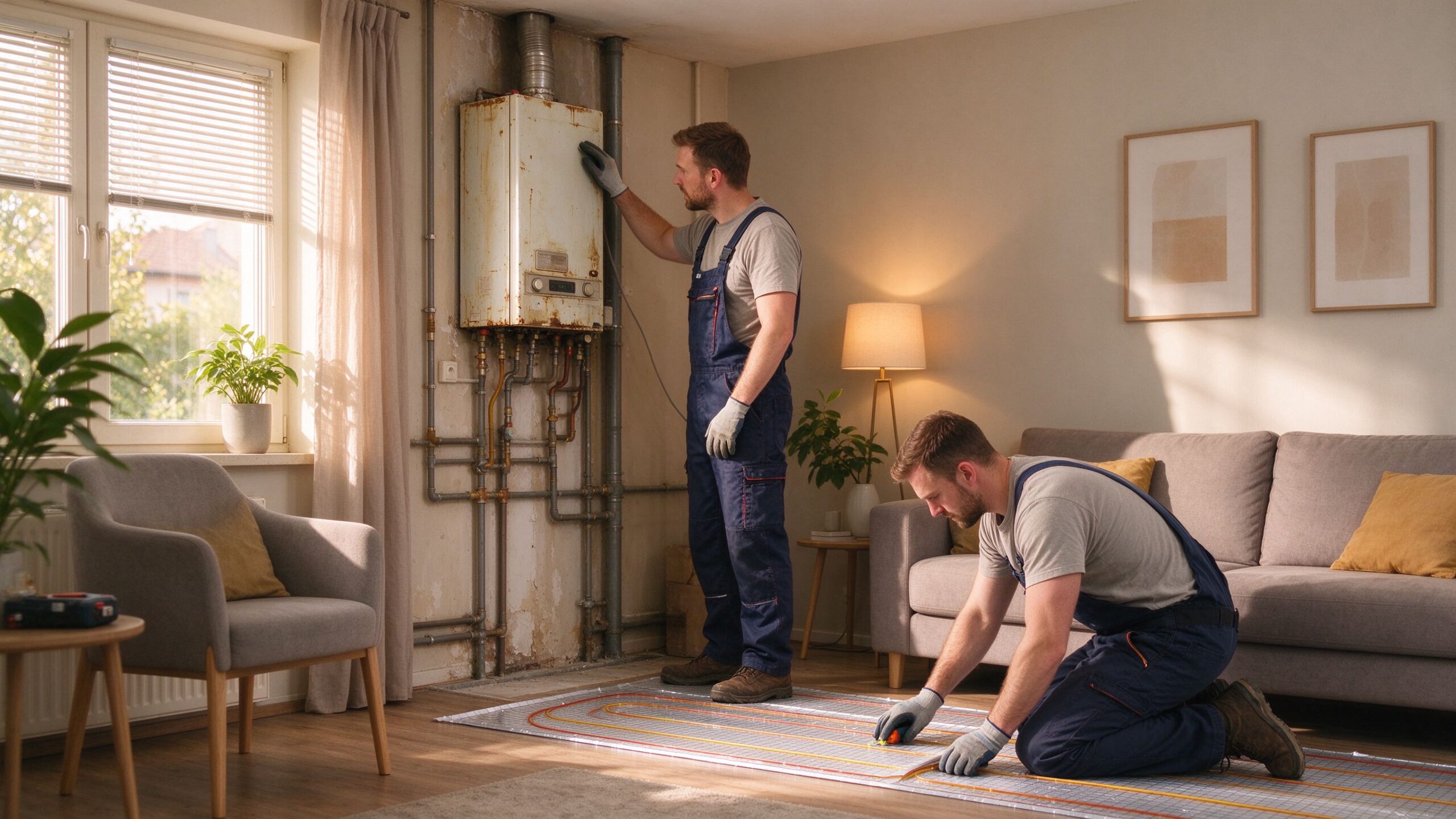
This is not a story about abandoning gas overnight. It is a story about efficiency: matching heat to the room, the time of day and the floor finish, so that households stop paying to heat unused space for hours at a time. Below we look at the 2026 energy-price backdrop, why electric mats suit the British climate and housing stock, how they compare with a gas wet system at a trend level, and where to get the precise cost numbers.
Why UK homeowners are revisiting heating choices in 2026
For decades, the UK heating market has been dominated by gas combi-boilers feeding radiators and, in a smaller share of homes, wet underfloor heating. That model works—but it carries a structural cost. A wet system heats water, circulates it, and responds slowly. If you only want the bathroom warm for an hour in the morning and the living room in the evening, a whole-house wet system is running infrastructure far larger than the task demands.
Through 2026, two trends have pushed homeowners to look again. First, wholesale and retail energy prices have remained elevated rather than returning to the lower, pre-2021 norm. Estimates from analysts and industry observers place UK bills broadly in a higher-than-pre-pandemic band, with month-to-month fluctuation rather than a decisive fall. Households have adapted by using less gas, zoning their heating, and asking whether some rooms could be heated more surgically. Second, policy and building regulations have continued to nudge toward more efficient, controllable electric heating—particularly for renovation, extension and retrofit scenarios where a wet system is expensive to install.
The result, as we see it from the factory floor, is a surge in enquiries for electric heating mats as supplementary and zonal heating. Homeowners keep the boiler for whole-house warmth on the coldest days, but ask us to specify mats for the bathroom, kitchen, open-plan extension, home office and loft conversion—rooms where radiant floor heat feels noticeably better than a radiator.
What is driving gas boiler running costs in 2026 (the picture in ranges)
We are deliberately not quoting precise GBP figures here. UK energy tariffs vary by region, tariff type, meter kind and season, and our cost-specialist page handles the detailed numbers. What we can say with confidence, based on the trend-level data installers share with us, is the direction of travel.
- Gas remains comparatively cheap per unit than electricity. Even after several winters of volatility, the unit price of gas has generally stayed below the unit price of electricity in the UK. A gas boiler still wins on fuel cost per kilowatt-hour.
- But running costs are about utilisation, not just unit price. A gas wet system only saves money when it is actually heating the home continuously. A household that heats one or two rooms for a few hours a day can find that an electric mat—switched on only where and when needed—costs less overall than firing up a whole-house wet loop for the same comfort.
- Efficiency losses matter. Older boilers and ageing wet systems sit well below modern efficiency; pipework heat loss and slow warm-up mean a meaningful share of the gas burned never reaches the room. Electric mats convert almost all input energy directly into radiant heat at the floor.
- Time-of-use tariffs are changing the maths. Where households are on flexible or off-peak tariffs, the effective cost of electric heat shifts, which is one reason electric underfloor heating is being reconsidered—we cover this in more detail in our guide to off-peak electric underfloor heating.
In short: gas boiler running costs in 2026 are not collapsing back to old levels, and households are responding by reducing waste rather than simply turning the thermostat down. That is the opening that zonal electric heating fills.
Why electric heating mats suit the British home
The UK climate and housing stock are unusually well matched to electric underfloor heating—once you move past the “electric heating is expensive” reflex.
Britain has a temperate maritime climate: winters in the roughly 0–8 °C band, high humidity, frequent rain and wind, and limited sunshine. The “damp cold” of a British winter feels substantially colder than the thermometer suggests, particularly in older, poorly insulated terraced and semi-detached homes. Radiators heat air, which then drifts; underfloor heating heats the whole floor surface as a radiant panel, warming feet, furniture and the room fabric directly. In a damp room, a warm floor also dries carpet edges, bathroom floors and tiled surfaces—a comfort and hygiene benefit that radiators do not match.
The housing-stock point is equally important. The UK has no district-heavy heating network comparable to parts of continental Europe, and a large share of older flats and converted properties have no gas connection at all. For those households, a wet gas system is simply not an option. Electric mats—typically a thin heating element bonded to a mesh, laid beneath tiles, stone, LVT or screed—are a practical retrofit because they add very little to floor build-up and require no boiler, flue or water plumbing.
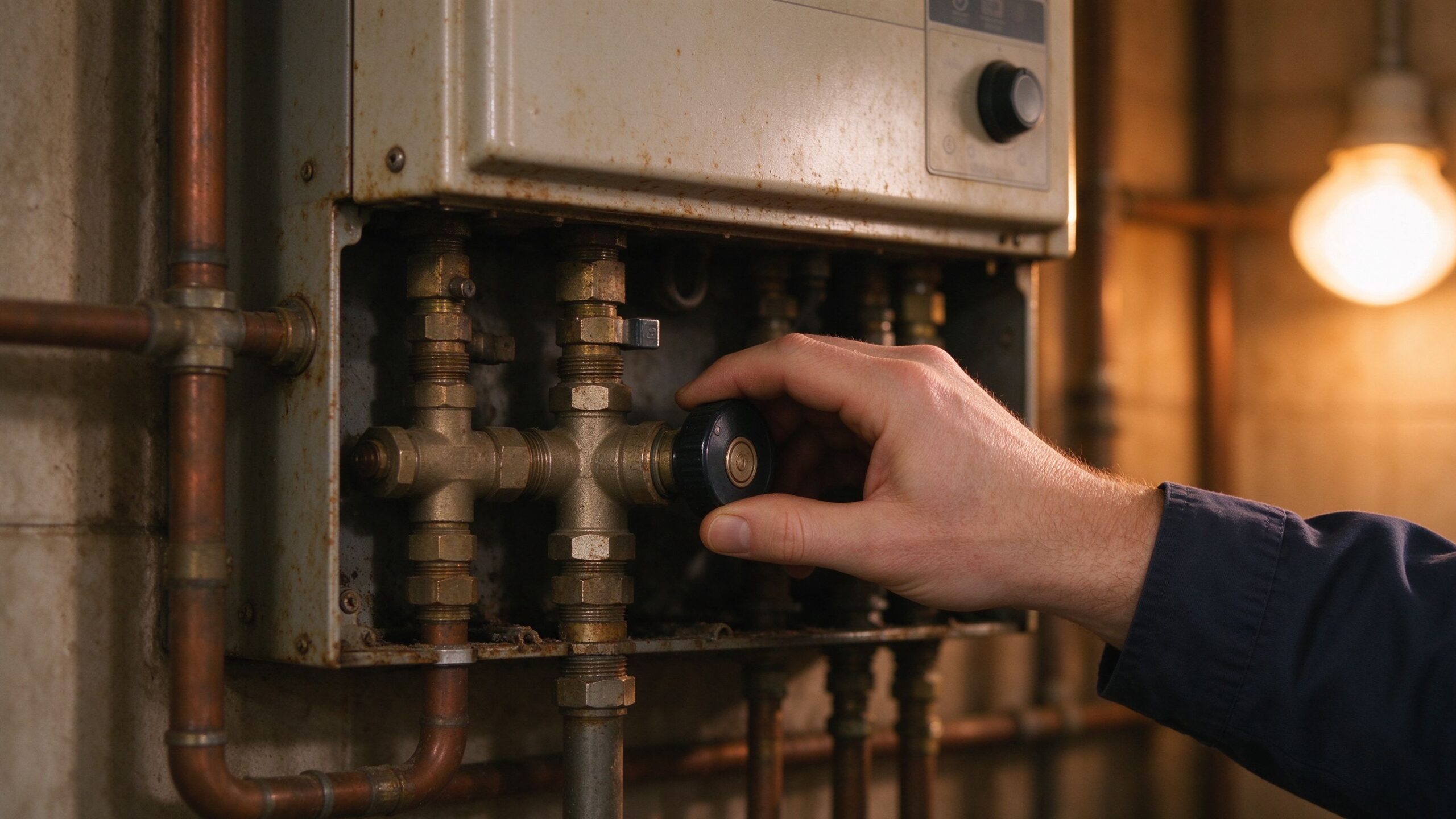
Crucially, mats are zonable by room. The bathroom mat runs only for the morning and evening; the kitchen mat runs through cooking hours; the home-office mat follows the working day. Each circuit has its own thermostat, so heat follows occupancy rather than a fixed 24-hour schedule. This is the core of energy efficient heating in the UK as we now understand it: not a lower thermostat, but the right heat in the right place at the right time.
Electric mat versus gas wet system: a trend-level comparison
We have kept this table deliberately qualitative. Detailed GBP cost comparison belongs on our dedicated UK cost page (see link below), where current tariffs and assumptions are spelled out. The table below is about direction—how the two approaches tend to compare in a UK home.
| Factor | Gas combi-boiler + wet system / radiators | Electric heating mat (zonal / supplementary) |
|---|---|---|
| Fuel unit cost | Generally lower per kWh | Higher per kWh, but offset by targeted use |
| Best fit | Continuous whole-house heating | Occupied rooms, timed zones, retrofit |
| Warm-up speed | Slow (heats water, pipes, fabric) | Faster at the floor for a single zone |
| Retrofit floor build-up | High; radiators, pipework, boiler | Very low; thin mesh element under finish |
| Comfort feel | Warm air, hot surfaces | Even radiant floor warmth, dry damp floors |
| Zonal control | Limited by loop design | Per-room thermostats, easy zoning |
| Ideal use case | Whole home on the coldest days | Bathroom, kitchen, extension, office, loft |
| Cost detail | See UK underfloor heating running and installation costs for current, assumption-led figures | |
The pattern UK installers report is consistent: for households that heat most of the home all day, gas still wins; for households that heat a few rooms well, electric mats are often the more cost-effective and comfortable choice. Most British homes sit somewhere in between—which is exactly why a hybrid, zonal approach is gaining ground.
The damp British winter problem
Dampness is the quiet enemy of comfort in UK housing. Rising moisture, cold floors and condensation create rooms that feel cold even when the air temperature looks acceptable, and they accelerate wear on timber floors, skirtings and wall coverings. Radiators do little for a cold floor slab; underfloor heating does exactly that.
We have published a dedicated analysis of this: Why damp British winters drive electric underfloor heating. It explains how the maritime climate, older solid floors and limited insulation combine to make radiant floor heating a strong match for UK conditions—and why mats and film increasingly out-perform wet systems in retrofit scenarios.
Choosing the right mat or film for a UK property
Not every electric underfloor product suits every floor finish. A heating mat (mesh-bonded cable) is the default under tiles and stone; a thin heating film is often preferred under LVT, vinyl and timber-style finishes where build-up height is critical; heating cable remains the flexible option for irregular rooms and renovations. Matching the element to the floor finish—and to the subfloor insulation—is what separates a cost-effective installation from an expensive mistake.
We have written the selection guide for UK damp homes here: How to choose electric heating mats and film for UK damp homes. It covers wattage selection, floor finishes, insulation, and which element type to specify in a retrofit.
For product detail, see our range pages: electric heating mats, heating film, and the supporting heating cable and thermostats and controls.
Controls matter as much as the element
An electric mat without a good thermostat is an expensive one. The efficiency case for zonal heating collapses the moment a homeowner sets the bathroom mat to run all day. Modern programmable, smart and wireless thermostats let each zone follow a weekday/weekend schedule, read floor temperature via a sensor, and—increasingly—react to time-of-use tariffs.
This is why we consistently recommend pairing mats with a dedicated floor-sensing thermostat rather than a simple air stat. We explain the trade-offs in our thermostats and controls range and in our buying note on wireless versus wired thermostats. For a UK household trying to make sense of gas boiler running costs in 2026, the thermostat is where most of the saving actually happens.
What a manufacturer sees in the UK market
From our position as an OEM and manufacturer of heating mats, films, cables and controls, the UK enquiry pattern through 2026 is unmistakable: demand for a UK-specification electric heating mat—matched to British floor finishes and tariffs—is now the single clearest signal in our inbox. We see three recurring signals.
First, retrofit and extension enquiries now outweigh new-build enquiries for electric mats. Homeowners fitting a new bathroom, kitchen or orangery are choosing electric over wet because the installation is faster and does not disturb the existing boiler circuit. Second, cost-conscious specifiers are asking for lower-wattage, well-insulated builds rather than the highest-output element—an encouraging sign that the market understands running costs. Third, control and zoning is now a standard specification request, not an optional extra.
We also see the limits of DIY optimism. Electric underfloor heating is not a substitute for proper insulation, and it is not a cure for a poorly insulated solid wall. Manufacturers’ honest advice is to insulate the build-up, size the element to the floor finish, and use a thermostat that actually follows occupancy. When those steps are done, an electric mat delivers consistent, dry, comfortable heat—which is precisely the experience UK homeowners are now seeking.
Getting the precise cost numbers
Because energy tariffs in the UK change and because running costs depend heavily on floor area, insulation, tariff and room schedule, we do not quote blanket GBP figures in this article. Our cost-specialist page sets out the assumptions, ranges and current-cost methodology for UK properties. We recommend starting there for any budget:
→ Underfloor heating cost UK: installation and running costs explained
That page is where the precise, assumption-led numbers live; this article is about the trend and the product rationale. Together, they give a homeowner or installer a realistic basis for a zonal electric heating decision.
Next steps for UK homeowners and installers
If you are a UK homeowner weighing a new bathroom, kitchen, extension or home office against a backdrop of still-elevated gas prices, an electric heating mat is worth modelling as a zonal, supplementary option—not a full boiler replacement, but a targeted upgrade in the rooms that matter. If you are an installer or developer specifying for a UK project, we can help with element selection, wattage schedules and control layouts.
Talk to our UK-facing team about your floor finish, room size and tariff assumptions, and we will recommend the right mat, film or cable—and the thermostat to keep it efficient. Contact SunAura Thermal for UK electric heating mat specifications.