
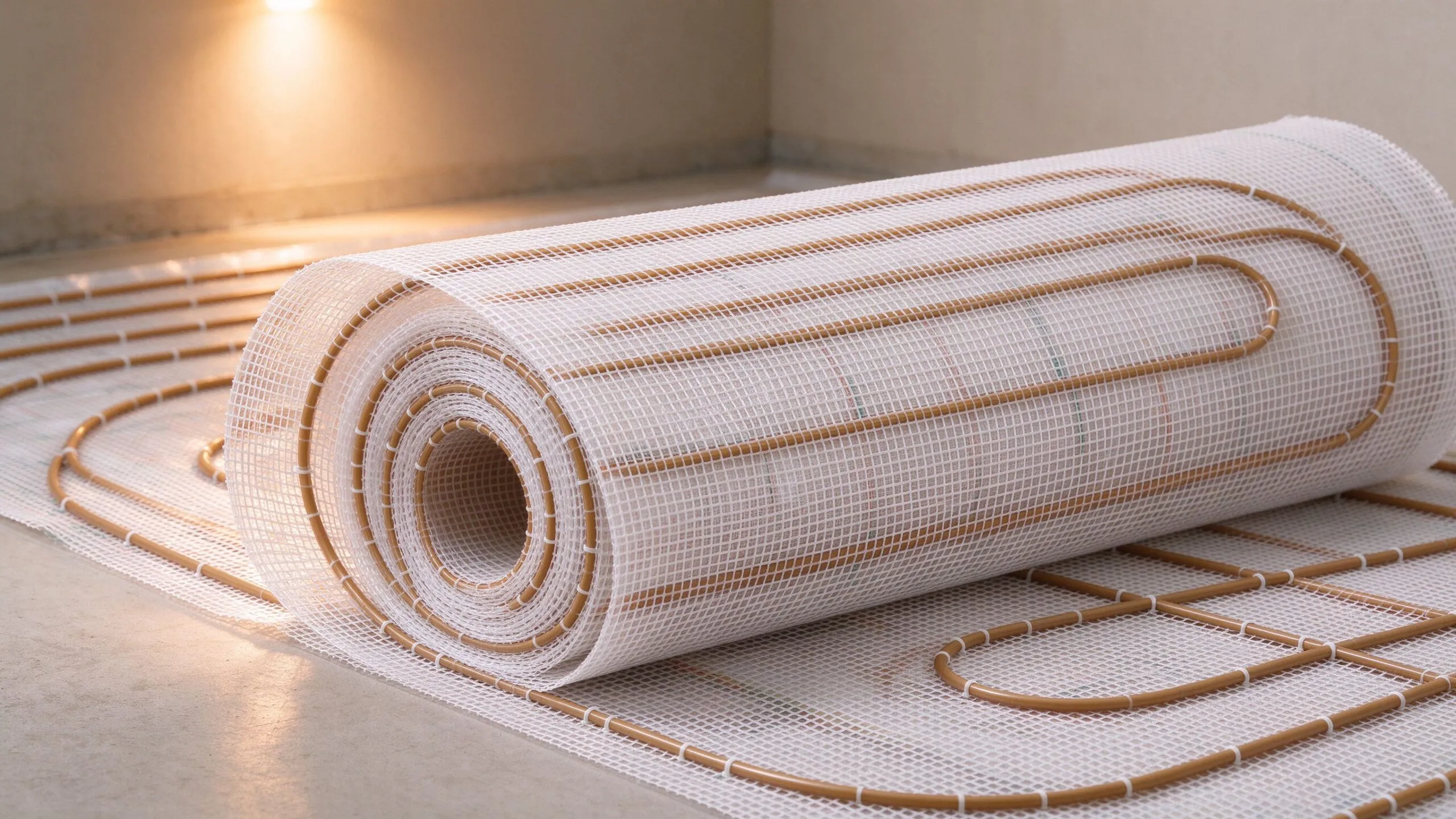
Electric underfloor heating mats have become one of the most popular choices for homeowners and contractors seeking an efficient, reliable, and easy-to-install heating solution. Unlike loose cable systems that require careful spacing and planning, heating mats come pre-spaced on a fiberglass mesh, making installation straightforward even for those with limited experience. In this technical guide, we break down every specification you need to understand when selecting an electric underfloor heating mat.
Article by Ethan Sun, Founder & CEO, SunAura Thermal — based on 17 years of heating element manufacturing and export experience.
Understanding Power Density and Wattage
The power output of an electric heating mat is typically expressed in watts per square meter (W/m2). This figure is one of the most critical specifications, as it determines the maximum heat output the system can deliver. Common power densities include 100W/m2, 150W/m2, 200W/m2, and 220W/m2. The appropriate power density depends on several factors including the room type, insulation quality, desired floor temperature, and whether the system is intended for primary or supplementary heating.
For well-insulated rooms used as supplementary heating, 100-150W/m2 is generally sufficient. For areas with higher heat loss, such as bathrooms with exterior walls or conservatories, 150-200W/m2 is recommended. For primary heating in colder climates or poorly insulated spaces, 200-220W/m2 may be necessary. The actual floor surface temperature achieved depends not only on the power density but also on the floor covering thermal resistance, subfloor insulation, and ambient room temperature.
Cable Construction and Materials
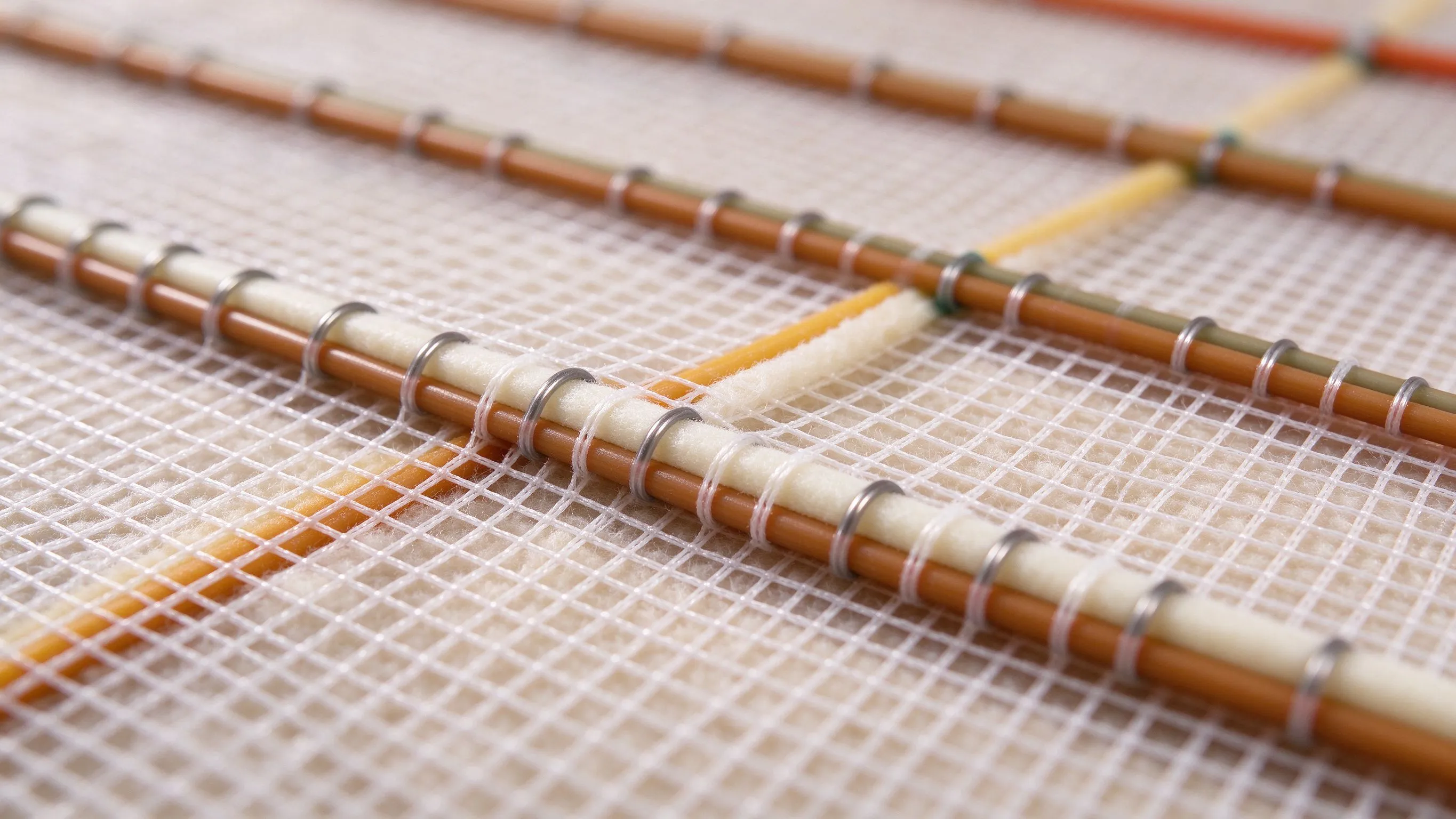
The heating cable within a quality electric heating mat is typically a twin-conductor design with a single cold lead connection, which simplifies installation by requiring only one electrical connection point. The conductor is usually made of high-purity copper or a copper alloy, surrounded by multiple layers of insulation. The inner insulation layer is typically made of cross-linked polyethylene (XLPE) or fluoropolymer, providing excellent electrical insulation and heat resistance up to 90 degrees Celsius or higher.
The outer sheath is usually made of PVC or silicone, providing mechanical protection and moisture resistance. The overall cable diameter ranges from 2.5mm to 4mm, with thinner cables being easier to cover with thin-set mortar or self-leveling compound. The fiberglass mesh backing is typically 1mm thick and serves to maintain consistent cable spacing while allowing the mat to be cut and shaped to fit the room layout.
Thermostat Compatibility and Smart Control
Modern electric heating mats are designed to work with a wide range of thermostat options, from basic manual controllers to advanced WiFi-enabled smart thermostats. The thermostat serves as the brain of the heating system, regulating power delivery based on floor temperature, air temperature, or both. Most heating mats use a 16-amp or 20-amp thermostat, which can handle loads up to 3,680W or 4,600W respectively at 230V.
WiFi-enabled thermostats, such as those offered by SunAura Thermal, provide remote control via smartphone apps, programmable schedules, energy usage monitoring, and integration with smart home platforms including Amazon Alexa and Google Home. These smart features can reduce energy consumption by 15-25% through optimized scheduling and adaptive learning algorithms.
Floor Sensor and Temperature Control
A floor temperature sensor is a critical component of any electric underfloor heating system. The sensor, typically a 10k NTC thermistor, is installed in a conduit tube embedded in the floor alongside the heating mat. This allows the thermostat to monitor the actual floor surface temperature and prevent overheating, which could damage floor coverings or create uncomfortable surface temperatures.
Different floor coverings have different maximum temperature limits. Engineered wood flooring typically should not exceed 27 degrees Celsius surface temperature, while tile and stone can safely reach 29 degrees Celsius. A quality thermostat with floor sensor capability allows you to set appropriate maximum floor temperatures for each room, ensuring both comfort and protection of your flooring investment.
Sizing and Layout Planning
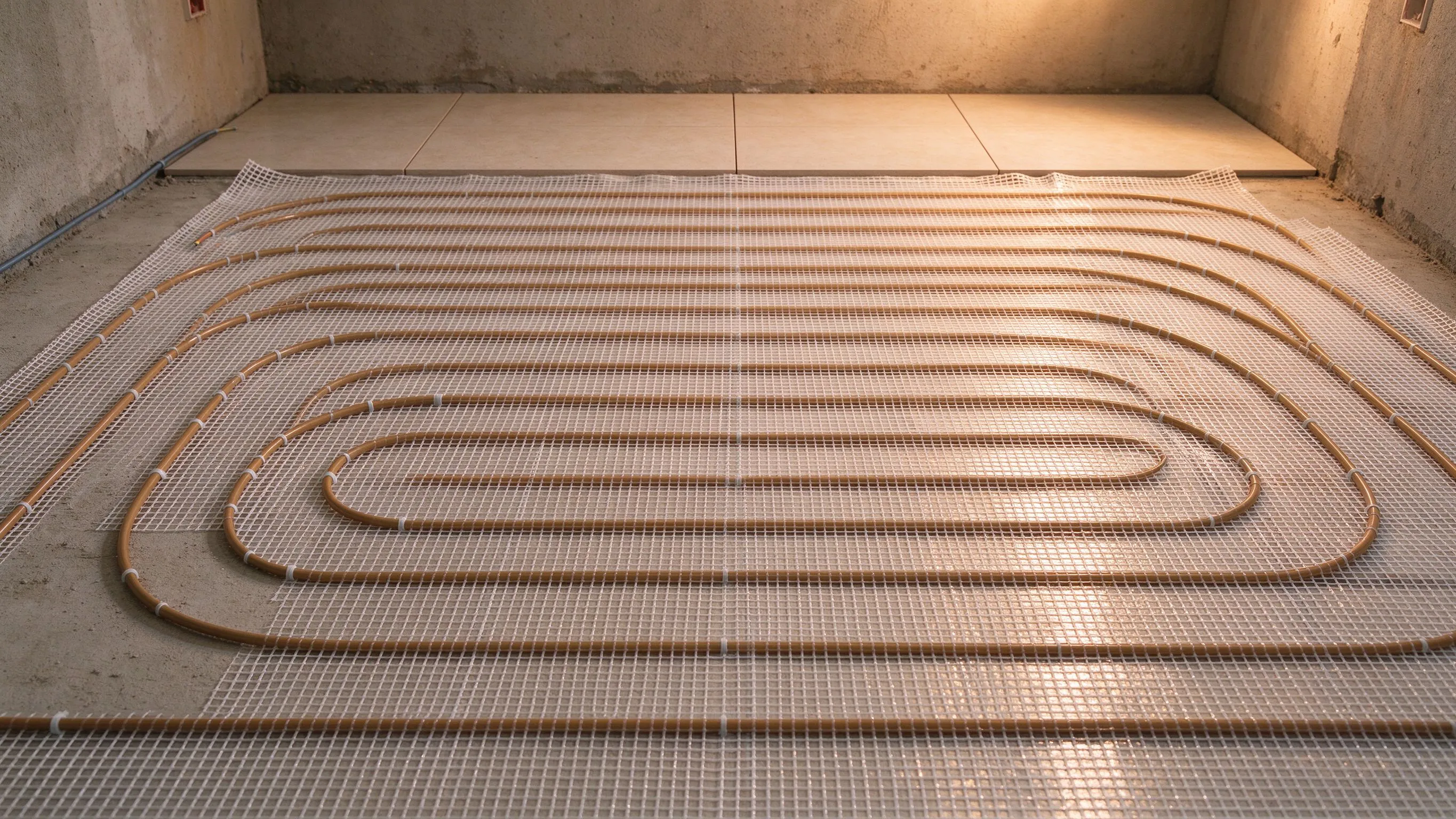
Proper sizing of an electric heating mat is essential for optimal performance. The heated area should cover approximately 80-90% of the free floor space, excluding areas under fixed furniture, kitchen units, and sanitary fixtures. The mat should be positioned at least 100mm from walls and 200mm from toilet bases and other fixtures.
When planning the layout, consider the location of the thermostat and the power supply. The cold lead of the heating mat is typically 3 meters long, so the mat should be positioned to allow the cold lead to reach the thermostat location without splicing. For larger rooms requiring multiple mats, a junction box can be used to combine the connections.
Electrical Requirements and Safety
Electric underfloor heating mats require a dedicated circuit from the electrical distribution board. The circuit should be protected by a residual current device (RCD) with a trip sensitivity of 30mA. The cable size should be appropriate for the load, typically 2.5mm2 for loads up to 3,000W and 4mm2 for loads up to 4,600W. All electrical connections must be made by a qualified electrician in accordance with local electrical codes.
SunAura Thermal heating mats are manufactured to meet international safety standards including CE, RoHS, and EAC certifications. Each mat undergoes 100% continuity and insulation resistance testing before leaving the factory. The mats are backed by a comprehensive 15-year warranty, reflecting our confidence in the durability and reliability of our products.
How to Read an Electric Heating Mat Datasheet
Comparing competing brands of electric underfloor heating mat technical specifications becomes straightforward once you know which numbers actually drive comfort and reliability. Beyond watts per square metre, buyers should check the conductor material, cold-lead length, cable diameter, sensor type, mesh width and the rated circuit maximum. A datasheet that hides any of these parameters should be treated as a red flag: it usually means the product is rebranded commodity cable with inconsistent build quality.
The cold lead deserves special attention. It is the unheated tail that carries mains power from the thermostat junction box to the heating element. Quality mats use a shielded twin-core cold lead of 3 m or longer, with a heat-shrink transition zone where it meets the heated cable. If the cold lead is too short, installers are forced to join it mid-floor — a point of failure that cannot be serviced once tile adhesive covers it. For bathrooms and kitchens, specify mats with a fully bonded, single-end connection so that only one joint is buried in the floor build-up.
| Parameter | Typical range | What it tells the buyer |
|---|---|---|
| Power density | 100–220 W/m² | Heat output per covered square metre |
| Cable diameter | 2.5–4.0 mm | Bedding thickness and tile risk |
| Mesh width | 500 mm / 1000 mm | Lay speed around obstacles |
| Cold lead | 2.5–5.0 m shielded | Reach to thermostat without splicing |
| Sensor | 10 kΩ NTC thermistor | Floor-safety cutoff point |
| Insulation class | XLPE + fluoropolymer | Maximum continuous exposure temperature |
| Test voltage | 1500 V DC hipot | Factory dielectric proof level |
For tiled areas where thin bedding matters, an ultra-thin heating mat for tile with a 2.5 mm cable and aluminium spreader layer lets tilers embed the element in 5–8 mm of adhesive rather than a full screed bed. Our electric heating mat under vinyl flooring guide covers the low-profile build-up that makes LVT and SPC renovations possible without raising door thresholds.
Matching the Mat to the Floor Covering
Not every electric heating mat is right for every floor finish, and mixing the two up is the most common reason installations underperform. Tile and stone have negligible thermal resistance and respond best to 150–220 W/m² mats embedded in flexible adhesive. Engineered wood and laminate, by contrast, carry a thermal resistance of 0.10–0.15 m²K/W and are rated for surface temperatures no higher than 27 °C; for these finishes a 150–160 W/m² mat used with a floor-sensor thermostat is the safer specification. Carpet thicker than 2 mm should be avoided entirely over electric mats, because its thermal resistance traps heat against the element instead of delivering it to the room.
Bathrooms deserve a separate sizing conversation. They are high-heat-loss, wet zones where the mat must keep a 100 mm offset from walls and a 200 mm offset from sanitary fixtures. A 100 mm² bathroom typically needs around 12 m² of heated area; a single 150 W/m² mat of 8 m² plus a second 4 m² mat on the same circuit, paralleled in a junction box, is the standard configuration. We discuss the wet-room detail in our tile floor heating product guidance, and in the installation tutorial covering electric heating mat installation under tile.
For open-plan renovations that combine tiled kitchens with wood-floored sitting areas, a two-circuit layout — one tiled zone at 200 W/m², one wood zone at 150 W/m² — controlled by two thermostats, is far more efficient than forcing both zones onto a single average schedule. The marginal hardware cost of a second thermostat is paid back within two heating seasons through better zoning.
One final specification buyers overlook is the IP rating of the junction and cold-lead transition. In wet rooms the transition boot must be IP67 rated, and the floor sensor must be routed through a sealed conduit so that any future sensor replacement does not require breaking out the tile bed. These details are small on the datasheet but decisive over a 15-year service life, which is why SunAura documents them in every product manual shipped with our bathroom floor heating mat range.
Factory Evidence: Production, Testing and Certification
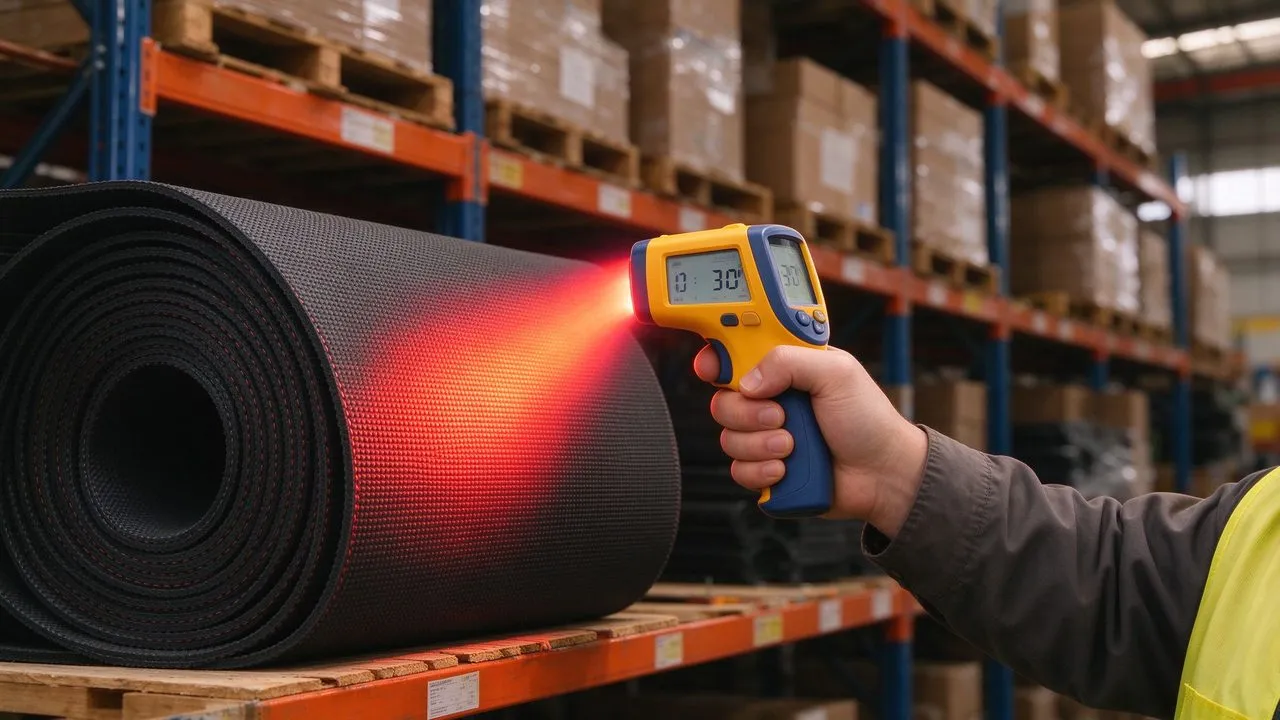
SunAura Thermal has manufactured heating mats and cables at our Qingdao Huangdao facility since 2008, now in our 17th year of continuous production. Our mats are built under ISO 9001 quality, ISO 14001 environmental and ISO 45001 occupational safety management systems, and carry CE, RoHS, LVD and EMC declarations for export markets, per SunAura factory records. Before despatch, every mat undergoes 100% continuity testing, hipot insulation-resistance proof testing, and a thermal imaging scan to confirm even heat distribution along every cable run.
That testing protocol mirrors what regulators expect from connected heat-producing products. The EU Ecodesign and energy labelling framework sets mandatory performance and information requirements for energy-related products, while the International Energy Agency heating report tracks how efficient electric heat and zoned controls reduce buildings’ final energy demand. As an electric heating mat supplier exporting to more than 50 countries, we document each production batch so that buyers’ notified-body audits and customs declarations trace cleanly back to factory test records.
Frequently Asked Questions
What power density should I choose for a bathroom?Because bathrooms combine tiled floors with exterior walls and frequent wet-room conditions, 150–200 W/m² is the common choice. The mat covers roughly 80–90% of the free floor area outside the bath, shower tray and toilet footprint; the missing area is compensated by the higher wattage rather than by overlapping the mat.
Can one thermostat control more than one heating mat?Yes, as long as the combined load stays within the thermostat’s current rating (typically 16 A or 20 A at 230 V). Mats can be paralleled through a suitable junction box, but each circuit should still have its own floor sensor if rooms require different surface-temperature limits. For multi-room projects, use a floor heating mat system with separate zone thermostats rather than one master control.
How thick is the finished floor build-up with a heating mat?With a 3 mm cable embedded in flexible tile adhesive and a 10 mm tile, the total lift above the substrate is around 13–18 mm. Add 6 mm of XPS insulation below the mat where heat loss to a concrete slab or suspended timber floor is a concern. Thin-profile mats can shave several millimetres off that total.
What is the warranty on a quality heating mat?Reputable manufacturers offer 10–20 year warranties on the heating element itself, and 2–5 years on the thermostat. The warranty is only valid if the mat was tested before and after bedding (resistance values recorded) and commissioned according to the installation instructions — always keep the pre-covering multimeter reading.
Can I buy heating mats in bulk for a project or resale?Yes. As a factory-direct manufacturer we support electric heating mat bulk order quantities with flexible MOQs, private-label packaging and mixed wattage pallet loads. Lead time is typically 25–35 days for sea freight after deposit, with samples available within days for engineering approval.
Conclusion
Understanding the technical specifications of electric underfloor heating mats is essential for making an informed purchasing decision. From power density and cable construction to thermostat compatibility and electrical safety requirements, each specification plays a crucial role in the performance and longevity of the system. By choosing a quality product from a reputable manufacturer like SunAura Thermal, you can enjoy decades of comfortable, efficient, and worry-free underfloor heating.
Related Products & OEM Inquiries
Looking for a technically specified underfloor heating mat or a factory-direct OEM/ODM partner? Explore our electric underfloor heating mats and complete electric underfloor heating systems, then request a quote for your project — we supply distributors, installers and brands in 50+ countries.