
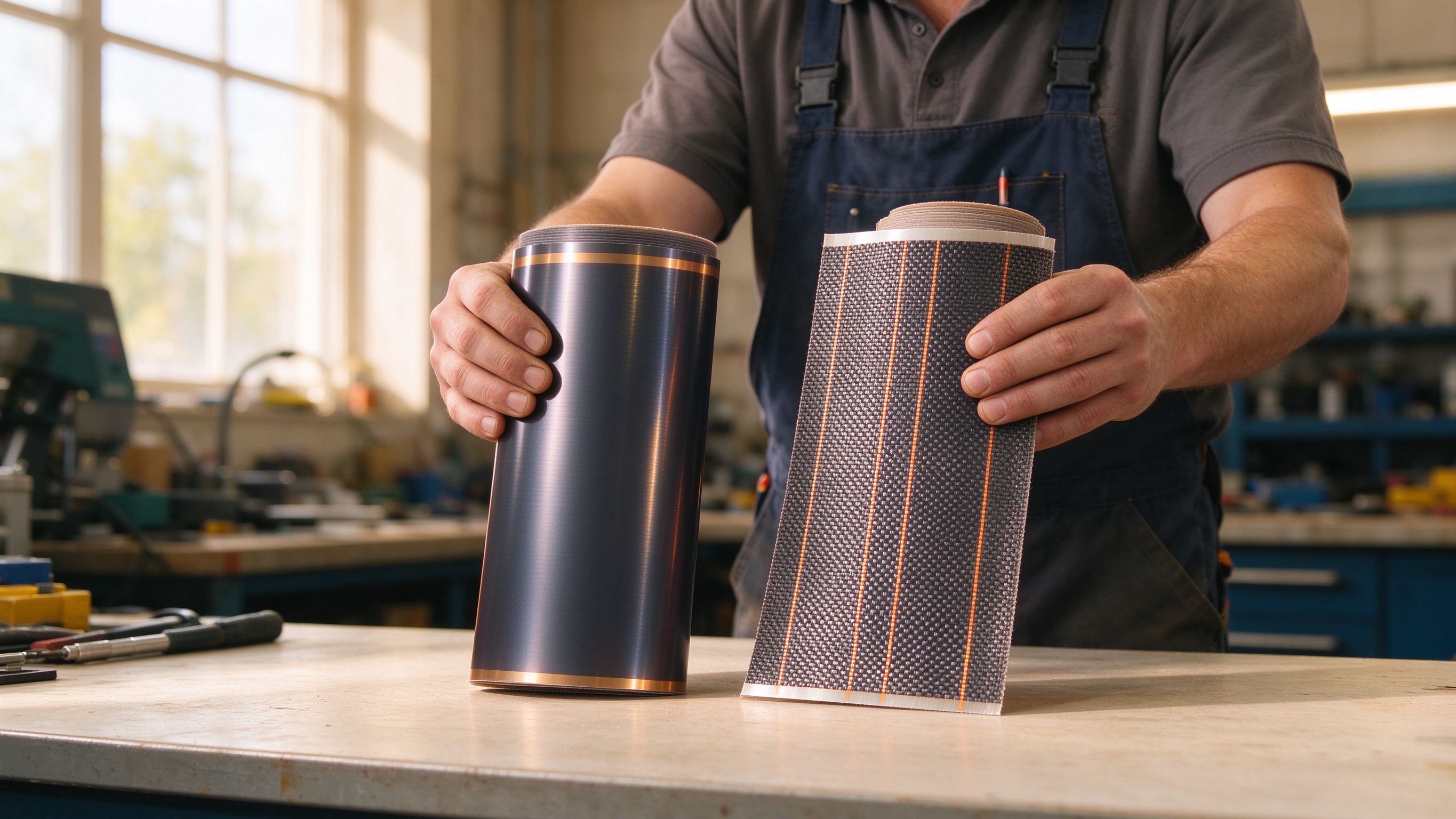
Graphene vs Carbon Fiber Heating Film: What the Material Comparison Means for Buyers
If you are comparing graphene vs carbon fiber heating film for a floor, wall or ceiling project, you are asking the right question at the right time. Both materials sit inside electric heating elements that look similar on a sales page, yet they behave differently in real installations. This guide explains the material-level differences between graphene and carbon fiber heating film, what they mean for heat distribution, response speed, durability and price, and how a manufacturer with 17 years of production experience evaluates the two.
The short version: graphene heating film uses a printed graphene-based conductive layer that spreads current across a wide area, while carbon fiber heating film uses woven or parallel carbon filaments that carry current along defined lines. That structural difference drives almost everything else. Read on for the comparison table, the infrared evidence and the buying advice. If you already know the direction, request a graphene heating film wholesale quote with your room sizes and we will reply with factory pricing.
Why the graphene vs carbon fiber question keeps coming up
Buyers search graphene vs carbon fiber heating film because both products are marketed as “far-infrared”, “energy-efficient” and “film-thin” electric floor heating. The claims overlap, so procurement teams and homeowners alike struggle to tell them apart. The distinction matters at three levels: how heat is generated, how evenly it is released, and what happens over ten years of thermal cycling.
In a graphene heating element, the conductive layer is a coating or film in which graphene platelets are dispersed. Voltage applied across the layer drives current through the entire sheet area, so heat generation is two-dimensional. In a carbon fiber heating element, current travels through discrete carbon filaments or a woven carbon cloth, so the heat sources are one-dimensional lines spaced across the element. Both are valid electric underfloor heating technologies; they simply distribute energy differently.
<img src="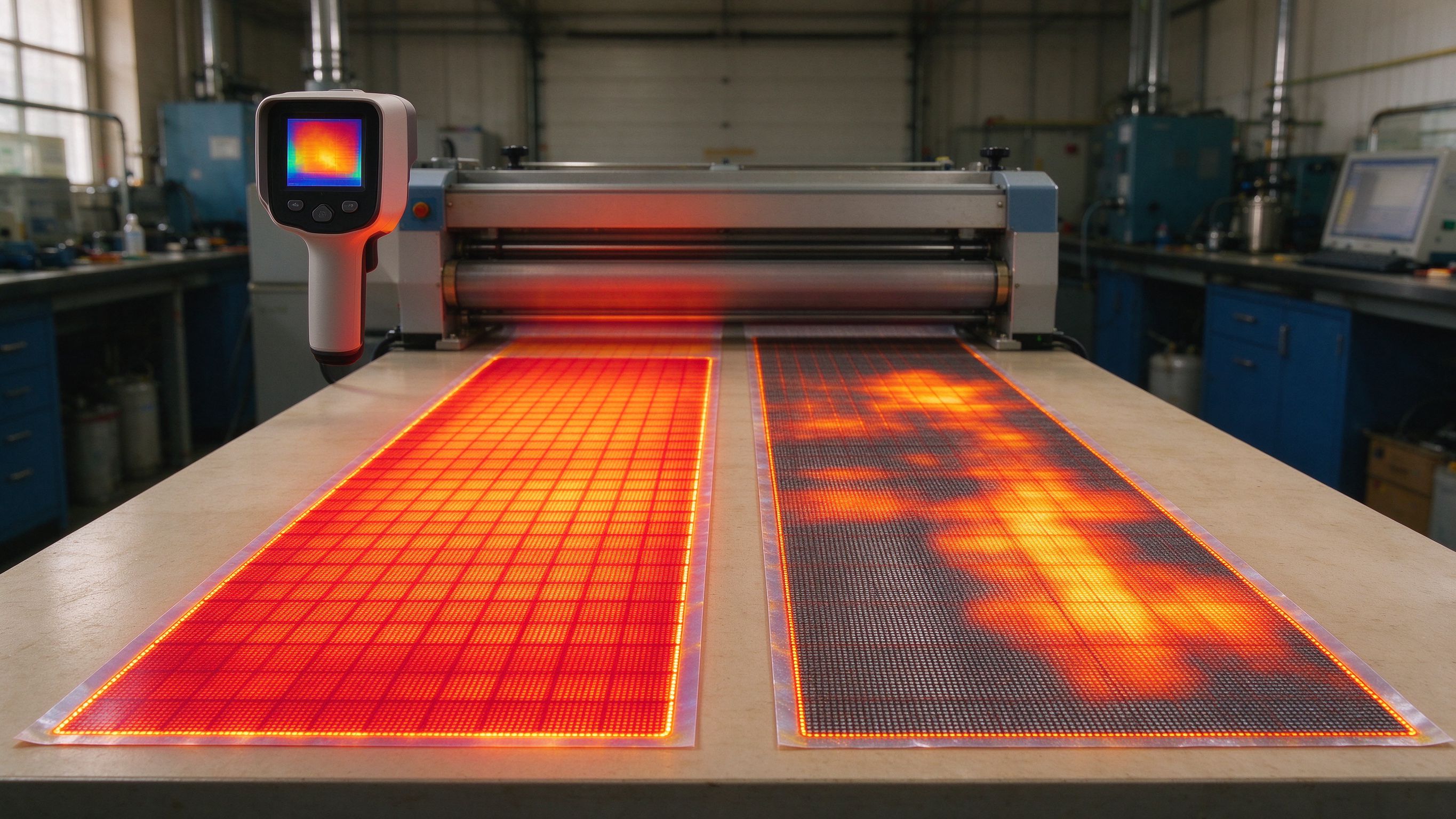 ” alt=”Thermal imaging comparison of graphene and carbon fiber heating film samples” loading=”lazy” width=”1280″ height=”720″ />
Heat distribution: even surface vs spaced filaments
The most visible difference is on a thermal camera. A graphene heating film sample powered to its working voltage shows a broad, even orange-red field with only small temperature differences across the surface, because the conductive layer covers the full area. A carbon fiber heating film shows defined hot lines where each filament runs, with cooler gaps between the filaments. The practical result is that graphene film produces a more uniform floor temperature, which reduces the “warm stripe, cold stripe” feeling that users sometimes report with filament-based elements under bare feet.
For room heating, the difference in comfort is modest when the carbon fiber element is spaced correctly under a screed or underlayment, because the floor layer spreads the heat before it reaches the surface. It becomes more noticeable in dry-lay installations where film sits directly under a floating floor with little thermal mass. Buyers choosing carbon fiber heating film for dry installation should therefore pay attention to filament spacing and the insulation layer beneath.
SunAura’s own infrared quality checks, per SunAura factory records, measure surface temperature uniformity on every production roll of graphene film; the target is a maximum deviation of a few degrees across the active surface at rated wattage. That uniformity is one reason installers specify graphene film for bathrooms and entry areas where a barefoot surface temperature matters most.
Response speed and thermal mass
Both film families are fast compared with screed-embedded cables or hydronic pipes, because the element sits close to the floor surface with minimal thermal mass between it and the room. Graphene film, with its full-area conductive layer, reaches its working surface temperature in minutes rather than hours. Carbon fiber film behaves similarly in surface response, although the filament lines mean small local hot spots appear first and then equalise through the floor layer.
In practice, the response speed advantage of film matters most in intermittently occupied rooms: home offices, studios, bathrooms and bedrooms that are heated only when used. A DC heating film or 110-240V graphene film paired with a programmable thermostat can warm a study before the user sits down, then drop to a frost setting overnight. That scheduling behaviour is where the running-cost savings come from, not from any exotic material property alone.
Durability, flexibility and installation tolerance
Graphene film is printed on a flexible PET or similar carrier, so it bends around obstacles and can be cut to width in some designs without losing the circuit. Carbon fiber heating film, being a cloth or filament structure, is also flexible, but cutting it requires care to avoid shorting the filaments at the cut edge. Installers familiar with both report that graphene film is more forgiving of field trimming and rework, while carbon fiber cloth is valued where a breathable, fabric-like element is preferred, such as certain wall or textile applications.
Both technologies tolerate the mechanical loads of normal flooring: foot traffic, furniture and the movement of wood floors during seasonal humidity changes. The critical installation rules are the same: a clean subfloor, a compliant insulation layer, correct spacing from fixed objects, and a floor temperature sensor wired to the thermostat so the element never exceeds the floor finish’s maximum temperature.
<img src="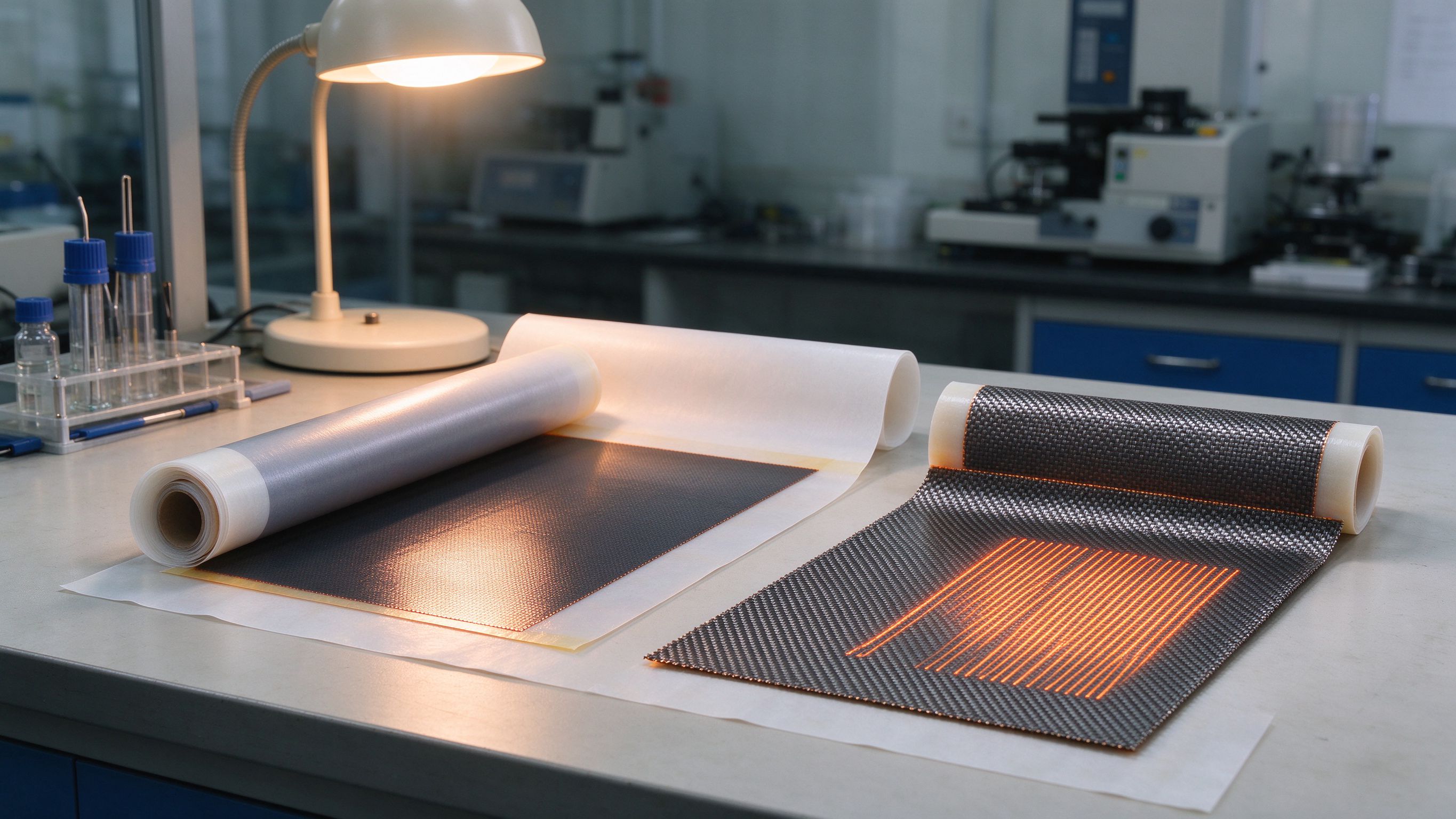 ” alt=”Graphene film and carbon fiber heating cloth samples in a quality-control laboratory” loading=”lazy” width=”1280″ height=”720″ />
Far-infrared emission: similar physics, different packaging
Both materials convert electricity to heat, and a large part of that heat leaves the element as far-infrared radiation. The far-infrared wavelength band (roughly 8-14 micrometres, the range human skin absorbs well) is emitted by any surface at a comfortable floor temperature, whether the element is graphene, carbon fiber, or even a simple resistive cable. That is physics, not a brand claim: the “far-infrared heating film” benefit is real, but it is a property of radiant heating surfaces generally, not a differentiator unique to one material.
What differs is how evenly the emitting surface is. Because a graphene layer emits from the full area while carbon filaments emit from lines, a thermal camera sees a more uniform radiant field from graphene film. For wall and ceiling installations where the element is directly exposed to the room rather than buried under a floor build-up, that uniformity matters more. SunAura’s graphene film range is used in floor, wall and ceiling applications for this reason, and the wall heating article explains the build-up options.
Price, MOQ and supply-chain reality
Carbon fiber heating film has a longer industrial history and lower raw material cost in many markets, so it can appear cheaper at first quote. Graphene film is newer to mass production; its pricing depends on the dispersion quality of the graphene, the printing process and the laminating layers, and reputable manufacturers quote by active heating area, wattage and insulation class rather than by roll length alone.
A useful buying discipline is to compare total installed cost per square metre, including insulation, sensor cable, thermostat and labour, rather than the element price alone. A slightly more expensive element that installs faster under a floating floor and requires less levelling can be cheaper overall. For project buyers, request flexible heating film wholesale pricing with your wattage target, and ask for the batch record and CE, RoHS, LVD and EMC documentation that ship with each order.
<img src="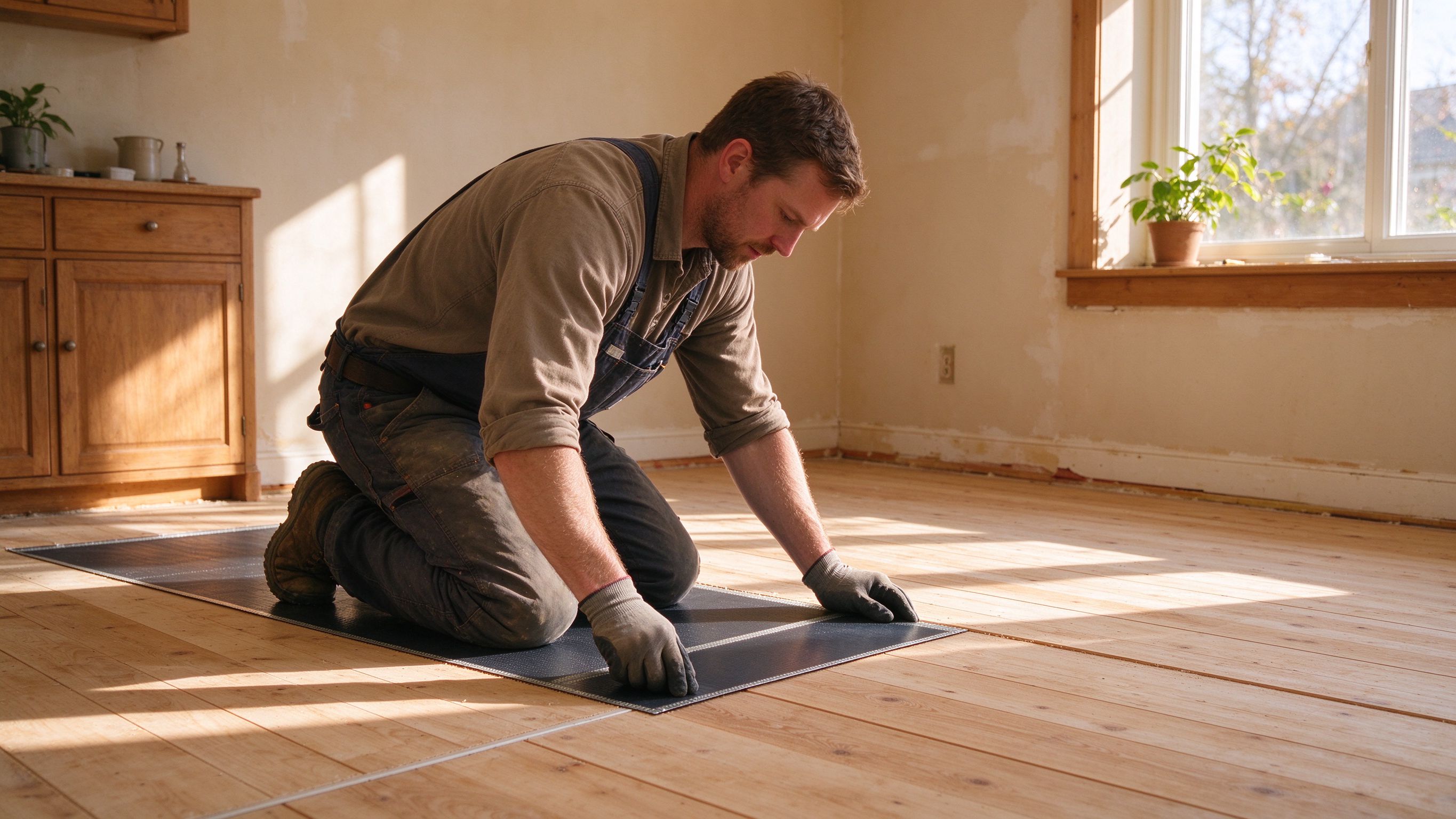 ” alt=”Installer laying graphene heating film on a wooden subfloor in a renovated room” loading=”lazy” width=”1280″ height=”720″ />
Data and evidence: what the factory actually measures
SunAura Thermal has manufactured heating elements at its Qingdao Huangdao factory since 2008 — 17 years of continuous production — and produces both film technologies. Per SunAura factory records, the graphene film line runs standard widths with power outputs in the 100-200 W/m² range, and every roll is tested for resistance uniformity, insulation withstand and surface temperature profile before packing. The factory operates under ISO 9001 (quality), ISO 14001 (environment) and ISO 45001 (occupational health and safety), and the heating film range carries CE, RoHS, LVD and EMC compliance for the European market, with products exported to more than 50 countries.
When a buyer asks for a comparison, the factory answer is practical: choose graphene film when you want the most even surface temperature, the simplest dry-lay installation and the broadest cutting tolerance; choose carbon fiber film when a fabric-like element or a specific supply-chain preference dictates the choice. Both perform as certified; the engineering decision is about the floor build-up, the room usage and the installer’s workflow.
Certification and compliance: what to check on the documentation
Whichever material you choose, the compliance file tells you more about the supplier than the marketing page does. For European and global projects, request the CE declaration, the RoHS and REACH material statements, and, where relevant, the LVD and EMC conformity documents. A reputable manufacturer ships these with every order and can trace each roll back to its production batch.
SunAura Thermal’s documentation practice, per SunAura factory records, is to pack the batch record and the compliance file with every heating film order. The factory’s certificates for ISO 9001, ISO 14001 and ISO 45001 cover the management system, and the product-level CE, RoHS, LVD and EMC conformity covers the film range. Buyers should treat “compliant” as a claim to be evidenced, not a label to be believed: ask for the document, check the declared standards, and keep it with the project file for the final building handover.
There is also a practical safety angle in the documentation. The declared power tolerance, the insulation class and the maximum surface temperature are printed on the label or in the datasheet; a film that cannot show its rated wattage and insulation rating is a film that cannot be installed to a building code. Verify these numbers before the element goes under the floor, because after the floor finish is down, changing the element is an expensive lesson.
Frequently asked questions
Is graphene heating film better than carbon fiber heating film?
“Better” depends on the installation. Graphene film offers a more uniform radiant surface and easier field cutting for dry-lay floors; carbon fiber film has a longer production history and can suit specific wall or textile applications. Compare total installed cost, not element price alone.
Does graphene film really heat faster?
Film elements generally respond in minutes because they sit close to the floor surface. Graphene film reaches an even surface temperature quickly because the conductive layer covers the full area; the visible difference versus spaced carbon filaments is largest in dry-lay builds with low thermal mass.
Can I cut graphene heating film to fit my room?
Many graphene film designs can be trimmed to width along the marked cutting lines while keeping the circuit intact. Always follow the manufacturer’s cutting instructions and verify the circuit with a resistance test before flooring goes down. Per SunAura factory records, the graphene film range is designed for field trimming within the documented limits.
Which film is better for a home office or bathroom?
For rooms with a hard floor and barefoot use — bathrooms, entries, home offices — the even surface temperature of graphene heating film is a practical advantage. For carpeted or fabric-underlaid rooms the difference is less noticeable. Pair either choice with a floor probe thermostat so the surface temperature is controlled, not just the air.
How do I buy graphene heating film wholesale?
Send your room plan, target wattage per square metre and destination country to the SunAura sales team. Factory-direct pricing, MOQ terms, sample availability and OEM branding are handled with the compliance documentation included. Contact [email protected] for a quote.
Does the film need a special subfloor or underlayment?
Most film installations use a thin closed-cell insulation under the element to direct heat upward and protect the subfloor from overheating. Over concrete, that layer also reduces heat loss to the ground, which is the biggest efficiency lever in the whole build-up. The floor must be clean, dry and reasonably level before the film goes down; the insulation layer absorbs small irregularities. Follow the manufacturer’s build-up drawing for the specific floor finish, because the insulation thickness and the maximum floor temperature cap change with the material above the film.
Where to go next
For the next step in your project, read the far-infrared heating film explainer for the radiation physics, the underfloor heating wattage calculation guide to size the system, and the tile floor heating and graphene heating film product pages for the range details.
Ethan Sun, Founder & CEO, SunAura Thermal. SunAura Thermal has manufactured electric heating elements in Qingdao Huangdao, China, since 2008, and exports to more than 50 countries under ISO 9001/14001/45001 with CE, RoHS, LVD and EMC compliance. Data in this article per SunAura factory records.